Eating and speaking
Chewing on one side, food packing into the gap, a new lisp, or a denture that lifts when you bite into something firm.

A gap you’ve lived with for a while, and now someone has said the word “implant”. Before you weigh it up, it helps to see it next to the other three honest answers: a bridge, a denture, or leaving the gap alone for now.
An implant asks the most of you up front: surgery, then 3–6 months while it fuses with the bone before the final tooth goes on. A denture is made in a lab over several weeks. A bridge sits on the teeth either side. Each one suits a different mouth.
Any patient can book a free 10-minute session to talk about implants or cosmetic treatment. It’s an information session about the options and your goals, not an examination, diagnosis, suitability check, treatment plan or quote. Availability and booking conditions apply. Read the current offer details before booking.
Bring your questions about all four. We’d rather you chose with the whole picture than went with the first option you heard about.
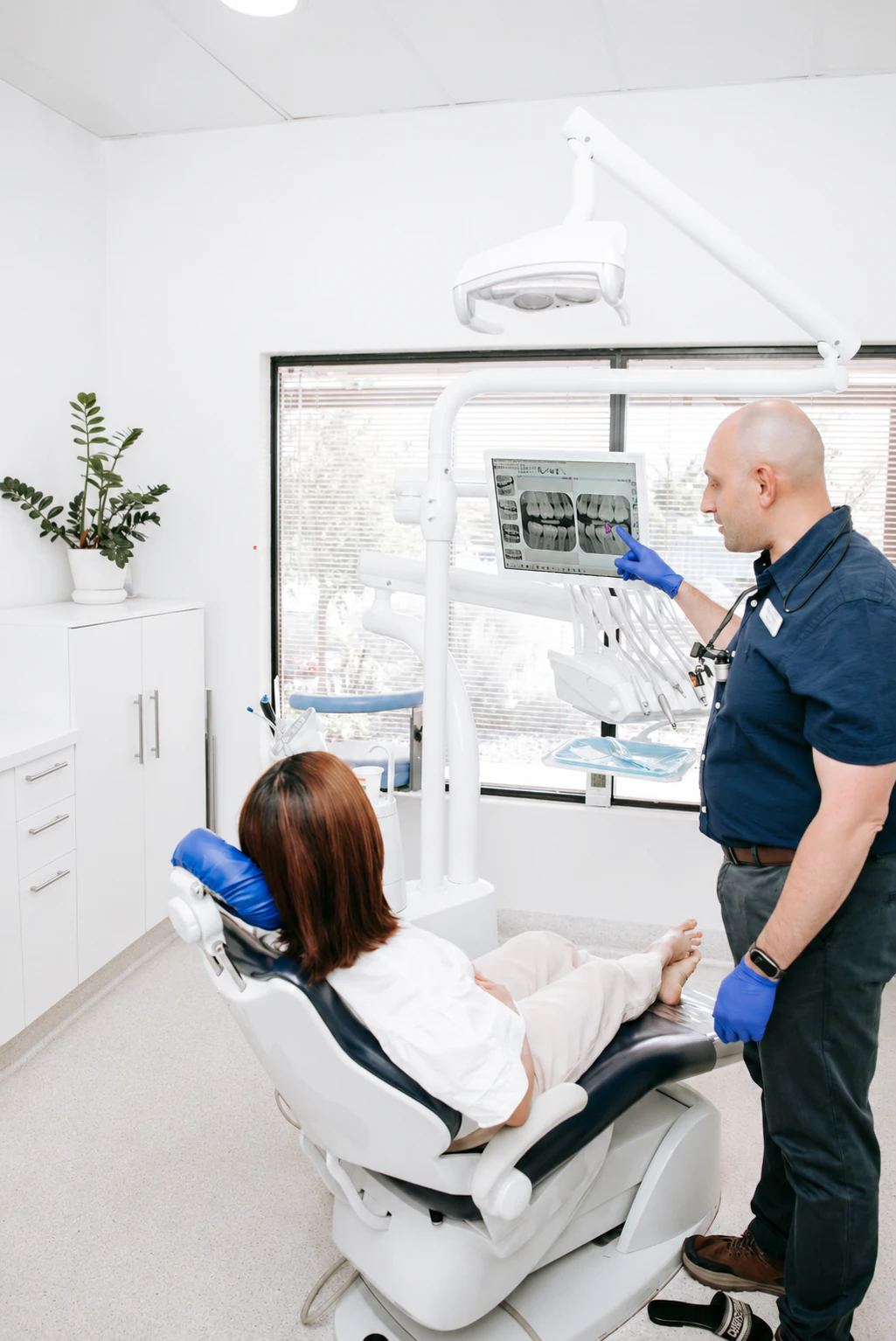
Start there, before anyone mentions materials or how many implants. The answer often points to one option more than the others.
Chewing on one side, food packing into the gap, a new lisp, or a denture that lifts when you bite into something firm.
Some people want teeth that never come out. Others are happy to unclip a denture at night. Both are reasonable, and both need cleaning.
A bridge is held by the teeth either side, and they’re crowned to carry it. An implant stands on its own in the bone and leaves them alone.
Picture where the brush and floss would need to go. If your hands are stiff or your eyesight isn’t what it was, that matters here.
An implant spreads over months, with surgery near the start. A bridge or denture is made in a lab and fitted at a later visit. Leaving the gap changes nothing yet.
The gap is what people notice, but gum shape, the teeth nearby, colour and your bite all decide how natural the new tooth looks.
None of these wins outright. The table shows what each one asks of you, so you can bring the right questions to your appointment.
| What you’re asking | An implant | A bridge | A denture | Leaving the gap |
|---|---|---|---|---|
| What holds it in? | A post in the jawbone holds a crown or bridge, or gives a denture something to clip onto. | The teeth either side of the gap carry it. | It rests on your gums, sometimes with small clasps onto your own teeth. | Nothing. We keep an eye on the space at your check-ups. |
| Does it come out? | It can be fixed, or a denture that unclips. That’s settled in planning. | No. A bridge is cemented in. | Yes. You take it out to clean it. | There’s nothing to take out. |
| Is there surgery? | Yes. Placing the implant is surgery, and a bone graft can add a stage. | No, but the teeth either side are shaped and crowned. | No, though fillings or extractions sometimes come first. | No, as long as the space stays stable. |
| How do you clean it? | Brush the tooth and the gumline, then clean around or under it. | Brush it, then thread floss or a small brush underneath every day. | Take it out, clean it, then clean your gums and tongue. | Look after your own teeth and gums, and keep your check-ups. |
The teeth next door stay untouched
A single implant carries its own load, so healthy teeth beside the gap don’t need crowning to hold a bridge. It still needs enough bone, healthy gums and room to clean.
Teeth that stay put
In the right mouth, implants can hold a fixed crown, a bridge or a full arch. Fixed isn’t the same as fuss-free: you still clean it every day.
Shaped for your gap
We design the visible tooth around its neighbours, your gum line and your bite. How the gum heals still has a say in the final look.
Checked like the rest of your mouth
At each check-up we look at the gum around it, the bite and how well you’re reaching it. What you do at home each day counts just as much.
These answers are general. Which of them apply to you depends on what your dentist finds when they examine your teeth, gums and bone.
No. An implant is one way to replace a tooth, and it comes with surgery, months of healing, daily cleaning and regular checks. A bridge or a denture can suit someone else’s teeth, gums, health or timing better, and leaving the space alone is sometimes fine too. Before you decide, we’ll lay out at least one alternative and explain what we found that points one way or the other.
A bridge hangs off the teeth either side of the gap, which are crowned to hold it. An implant crown sits on a post in the jawbone instead. That difference alone doesn’t settle it. We still look at your bone, gums, the roots nearby, your bite, your health and how easily you could clean each one.
For a lot of people, yes. A partial or full denture replaces missing teeth without surgery, as a stopgap or for the long term. Ours are made in a lab over several weeks, in acrylic or with a metal framework for partials, and we adjust them as they settle. You take it out to clean it.
It leaves them alone, which isn’t quite the same thing. An implant crown carries its own load, so unlike a bridge it doesn’t lean on its neighbours. Those teeth still have their own roots, gums and fillings to look after, and we check them as part of the plan.
Filling a gap changes how you chew and speak, though we can’t promise exactly how yours will feel. Your bite, the shape of the new tooth, the teeth around it and how quickly you get used to it all play a part. If something feels off once it’s fitted, come back and we’ll look at it.
Not automatically. A fixed implant crown or bridge stays put, so you clean along the gumline and the spaces around it every day. A denture comes out for cleaning. An ordinary bridge needs floss or a small brush threaded under the joined teeth.
Say so at the start, and we’ll plan around it. A bridge, a denture or keeping an eye on the space are all real options, and we’ll compare the daily care, the visits and the risks of each with you. Choosing not to have surgery is a sound decision, and we won’t steer you back towards it.
Line up what each plan actually covers, not one headline number. For each option, look at what it replaces (if anything), what it relies on, which stages are included, and the cleaning and maintenance it needs over the years. We’ll point out anything in an estimate that could shift. Work out what suits your mouth first, then how you’ll pay for it.
This page is general information. Implant treatment is surgery and sometimes involves extra procedures. Any surgical or invasive procedure carries risks. Before proceeding, you should seek a second opinion from an appropriately qualified health practitioner. Results, risks, complications and recovery times vary between individuals. Whether an implant suits you, how long it takes, what it costs and what else could work are all worked out at your examination, where your dentist walks you through what they found.