Your forms
They ask about your medical history, past dental care and your health fund. Fill in what you can, and we’ll help with the rest.

Walking into a new dental clinic after a few years away can feel like turning up to an exam you didn’t study for. It isn’t one. Most first visits take 30 to 60 minutes, and most of that time is us asking questions and taking a careful look.
You’ll see one of our three dentists or one of our two oral health therapists. We’ll tell you who when you book, so you’ll know the name before you walk in.
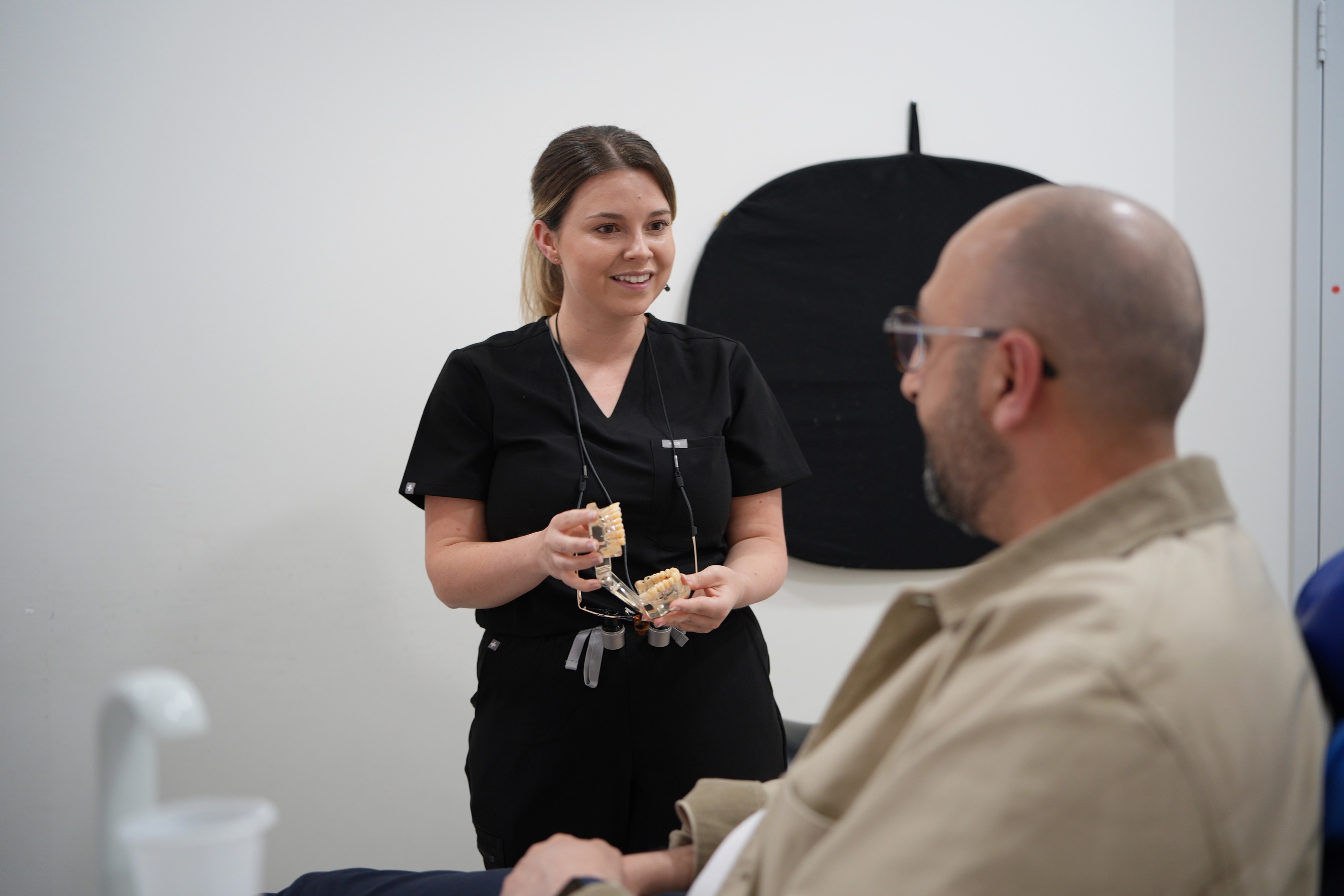
When you book, we’ll confirm how long the appointment takes, a rough cost and who you’re seeing. Here’s what else helps.
They ask about your medical history, past dental care and your health fund. Fill in what you can, and we’ll help with the rest.
Recent X-rays, a referral letter or a treatment plan from another dentist are useful. If you can’t find them, come anyway.
Booking a child under the Child Dental Benefits Schedule? Bring their Medicare card. If you hold a DVA Gold or White Card, bring that too.
If your forms aren’t finished before the day, we may ask you to come in a little early to do them.
If your stomach knots up at the thought of the chair, mention it when you book. We’ll explain each step before we do it, and stop whenever you raise a hand.
There are three parts: checking in, a conversation and a look, then going through what we found. If X-rays or a clean are needed and fit the time you’ve booked, we’ll ask you first.
You check in and finish any forms. If a tooth has started playing up since you booked, or you’ve brought old X-rays, say so then, so it’s ready before you sit down.
First, what brought you in, what you’d like help with, and your health and any medicines. Then we check your teeth, gums, jaw, bite and the soft tissues of your mouth, with a camera photo or X-ray only if we need one.
We’ll show you on the screen what we found, tooth by tooth. If you need treatment, your dentist goes through each option, what can be watched rather than treated, and roughly what it costs. You’ll have the cost in writing before anything starts.
Some things can happen on the day, and some get booked for later. It comes down to what we find, how long the appointment is, what you booked and whether you’re happy to go ahead.
Before you agree to anything, ask which parts can happen today, which need another booking, and what each one costs.
Before you head home, you should know whether your next step is a recheck, prevention or treatment, and roughly when.
Ask your dentist to walk you through the plan: why each step is there, what it costs, and whether it can be spread over a few visits.
Most adults come back every 6 to 12 months, and children usually every six months. We’ll send an SMS or email when you’re due, as part of our oral-hygiene maintenance programme.
If a tooth starts to hurt or something feels different, don’t wait for the reminder. Ring (08) 9407 7888 and say what’s changed, so we know how soon to see you.
From forms and health funds to whether anything happens on the day, these are the questions people most often ask us.
Say so when you book, and again when you arrive, so whoever sees you knows from the start. Breaks are fine at any point. If something particular sets you off, like the sound of the drill or a bad visit years ago, it helps us to know what it is. Sedation isn’t usually part of a first visit. If you’d like to talk about it, raise it when you book, and your dentist will look at your medical history and the treatment you need.
No. Recent X-rays, a referral or an old treatment plan are handy, but don’t put off booking while you hunt for them. We can start fresh with your history and an examination. If an earlier record would help, we’ll tell you what to ask your old dentist for and how to get it to us.
Sometimes. It depends on why you came in, what we find, how much time is booked and whether you’re happy to go ahead. If you’re in pain, or a tooth has broken or been knocked out, we offer a same-day assessment. Routine treatment that needs more time is usually booked for another day, so mention your main worry when you book and we’ll allow for it.
Not always. We decide after hearing what’s bothering you and looking in your mouth, and we take one only when it will answer a question our eyes can’t. Digital X-rays use less radiation than the older film kind. If you’ve had X-rays somewhere else recently, mention it when you book; we might be able to use those instead. If you might be pregnant, let us know before any X-ray is taken.
Plenty of first visits here start exactly there. Let your dentist know roughly when you last went and anything you’ve noticed since, like gums that bleed or a tooth that’s turned sensitive. We’ll go through your history, check your mouth and take X-rays if they’re needed, then sort what needs attention soon from what we’ll simply keep an eye on. You won’t be asked to justify the years.
We’ll tell you how long the appointment takes, roughly what it costs, and whether you’ll see a dentist or an oral health therapist. You’ll get forms about your medical history, dental history and health fund, and we might ask you to come early to finish them. If you get nervous, your symptoms change, or something’s on your mind, let us know before the day.
Your health fund card, a list of any medicines you take, and any recent X-rays or treatment plans. For a child on CDBS, bring their Medicare card; for DVA care, bring your Gold or White Card. The forms cover your medical history, dental history and health fund details, so fill them in as fully as you can. Not sure what applies to you? Ring (08) 9407 7888.
We’re a preferred provider for Bupa Members First, HCF and nib First Choice, and we accept HBF. What you get back depends on your level of cover, waiting periods and annual limits. Eligible children are bulk billed for CDBS-covered services within their available benefit limit. We also see eligible DVA cardholders, with cover set by each card’s entitlements. Have your fund card with you, and before any treatment we’ll look into whether the claim can be settled at that first visit.
You’ll hear the likely cost of the appointment when you book. After the examination, your dentist explains what they found, the choices and whether you’ll need more visits. If you do need treatment, you’ll get a written estimate before treatment starts, showing which parts could be staged and the ways you can pay.
Yes. We see children for first visits, check-ups, prevention or a particular worry, ideally by their first birthday or when the first tooth appears. A dentist or oral health therapist checks their teeth and gums, shows them how to brush, and uses X-rays only if they’re needed. There are toys, games and children’s TV in the waiting area. Let us know their age, and whether CDBS applies, when you book.
Usually 30 to 60 minutes. It’s at the longer end if you’re having X-rays or a clean as well, or there’s a lot to talk through. We’ll confirm the time when you book, and whether to come early for paperwork.
That depends on what you need. Our three dentists, Dr Michael Shams, Dr Charles Tricoli and Dr Maddison Sheppard, cover general, preventive and restorative care. Rachael and Ann, our oral health therapists, look after cleans, gum health, children’s dentistry and home care. We’ll tell you who you’re booked with.
Yes. Before anything starts, your dentist should explain what they suggest, the reasonable alternatives and the risks, then give you time to decide. You can ask more questions, take a few days, say no, or change your mind later. Fees and timing are fair questions too. If you’d like things one step at a time, say so at the start.
Ring us on (08) 9407 7888, especially if it’s getting worse. Say what’s changed, when it started and which tooth or area it is, so we’re not working from the original booking. Outside opening hours, call (08) 9407 7888 for guidance, or healthdirect on 1800 022 222. Call 000 or go to the nearest emergency department if you have trouble breathing or swallowing, swelling spreading towards your eye or neck, bleeding that won’t stop, or a head or jaw injury.
We go through what we found before you leave. If you need treatment, your dentist explains the choices and we book what comes next. If prevention is all you need for now, you can join our oral-hygiene maintenance programme, with check-ups and hygiene visits spaced to suit your mouth and an SMS or email when one is due. Before you head out, you should know three things: the first priority, anything we’re watching, and when to come back.