Healthy teeth and gums first
Decay, cracks, inflamed gums and sensitivity are sorted out first, so anything cosmetic sits on healthy teeth.

Not liking your smile is reason enough to come in, even if you can’t say exactly why. A darker tooth, a chipped edge, a gap: point to it, and we’ll find out why it looks that way before anyone mentions treatment.
A yellow tint can be surface stain, thinning enamel or an old filling showing through, and each has a different fix. So your teeth, gums and bite get looked at first.
Decay, cracks, inflamed gums and sensitivity are sorted out first, so anything cosmetic sits on healthy teeth.
Bring the photo, or point to it in the mirror. Your dentist works out whether it’s colour, shape, position or old dental work you’re seeing.
Short or worn front teeth are often about the bite as much as looks. Bonding on an edge that takes heavy pressure can chip again, so we check how your teeth meet.
Pick the one closest to yours. Each shows what we’d look at and which treatments tend to come up. The real suggestion waits until your dentist has seen your teeth.
Digital Smile Design pictures possible changes on a photo of your own smile, before any treatment. You and your dentist can then talk about shape and shade while looking at the same thing. The plan still rests on what your dentist finds in your mouth.
Worth asking: how close your teeth could realistically get to the preview, and what needs fixing before any cosmetic work.

You’ll leave knowing what’s causing the thing you noticed, what we checked, and what a second visit would involve if you’d like to go further.
That photo, or a note on your phone, is plenty. Say which teeth bother you, when you first noticed, and whether they’re sensitive or sore.
We take photos, and X-rays only if they’re needed, of the colour, shape, gum line, bite or old work you’re asking about.
For each one: what it changes, what it won’t, whether something simpler would do, and what has to happen first.
The next step is usually a longer cosmetic appointment with records and an estimate, or routine care that needs doing first.
Health problems are fixed first. The cosmetic part gets its own estimate, and it can often be staged: one tooth now, more later if you want.
Book a cosmetic appointmentTo spread the cost, there’s Zip, Fund My Dental, Pretty Penny and our in-house plans. Each has its own eligibility, approval, fees and interest, so read the terms before you sign.
This page is general information, not advice for your teeth. What suits you, and the cost, risks, timing and results, differ from person to person, so your dentist needs to examine your mouth before recommending anything. Any surgical or invasive procedure carries risks. Before proceeding, you should seek a second opinion from an appropriately qualified health practitioner.
Each of these is a close neighbour, and the first visit works the same way.
Close to yours
Close to yours
Close to yours
Close to yours
Whitening, bonding, veneers, previews, old fillings and cost, answered straight, for when you’re not sure yet which one fits.
In your own words. Colour, a chip, crowding, a gap, worn edges, an uneven shape, an old filling, the gum line, or just that you smile less than you used to. Any of those is a complete answer.
Your dentist then checks your teeth, gums, bite and existing dental work, because one concern can have several causes. A single darker tooth is usually a different problem from all-over staining, and old crowns, veneers and fillings don’t whiten the way natural enamel does.
Bring the photo that bothers you, if you have one. Your dentist will explain what’s likely causing it, which options are realistic for your teeth, and whether a health problem needs treating before any cosmetic work.
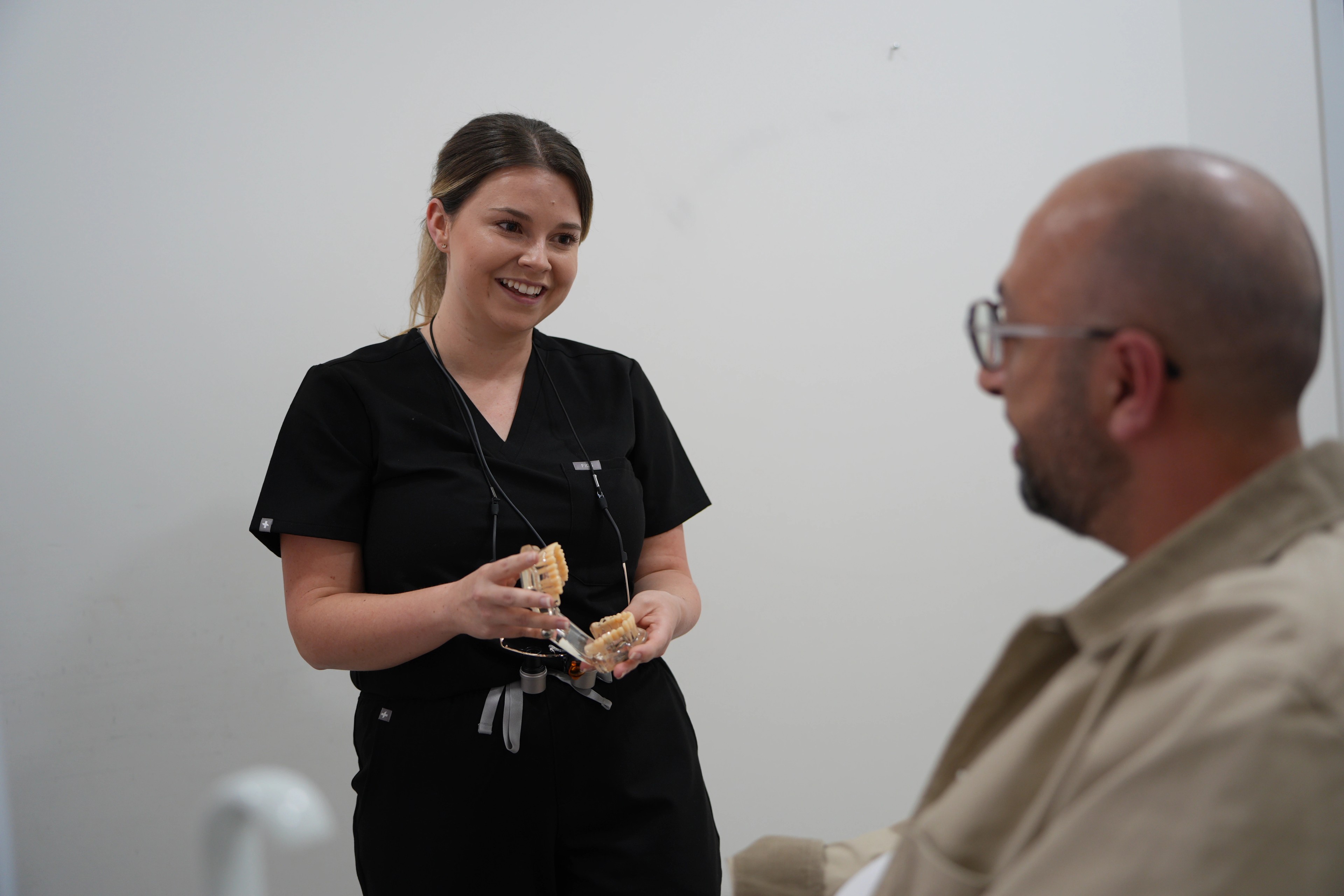
Yes. Our free 10-minute implant and cosmetic consultation is open to all patients. It’s an information session about what you’d like to change and the options in general. It isn’t an examination, so it can’t give you a treatment plan or say which option suits your teeth.
Firm advice comes after your dentist has examined your teeth, gums, bite and any fillings, crowns or veneers, with whatever photos or X-rays are needed. healthdirect suggests asking about benefits, risks and costs before any procedure, and cosmetic work is no different.
When you book, we’ll tell you what the ten minutes can cover, and what needs a full examination instead. An estimate, a staged plan or a clinical recommendation all come after that examination.
Usually, yes. Whitening lightens natural enamel, but not bonding, fillings, crowns or veneers, so doing things in the wrong order can leave brand-new work that no longer matches.
If whitening suits your teeth, it generally comes first, and the bonding or veneers are then matched to the shade you’ll keep. With a take-home POLA kit, that’s about 20 minutes a day for one to two weeks. The order changes with sensitivity, inflamed gums, visible fillings, one dark tooth, or if you’re pregnant or breastfeeding.
Before you spend money on a kit from the chemist, your dentist will check which of your teeth and fillings will actually lighten, and where whitening fits among the other work.
No. Veneers suit some smiles, but plenty of concerns are handled with less. Whitening, bonding, contouring, clear aligners, a new filling, a scale and clean, gum care, or simply keeping an eye on it can all come first, based on what your dentist finds.
What decides it is tooth structure, gum health, bite, position, colour, old restorations and how much change you want. One small chip is a very different conversation from worn edges across six teeth. A colour concern changes too if crowns or fillings show, because they won’t lighten like enamel.
Porcelain veneers mean removing some enamel, which can’t be undone. Your dentist will tell you the least invasive option that would genuinely work, and whether anything needs treating first.
Yes. Digital Smile Design shows possible changes on a photo of your own smile, before you decide whether to go further. It’s handy for comparing colour, shape, spacing, worn edges and the gum line, or seeing how a few small changes look together.
The preview isn’t the treatment plan, though. Your dentist still checks your teeth, gums, bite, existing fillings, crowns or veneers, and any sensitivity, before saying what will work. Whitening, bonding, veneers, aligners and new fillings each behave differently, so the order matters.
At the visit, we’ll discuss which parts of the preview are realistic for you, which could change once your mouth has been examined, and whether a simpler option is worth trying first. Then you can decide.
Say so early, before a detailed plan is drawn up. Your dentist can separate what’s clinically needed from what’s cosmetic, show how the work could be staged, and point out a simpler option if there is one.
Cosmetic fees vary because they rest on the examination, records, materials, the number of teeth, the number of visits and whether anything needs fixing first. healthdirect suggests asking what a procedure costs, what’s included and whether there’s a cheaper alternative before you agree.
Once you have the estimate, look at payment plans separately from the clinical advice; our payment options page sets out each provider’s terms. We’ll tell you what the essential care costs on its own, and how staging would change the total.
Your teeth and gums. Decay, gum disease and sensitivity all get checked before any cosmetic planning starts.
Sensitive teeth change how whitening is done, and fillings and crowns won’t lighten at all. Bonding and veneers rely on a steady bite, healthy gums and enough sound tooth to hold on to. Clear aligners need settled gums before any tooth moves, so a gum problem is treated first.
Your dentist will say whether a finding needs treating first or can simply be watched. That decides which cosmetic options are open to you, and when. We’ll tell you how the findings affect the change that matters most to you.
Yes. Old fillings, crowns, veneers and bonding affect the colour you can reach, the shapes that are possible and the order things are done in. Whitening works on natural enamel only, so porcelain crowns, veneers and tooth-coloured fillings won’t lighten with it.
Your dentist checks where the old work sits, whether it’s still sound, and whether the edges are leaking or stained. Replacing a filling that’s failing is a health decision. Replacing one that’s just the wrong colour is a cosmetic choice, and that one’s entirely up to you.
We’ll check which of your fillings and crowns would stand out after whitening, and tell you whether each one should be watched, repaired or replaced.
Compare them by the problem each one solves, not by which sounds most cosmetic. Whitening deals with colour. Bonding and contouring suit small chips, edges and shape. Veneers are a bigger decision that covers the front of the tooth. Aligners move teeth, which matters for your bite as well as your smile.
Your dentist finds the cause before narrowing it down. Colour, enamel thickness, position, gum health, bite pressure, old fillings, sensitivity and cost all shift the advice. Often the simpler option is enough; sometimes gum or bite work has to come first.
Point to the thing you most want fixed, and your dentist will tell you what each option can change for it.
Yes. Worn, chipped or uneven edges should be checked alongside your bite, because adding material to a tooth under heavy pressure doesn’t fix why it wore down. Your dentist looks at how your teeth meet, whether grinding or clenching is involved, and whether the gum or tooth has changed.
That check decides whether bonding, contouring, veneers, a night guard, aligners or simply watching it makes more sense, and when. If grinding is behind the wear, a night guard is often part of the plan. It’s made from an impression and is usually ready in one to two weeks.
We’ll ask when you first noticed the wear and whether it’s getting worse. Then your dentist will say whether the bite needs attention first, or whether a small repair is reasonable now.
Yes. A smile is gums as well as teeth. Inflamed or bleeding gums, recession, swelling or uneven gum levels all change what’s sensible and how predictable a cosmetic result will be, sometimes more than the teeth do.
Your dentist checks your gums before any talk of whitening, bonding, veneers or aligners. If they’re inflamed or bleeding, the first step is usually a scale and clean with Rachael or Ann, our oral health therapists, plus a few changes at home. Photos and previews come later, once the gums have settled.
We’ll tell you whether your gums need care first, whether your gum line will affect the result, and what needs to be stable before cosmetic work is booked.
It comes down to the option. Composite bonding typically lasts 3 to 10 years. Whitening needs the odd top-up. Veneers, aligner results and new fillings each have their own upkeep, shaped by your bite, grinding, diet and how well you clean.
Your dentist should tell you what can chip, stain, wear or need replacing, and how often to have it checked, not just how it will look. Results vary from person to person, and something hard to look after isn’t always the right choice, especially with heavy bite pressure, gum problems or older dental work.
We’ll explain what looking after your chosen option involves, which habits shorten its life, and what’s likely to need repair or replacement later, so you can check it suits your routine.
Often one tooth can be dealt with on its own: a small chip, an old filling, a dark tooth or an uneven edge. But no tooth sits alone. The teeth beside it, your bite, the gum level and nearby dental work all affect how it looks.
Your dentist looks at how that tooth fits the rest of your mouth before narrowing things down. It might need careful shade matching, a bite check, or a heads-up that a neighbouring crown will make blending harder. A single dark tooth is also checked differently from general staining, sometimes with an X-ray.
We’ll tell you whether this can stay a one-tooth decision, or whether the teeth beside it, your gums and your bite need including first.
Say so at the first visit. Some people want a brighter, noticeable change; others want something that blends with their face, their age and the teeth they already have. Your dentist needs to know which way you lean.
A natural look comes from details: colour, how see-through the edges are, edge shape, tooth proportions, the gum line, how your lips move and the teeth nearby. Existing crowns or fillings affect how subtle the change can be, and your bite and gums limit how far a shape can safely change.
Photos of smiles you like, and ones you don’t, help a lot. We’ll tell you what’s realistic for your mouth, which choices would make it more noticeable, and whether a smaller first step, like whitening alone, is possible.
Yes. A cosmetic consultation is there to explain your options, and nobody expects a decision on the day. Take the time you need to weigh up cost, upkeep, risks and timing, whether something simpler would do, and whether health work comes first.
Your dentist will go over what they found, which options are reasonable, and what a more detailed plan would need. If nothing’s urgent, you can leave it there and come back when you’re ready. A pause is useful when two or three options look possible but ask different things of you.
Before you go, we’ll recap the main findings, the likely next step and any warning signs that mean you should come back sooner. Book again only when it makes sense to you.