What brings it on
Cold drinks, hot tea, something sweet, biting down or lying flat in bed. Notice whether the pain stops within seconds or hangs around for minutes afterwards.

Toothache has a way of taking over the whole day. Ring us on (08) 9407 7888 when we open at 8: we offer same-day assessment for dental pain. Until then, a pharmacist can tell you which pain relief suits you. When you come in, we’ll find the cause and settle the pain first.
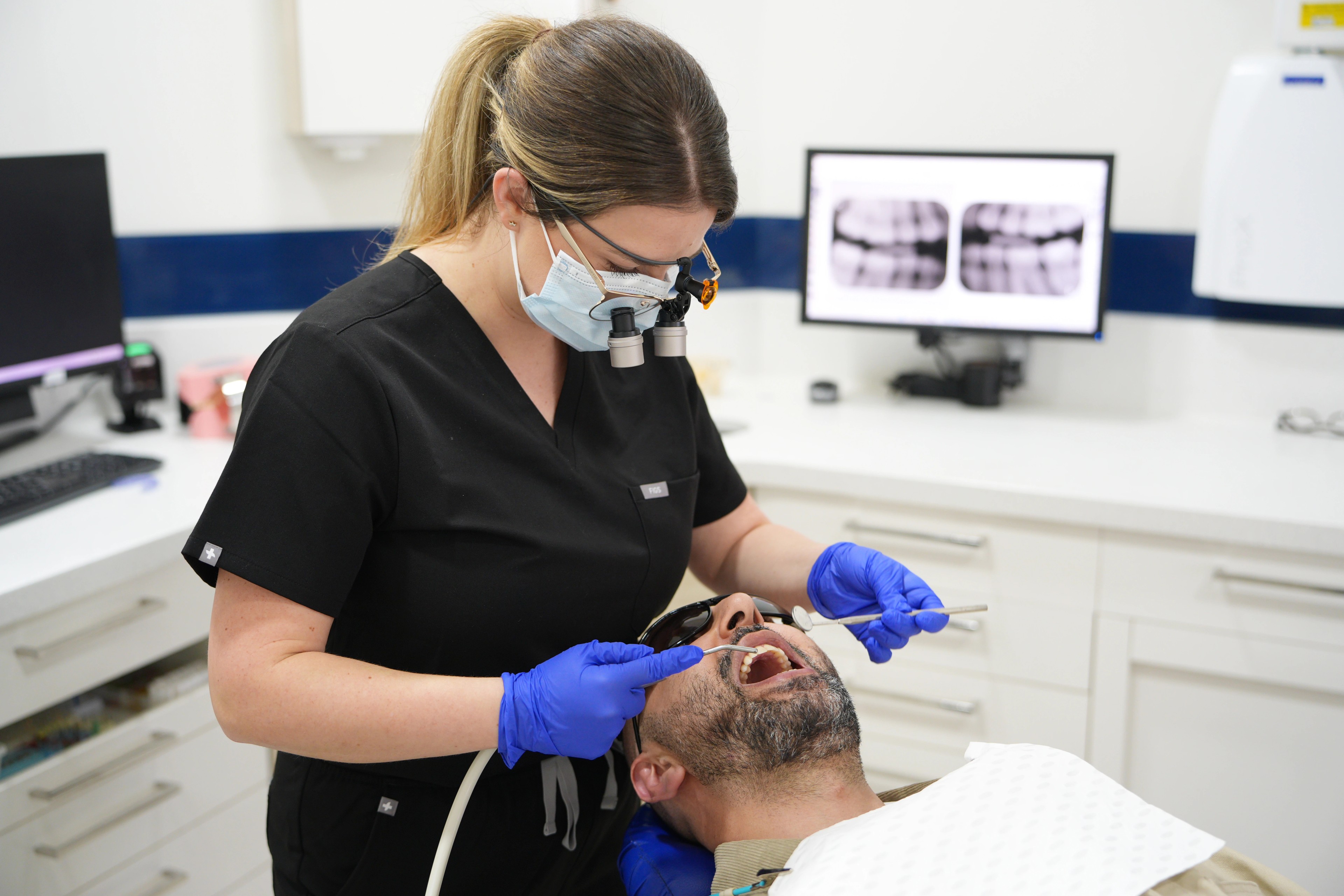
The way a tooth hurts points your dentist towards the cause. Before you ring, take a minute to notice three things.
Cold drinks, hot tea, something sweet, biting down or lying flat in bed. Notice whether the pain stops within seconds or hangs around for minutes afterwards.
A swollen gum or cheek, a bad taste or a fever means ring us today. Swelling spreading towards your eye or down your neck, or any trouble breathing or swallowing, means 000 first.
A tooth that goes quiet after a bad night hasn’t healed. The cause can carry on underneath, so it’s still worth a look, even on a good day.
A rough timeline is more useful than a pain score. When did it start, what sets it off, and has anything else changed?
Say whether it’s a quick zing that’s gone in seconds, or an ache that keeps going after the drink has gone. Pain that lingers often means the nerve inside is involved.
Toothache is a symptom, so the treatment follows whatever is behind it. Your dentist matches what you’ve described with what they see and what the X-ray shows.
If the damage is small and plenty of healthy tooth is left, a tooth-coloured filling is often all it needs. Your dentist checks how deep it goes and how your bite lands first.
You’ll see Dr Michael Shams, Dr Charles Tricoli or Dr Maddi Sheppard. Whoever it is will explain each step before doing it, and numb the tooth first if anything is likely to be uncomfortable.
When it started, what sets it off, whether it wakes you, any swelling or fever, and what you’ve taken for it so far.
Pain can travel, so your dentist checks the teeth next door, your gums, jaw and bite, not just the tooth that hurts.
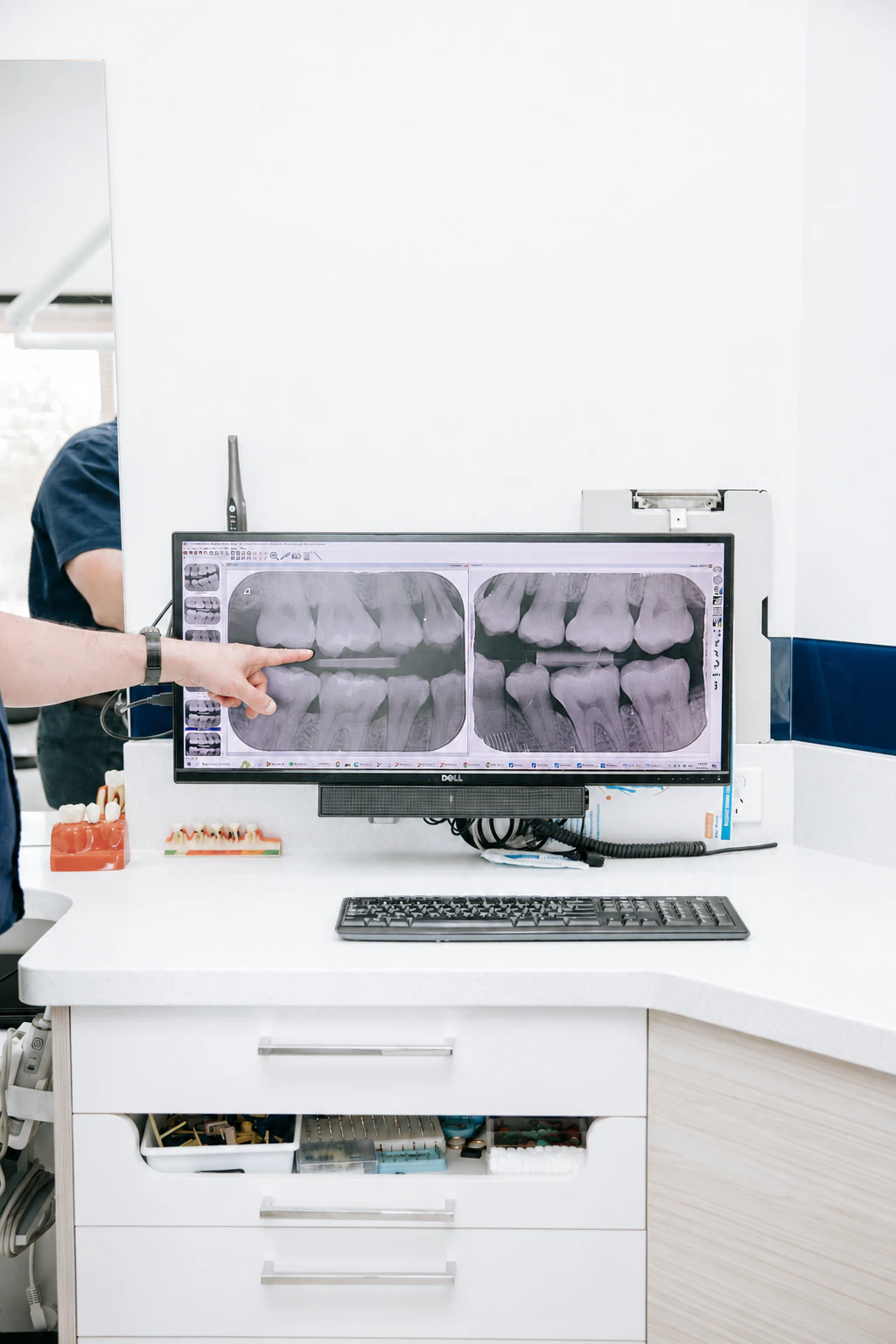
A digital X-ray can show decay under an old filling, the roots and bone, or a crack you can’t see. It uses less radiation than older film X-rays.
You’ll hear what’s causing the pain, what we can do today to ease it, and what the tooth needs after that.
Relief at home makes the wait easier, but it won’t fix the tooth. Watch for swelling, a fever, a bad taste or the pain coming back stronger, because those mean we need to see you sooner.
Chew on the other side, and skip very hot, icy, sweet or hard food if it sets the pain off. A pharmacist can tell you which pain relief suits you. Follow the packet, and jot down what you took and when.
A gentle warm salt-water rinse can soothe a sore gum: half a teaspoon of salt in a glass of warm water. If your cheek is swollen, hold a cold pack wrapped in a tea towel against it. Don’t put clove, garlic or peppermint products on the tooth, and don’t try to patch it yourself.
Call 000 or go to the nearest emergency department if you’re struggling to breathe, speak or swallow, if swelling is spreading towards your eye or neck, or if you faint. Without those signs, ring us on (08) 9407 7888.
Tablets take the edge off, but they can’t show whether the tooth needs a filling, root canal treatment or gum care. Keep your appointment even if the pain eases, and ring if anything changes.
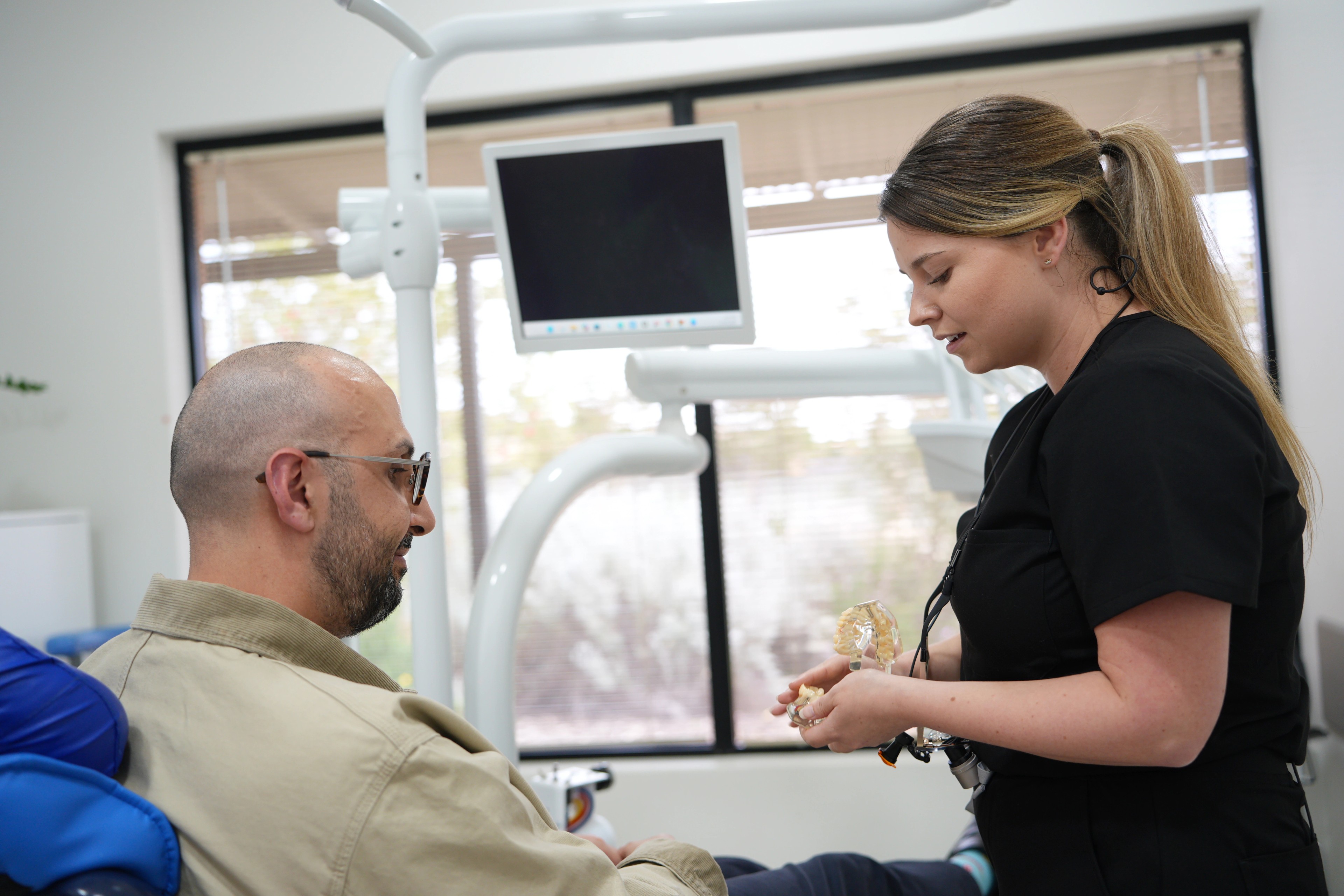
If the pain is changing, there’s swelling, or you can’t tell how serious it is, ring rather than guess. A steady, dull ache can be booked online. Ringing early in the day gives you the most choice of times.
Call (08) 9407 7888Book onlineRing (08) 9407 7888, or use Book an Appointment for a steady ache. Mention when it started, what sets it off, and whether there’s swelling, a fever or a recent knock.
There’s the visit and any X-ray, then the treatment the cause needs. Your dentist gives you the likely fees before starting. We’re a preferred provider for Bupa, HCF and nib, and we accept HBF and other private health funds.
We’re open 8am–6pm Monday to Thursday, 8am–5pm Friday and 8am–1pm Saturday. Outside those hours, call (08) 9407 7888 for guidance, or healthdirect on 1800 022 222 at any hour.
A list of your medicines, and any piece of tooth or filling that’s come away. If it’s your first visit, there’s a short form about your health, your teeth and your health fund. Book online for a steady ache.
Once we know what’s behind the pain, one of these pages will probably cover what happens next.


A sore tooth is reason enough to ring, even if you can’t say which tooth it is. Here are the questions we’re asked most, with straight answers.
Most often decay, a cracked tooth, a worn or broken filling, an inflamed nerve, gum disease, an infection or your bite. Several of these feel alike, so the trigger alone can’t tell us which it is. That’s why we look, and often take an X-ray, before suggesting treatment.
Ring if the pain is getting worse, waking you or changing quickly, or if there’s swelling, a fever, a bad taste or a recent knock. Ring too if you simply can’t tell how urgent it is. A mild ache that’s been steady for a while is fine to book online.
Usually, if it’s a steady ache with no swelling and you ring when we open at 8. Swelling, a fever or trouble opening your mouth is different: ring (08) 9407 7888 for guidance straight away, or call 000 if breathing or swallowing is affected.
Rinse gently with warm salt water, about half a teaspoon of salt in a glass, and hold a wrapped cold pack on your cheek if it’s swollen. Ask a pharmacist which pain relief suits you and follow the packet, mentioning if you’re pregnant, have allergies, take other medicines, or it’s for a child. Don’t put clove, garlic or peppermint products on the tooth or gum. Ring us if the pain is getting worse, waking you, or arrives with swelling or a fever.
It can. Tablets dull the pain without touching the cause, so a quieter tooth isn’t necessarily a safer one. Keep an eye out for swelling, a fever or a bad taste, and keep your appointment. Bring a note of what you took and when.
Often, but not every time. If the cause is plain from looking, we won’t take one. When we do, our digital X-rays use less radiation than older film. Mention if you’re pregnant or have had X-rays elsewhere recently.
No. Even severe pain can come from a deep filling, a crack, the gum or your bite. Root canal treatment or taking the tooth out comes up only when that’s what the examination shows, and saving the tooth is the first thing we look at.
Call 000 or go to the nearest emergency department if you’re struggling to breathe, speak or swallow, if swelling is spreading fast or towards your eye or neck, if you faint, or if you feel seriously unwell. Swelling without those signs still needs us soon, so ring and say where it is and how quickly it’s grown.
It comes down to what we find. There’s the examination and any X-ray, then the treatment the cause needs, and a filling costs far less than root canal treatment. Your dentist gives you the likely fees before starting anything. Bring your fund card too. Once we know what the tooth needs, and before we start on it, we’ll find out whether your claim can go through during the visit.