The one detail that bugs you
Which tooth or edge, when you first noticed it, and whether it shows in photos, catches when you eat, or only shows at certain angles.

You run your tongue over that chipped front edge twenty times a day, and it’s the first thing you see in the mirror. One thing is plenty to book a visit for. A chip, one darker tooth, a small gap or an old filling that shows when you laugh can often be sorted with a small fix, once we’ve checked what’s causing it.
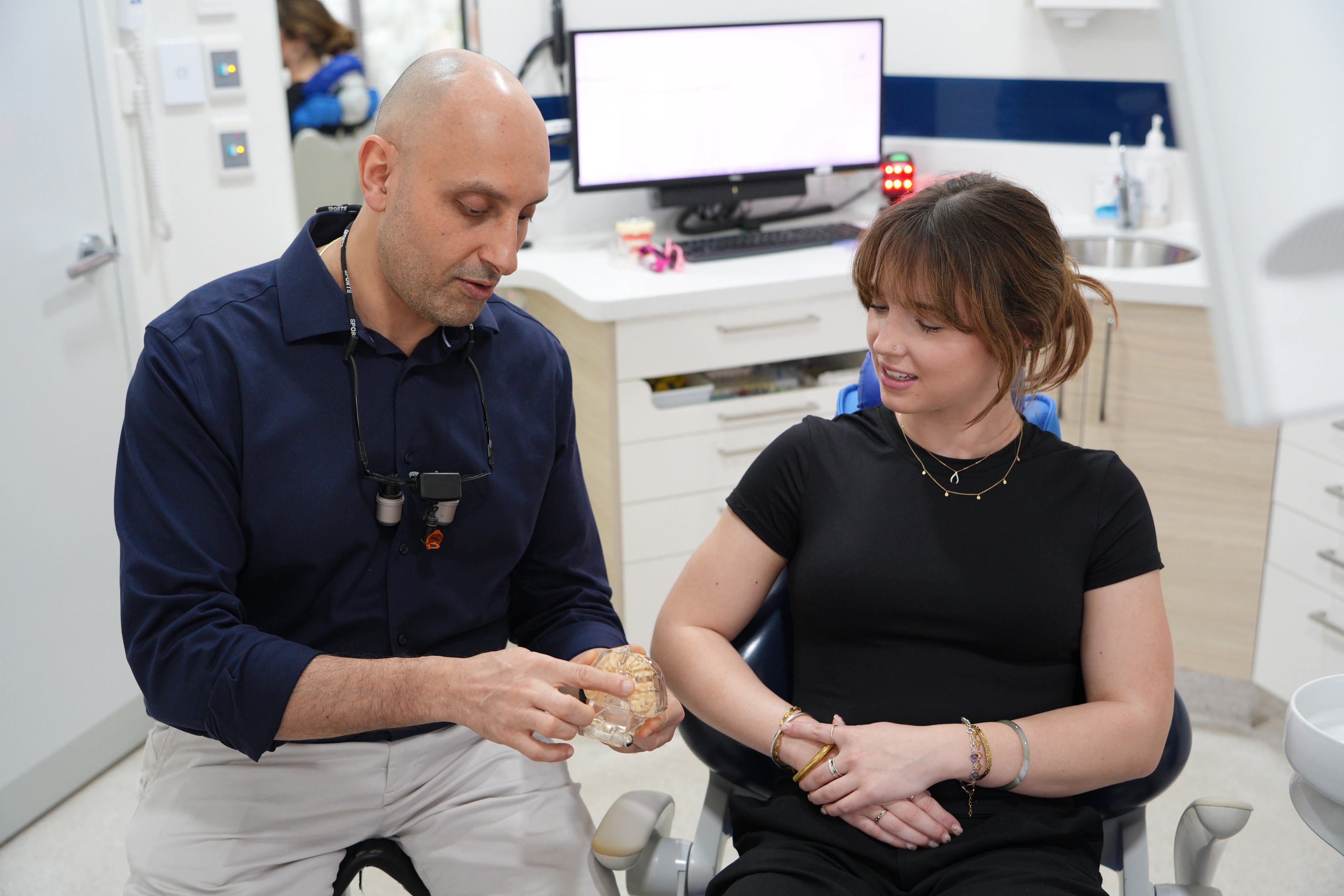
A tiny chip can be the end of a crack, and a gap can come from the bite. So we check the tooth and its neighbours before suggesting a fix.
Which tooth or edge, when you first noticed it, and whether it shows in photos, catches when you eat, or only shows at certain angles.
Decay, cracks, an inflamed gum, sensitivity or an old filling can each change a tooth’s colour, shape or strength.
An edge that keeps chipping is often taking too much bite pressure. The teeth beside it and the gum line also decide how well a repair will blend.
A dark tooth, surface stain, an old filling and a small gap can look like one problem. Up close they need four different fixes.
Find the one closest to yours, and the least involved option that could deal with it.

One chip doesn’t need a ten-tooth plan. Once we know the cause, you can weigh up what the small fix changes, how much tooth it uses and what upkeep it needs. Bonding usually takes one visit and typically lasts 3 to 10 years.
Matching the shade to the teeth beside it is a big part of fixing one tooth, and a photo helps you judge it. If the tooth also has decay, a gum problem, a bite issue or a broken filling, that’s fixed before any cosmetic finish. Individual results vary.
We’ll tell you how long the fix should last, and how to look after it.

That’s genuinely all you need to bring. The visit sorts out whether anything needs doing now, or whether it’s fine to leave for the moment.
Or say what you see in the mirror, in photos or while eating, and mention any pain, sensitivity, bleeding or recent change.
We look at the tooth, the gum, your bite and any fillings nearby, with an X-ray if something can’t be seen directly.
What whitening, bonding, contouring, aligners or a repair could and couldn’t do for this one tooth.
You’ll know the next appointment, the likely fee and any upkeep before you agree. If nothing’s urgent, leaving it alone is an answer too.
Usually not. Before you agree to anything, you should know what will change, what will stay the same, and whether anything bigger is genuinely needed.
Book about one toothNot sure how to describe it? Call (08) 9407 7888 and say it however it comes out, like “my front tooth has a chip”. We’ll book a check-up, a cosmetic appointment, or whichever visit fits.
If colour, tooth position, several changes at once, or nerves about booking are the real issue, one of these fits better.
You might also want to read
You might also want to read
You might also want to read
You might also want to read
Single-tooth fixes, chips, whitening around fillings and bite problems, so a small change stays small.
Yes, most of the time. A chip, an old filling, an uneven edge or one darker tooth is usually treated on its own. We still check the teeth either side, the gum line, the shade and your bite, because they decide whether the fixed tooth blends in.
Coming in about one tooth won’t turn into a makeover conversation unless you want it to. We’ll explain any limits on shade or shape, and what happens if you whiten the other teeth later. If the tooth hurts, is cracked or is sensitive, that’s treated before anything cosmetic.
It comes down to why it chipped and how much is missing. A tiny rough edge can often just be smoothed. A bigger chip is usually rebuilt with tooth-coloured bonding in one visit, once we’ve checked the enamel, your bite and whether it’s sensitive. A crack needs a different plan.
We’ll ask when it happened, whether the edge catches your tongue, whether cold hurts, and whether you grind or clench at night. Afterwards, you’ll know what the repair won’t fix, how to look after it, and which signs mean coming back sooner.
No. A filling or crown keeps the shade it was made in while the natural teeth around it get lighter, so after whitening it can stand out more than before. And one dark tooth needs its own check, not a whole-smile kit.
Before you buy a kit or book whitening, point out any fillings or crowns that show, and ask how they affect the order. Usually it’s whiten first, then match the filling to the new shade. The Australian Dental Association advises talking to a dental professional before whitening, especially if you have restorations or sensitivity.
Not always. If you’re unsure whether it’s decay, wear, a gum problem, an old filling or just looks, a check-up (usually 30 to 60 minutes) answers that first. If the area’s healthy and it’s purely about appearance, call us and we’ll book the right kind of visit.
When you ring, say which tooth it is, whether it hurts, whether it’s new, and what bothers you about it. A description over the phone is enough to book. We’ll tell you what the first appointment will answer, and whether photos, X-rays or a longer cosmetic visit might follow.
Then fixing the edge alone usually isn’t enough. A worn edge, a chip that keeps coming back, or a tooth that looks shorter often comes from how your teeth meet. We check for heavy pressure, clenching, grinding, teeth that have moved, and wear patterns before adding any material.
We’ll show you what your bite reveals, and whether the tooth needs protecting, perhaps with a night guard. Clear aligners or a crown can be more useful than a cosmetic repair here. A sore or tight jaw when you wake up is worth telling us about.
Your dentist names the problem first, then says whether a smaller option would meet your goal. They’ll explain what it won’t fix, and which findings would make a bigger plan worth considering. A photo, a preview or a brand name is no substitute for the examination.
Keep health and looks in separate columns. If a tooth needs a filling, gum care or a repair, sort that out and see how it looks afterwards; sometimes that’s the end of it. Before any cosmetic work, you’ll have the fee, the upkeep and the alternatives, so you can decide without feeling hurried.