Gums first
We look at your gums and teeth, and tell you what we see, before a single instrument goes in.

That hard, yellowish line behind your bottom front teeth that no brush will budge? That’s tartar, and it’s what a scale and clean is for. We check your teeth and gums first, then clean. It feels like a buzzing, a cool spray of water and a fair bit of rinsing, and if your gums are tender, we can use a numbing gel.
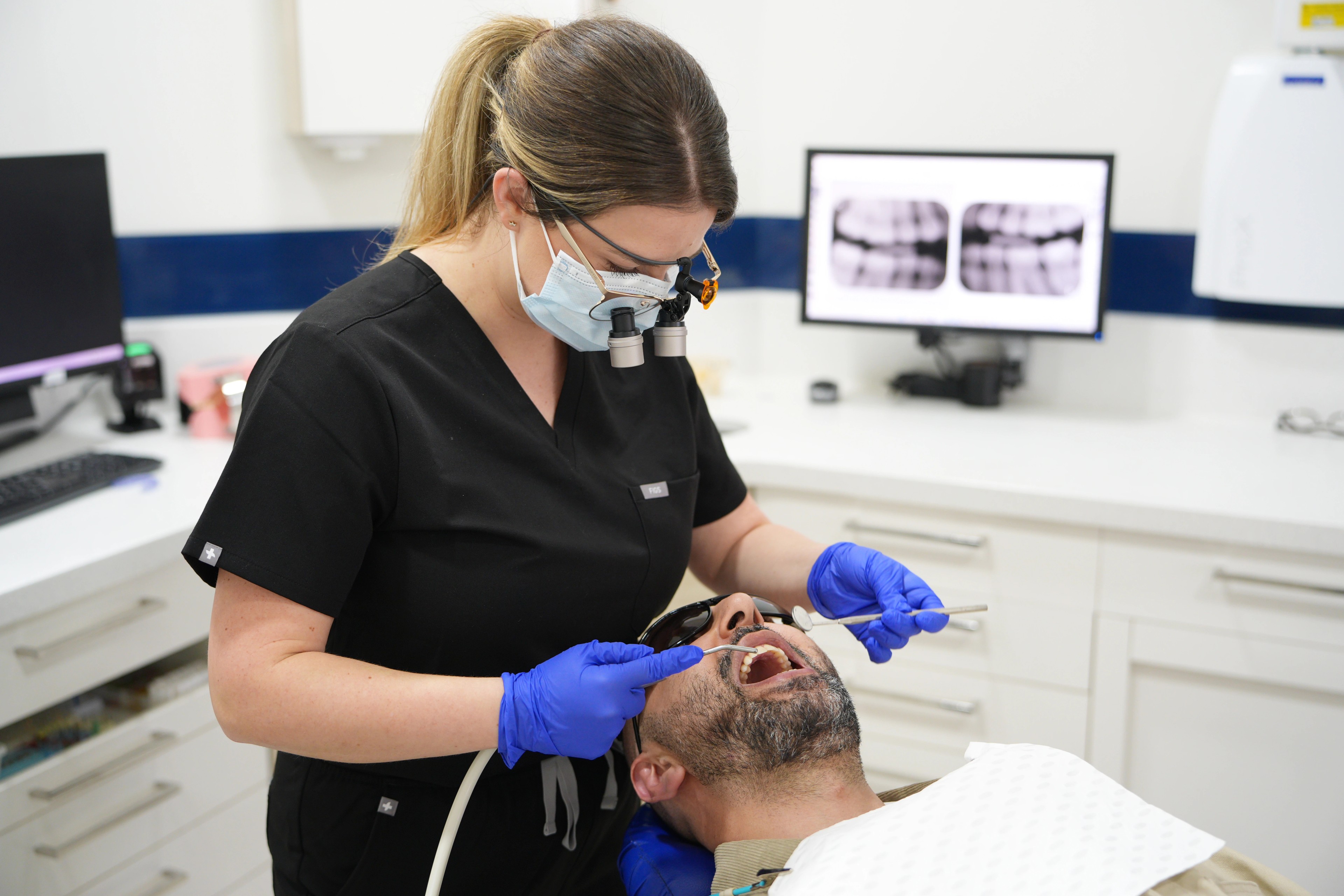
We look at your gums and teeth, and tell you what we see, before a single instrument goes in.
That rough ridge near the gumline is hardened plaque. Your toothbrush can’t shift it; our instruments can.
Bleeding, puffiness or gums pulling back tell us whether an ordinary clean will do, or your gums need more.
Rough patches, bleeding and tender spots usually come from plaque, tartar or inflamed gums. Mention what you’ve noticed when you book, so we know where to look first.
Years, even. Give us a rough idea, and we’ll check what’s changed and where tartar has built up before we start.
Your teeth will feel smooth, but that’s not the whole point. Before you go, you should know how your gums looked, where tartar keeps gathering and what to do differently at home.
Scaling doesn’t start until we’ve looked. That first check shows whether it’s routine upkeep, inflamed gums or something that needs a closer look.
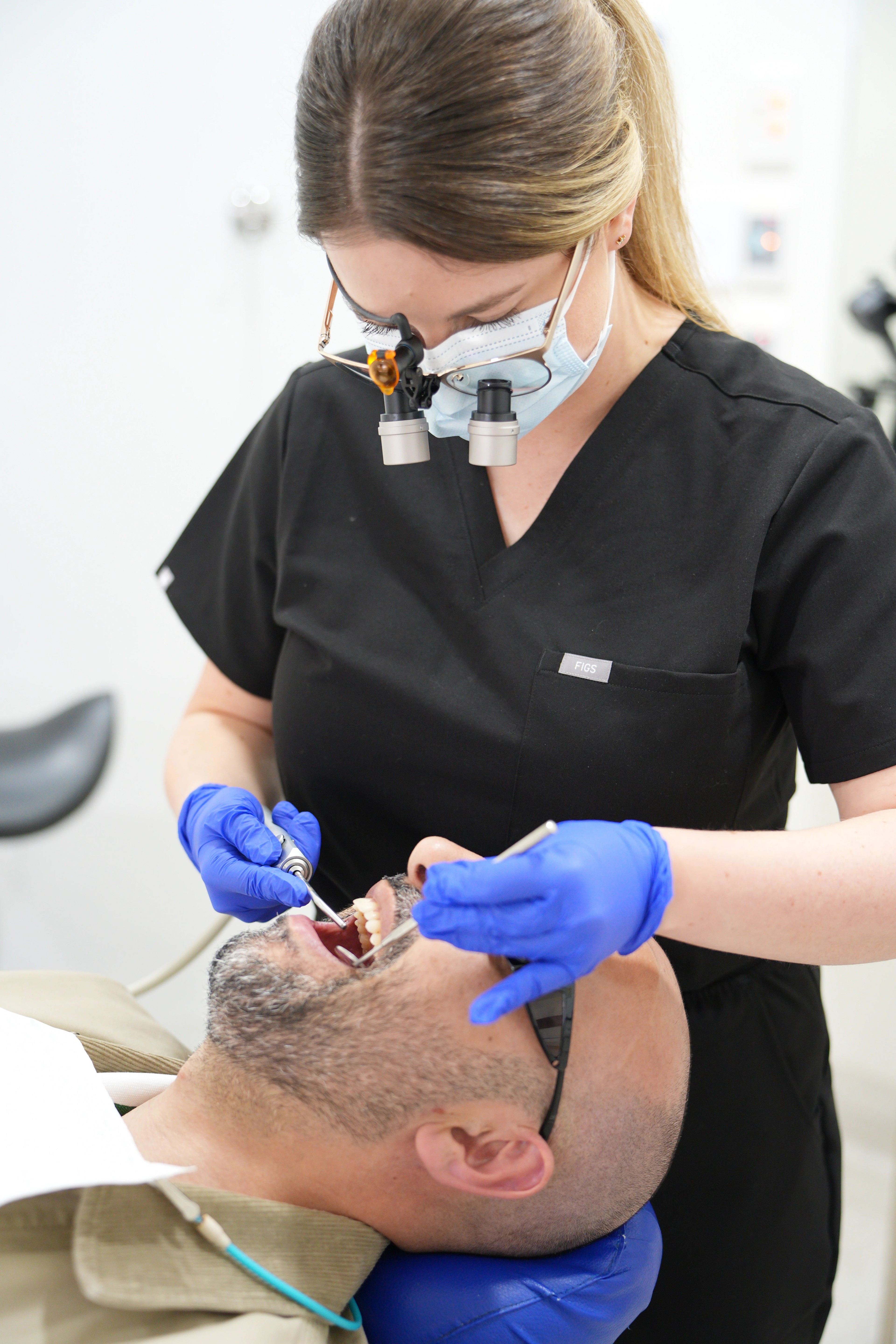
Your dentist checks your teeth, gums, bite and the soft tissues of your mouth, noting the spots that bleed, feel tender or gather build-up fast.
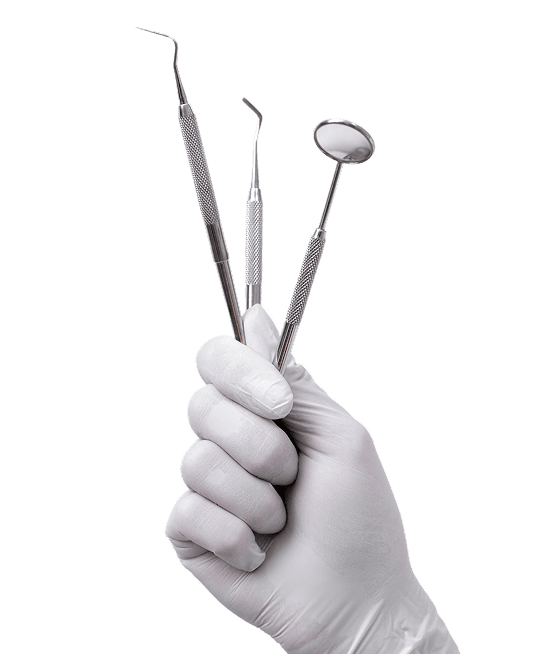
An ultrasonic scaler buzzes and sprays cool water to loosen tartar, then hand instruments clear what’s left along the gumline. If tartar sits deep under the gums, we stop and explain what that means.
Polishing smooths the surfaces and lifts some surface stain. It won’t change the natural shade of your teeth the way whitening does.
Before you go, we’ll show you where the build-up was and which tool fits that gap: floss, an interdental brush or a different angle with the brush.
The clean takes the build-up off. What you do at home keeps it off. Give extra time to the spots we pointed out, even the ones that bled.
Crowded teeth, a bridge, an implant, receding gums or a dry mouth can each call for a different brush or floss. We’ll show you how to use the right one, in your own mouth.
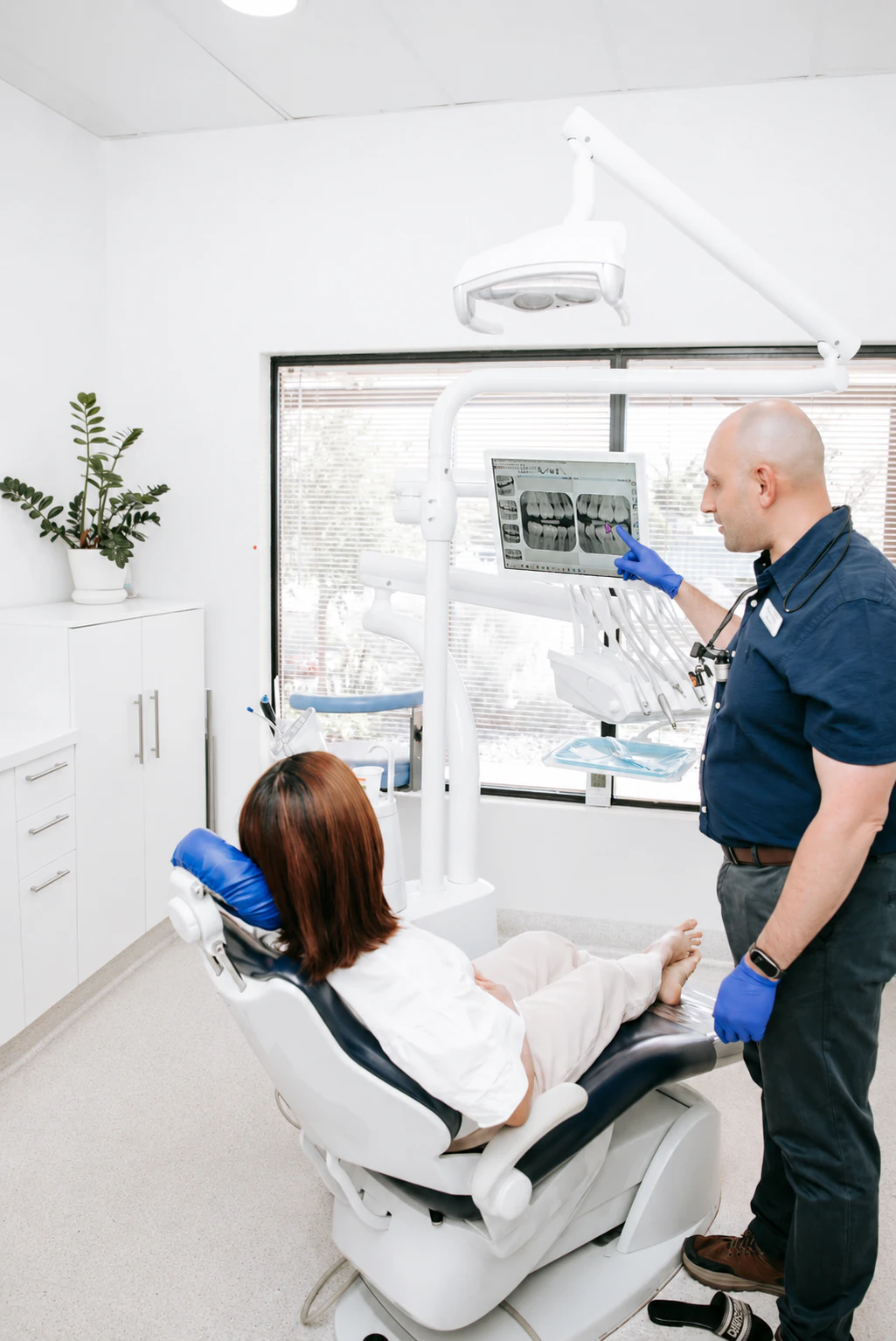
Ask for the fee and how long to allow when you book. Fund rebates, item numbers and CDBS cover depend on the appointment and your eligibility, and your dentist confirms the details once they’ve looked.
Book an AppointmentYou can claim on your private health fund. Bring your fund card, and before we start we’ll let you know whether the claim can be made at the visit. For eligible children, CDBS-covered services are bulk billed within their available benefit limit.
Most of the time, the clean is all you need. Now and then it turns up a tooth, a gum or a child’s concern that needs its own appointment.


From whether it hurts to what it costs. If your question isn’t here, bring it along and ask your dentist in the chair.
We check your mouth first, then clean. Your dentist looks at your gums, the plaque and tartar, any bleeding and any sore spots. Then an ultrasonic scaler loosens the build-up, hand instruments remove what’s left, and a polish smooths the surfaces.
If your teeth or gums are sensitive, say so before we start, and we can use numbing gel on tender gums. If the gums look inflamed, or the tartar sits deeper than expected, your dentist explains why the plan needs to change.
Gums can feel a little tender afterwards. Before you leave, ask where the build-up was heaviest and which one habit would make the biggest difference.
Ring us and we’ll match you to the right appointment. If you’re new to us, or it’s been a while, say so. Before any cleaning, your dentist wants a proper look for decay, gum changes, cracks and signs of infection, and we’ll book enough time for that.
If you already come regularly, ask whether your next visit is due as a check-up, a clean or a gum review. It depends on what was found last time and anything you’ve noticed since.
When you book, mention bleeding, swelling, pain, a loose or broken tooth, or food getting stuck, so we set aside the right appointment time.
Your brushing still does the main job. But plaque that gets missed hardens into tartar, and once it has, no toothbrush will shift it. A professional clean takes that off.
Where the tartar sits tells your dentist a lot: a corner you miss every day, floss that isn’t reaching between crowded teeth, or a bridge, implant or retainer that needs a different tool.
Bring the brush, floss or interdental brushes you use now. We’ll check they suit your mouth and show you how to get the most out of them at home.
The right interval comes from your mouth, not a set rule. Most adults have a check-up every 6–12 months, and your dentist adjusts that for how fast tartar comes back, how your gums respond, your decay risk, your medical history and any smoking.
Some people stay on routine visits for years. Others need to come more often because their gums bleed or tartar builds quickly. Our oral-hygiene maintenance programme sends an SMS or email reminder when you’re due.
At the end of the visit, ask when to come back and which signs should bring you in sooner.
Often, yes, when plaque, tartar or gum inflammation is behind it. Once the build-up is gone, the gums have a chance to settle. Bleeding still needs checking rather than guessing, because medicines, pregnancy, some health conditions and brushing technique can all play a part.
We check where the gums bleed, whether the pockets around the teeth are deeper than they should be, and whether it’s one spot or the whole mouth. For many people, a clean and a change at home is enough; others need periodontal care and closer monitoring.
Ring us sooner if the bleeding is heavy or keeps returning, or comes with swelling, pain, a bad taste or a loose tooth. Swelling that affects breathing or swallowing needs urgent medical care: call 000.
No. A clean removes plaque, tartar and some surface staining. Whitening is its own cosmetic treatment, which lightens the shade of the tooth once your dentist has checked it will work for you.
If the dullness is mostly surface stain, a clean can leave your teeth looking brighter. If the colour sits inside the tooth, cleaning won’t change it. Fillings, crowns and veneers don’t respond to whitening the way natural teeth do, either.
If colour is what bothers you most, mention it at the start, and ask your dentist whether cleaning, whitening or something else fits.
Yes, paced to your child’s age, nerves and teeth. For a little one, your dentist often keeps it to a gentle look, help with brushing and time getting used to the chair. For an older child with visible build-up or bleeding, it’s a proper clean.
If your child is eligible for CDBS, we bulk bill the covered services up to their remaining benefit. Bring their Medicare card, and ask what’s covered before anything goes ahead.
When you book, give your child’s age and mention bleeding, pain, visible build-up, a knock or trouble brushing.
Most people feel buzzing, some scraping and a lot of rinsing, rather than pain. Inflamed gums, heavy tartar, receding gums or a long gap since the last clean can make some spots sore, and we can use numbing gel on sensitive gums.
You can ask us to pause at any point. If one spot feels sharper than the rest, your dentist checks whether it’s an inflamed gum, an exposed root, decay or a crack.
If nerves are part of it, mention that when you book. We’ll slow down and explain each step before we do it.
Heavy tartar doesn’t mean you’ve done anything wrong, but it does change what we check. Your dentist looks at gum measurements, bleeding, tenderness and tooth support before deciding whether it’s still an ordinary clean.
For some people, it’s a clean plus a better technique at home. For others, the next step is periodontal care, shorter gaps between cleans, or cleaning in stages over more than one visit.
Ask whether the build-up was above or below the gumline. The answer explains why the plan has changed.
X-rays are not needed for every clean. Your dentist takes them when they need to see what a look can’t show, like decay between teeth, changes under old fillings or crowns, or the bone holding the teeth.
Your dentist will tell you what each one is for. If an extra image is suggested, ask whether it changes the cost before you agree.
Mention pregnancy, recent X-rays from another clinic or any medical concern at the start of the visit.
Usually, if your policy includes general dental cover. Private health fund claims are welcome here, and how much comes back depends on your level of cover, any waiting periods and how much of your annual limit is left.
Bupa Members First, HCF and nib First Choice all list us as a preferred provider, and we accept HBF as well. Your fund can tell you roughly what it pays towards a clean before you come in.
Bring your fund card on the day. Before the clean starts, our team will check whether the claim can go through at the visit, and your dentist will tell you before adding anything that changes the cost.
Most people go straight back to normal brushing and cleaning between the teeth. Pay extra attention to the spots that bled or gathered tartar, and follow any different advice if fluoride was applied or your gums need a follow-up.
A little tenderness is normal. Ongoing pain, swelling, heavy bleeding, a bad taste or a tooth that feels loose should be checked by your dentist, so ring us and describe what you’re feeling.
Before you leave, confirm when your next clean is due, and the one product or technique to focus on first.
Some of it. A clean lifts surface staining, especially stain stuck to plaque or tartar. The colour of the tooth itself stays the same.
Your dentist checks whether the colour is surface stain, tartar, the enamel itself, an old filling, a crown, a veneer or one darker tooth. That matters, because dental work doesn’t respond to whitening the way natural teeth do.
If stain is what bothers you, mention it. Ask whether a clean will help, and whether whitening is worth a separate conversation.
Have it checked before assuming a routine clean will do. Gum disease, bite pressure, a knock, receding gums, tartar and the bone around the teeth can all change how firm a tooth feels.
Your dentist checks gum measurements, bleeding, how much each tooth moves and X-rays, then decides whether it’s routine upkeep or gum care. Scaling is usually still part of it, with closer follow-up.
Ring us and describe the looseness, bleeding, swelling or sensitivity. Ask whether your gums need a periodontal check, and which signs should bring you back sooner.
Yes, though the tools and the advice change. Braces, implants, bridges, retainers and crowded teeth each trap plaque in their own way.
Your dentist checks the appliance or restoration, the gum around it and whether build-up is hiding somewhere hard to reach. Inflammation around implants and braces is harder to settle if it goes unnoticed, so these areas get extra attention.
Bring any removable retainer or appliance with you. Ask which brush, floss or interdental tool suits your mouth, and how often the area should be checked.