


How many, and where
A single front tooth is mostly about looks and the way you say some words. Several back teeth are mostly about chewing. We look at the space and the teeth either side.

The gap’s been there so long that food catching in it just feels normal now. Whether it’s a back tooth that came out years ago or a front one that went more recently, it’s worth a look. We’ll check the space and the teeth around it, then set out what could fill it and what each choice involves.
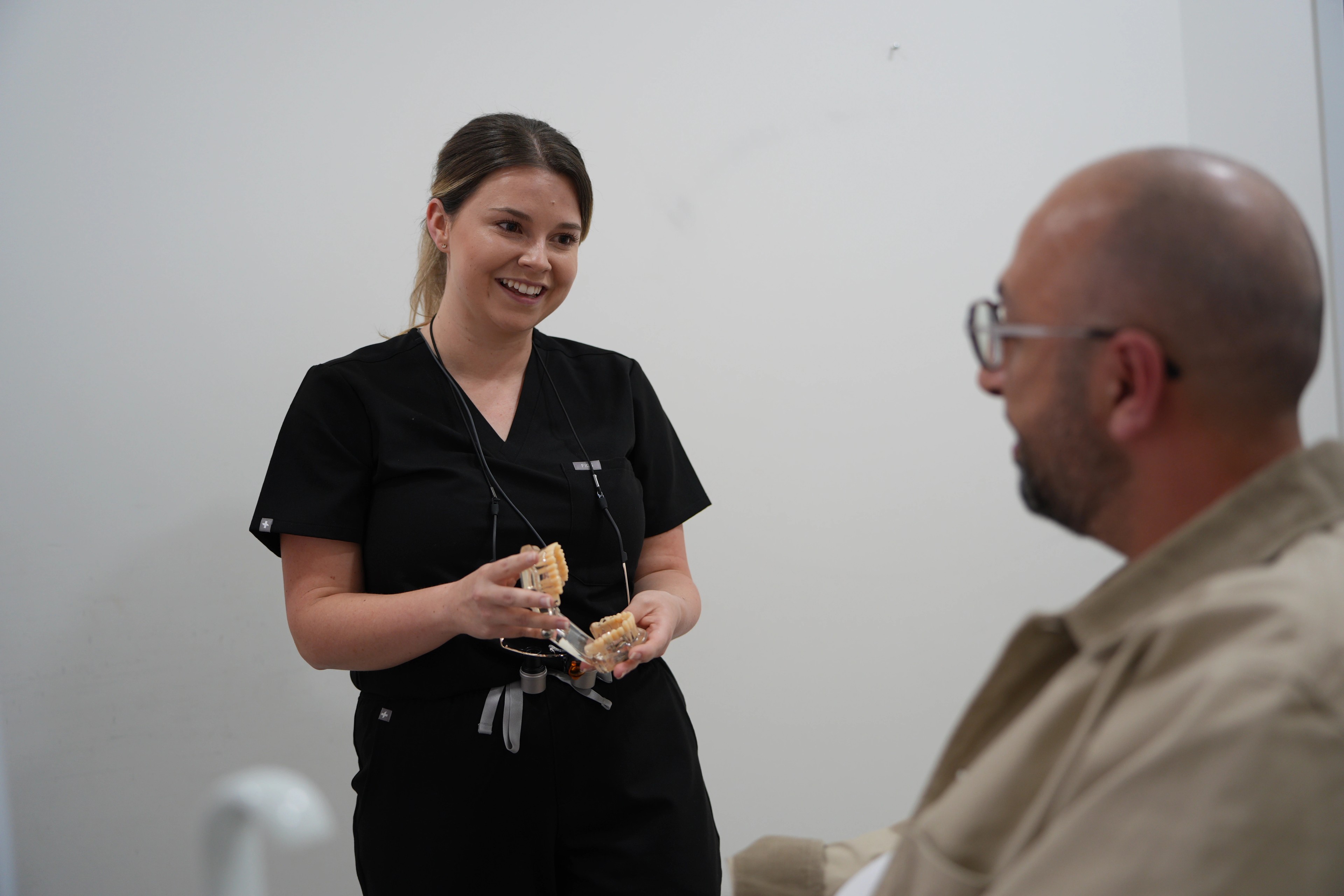
It changes what we look for. Teeth beside a gap can drift into it, the tooth opposite can drop, and the gum and bone underneath slowly change. A gap from last month and one from ten years ago need different conversations.
A single front tooth is mostly about looks and the way you say some words. Several back teeth are mostly about chewing. We look at the space and the teeth either side.
An implant needs enough bone to sit in. A bridge needs strong teeth either side to hold it. Any gum disease gets treated first.
Which side you chew on, words that whistle, food that keeps catching. Your everyday life tells us what matters most.
We check your teeth, gums, jaw, bite and the soft tissues. If an implant is on the table, an X-ray shows the bone we can’t see by looking.
Each one works differently. An implant goes into the bone and needs surgery. A bridge is held by the teeth beside the gap. A denture clips in and comes out for cleaning. Pick whichever sounds most like you.

The teeth beside the space, your gums, the way you bite and the bone underneath all decide what a replacement can do. An X-ray shows the bone, which matters most if you’re weighing up an implant.
An implant means surgery, then a crown once it has fused, usually 3–6 months later. A bridge or denture asks less of you up front, and is more about support, fit and cleaning.
Any surgical or invasive procedure carries risks. Before proceeding, you should seek a second opinion from an appropriately qualified health practitioner.

Plan on 30 to 60 minutes, most of it talking and looking. You’ll go home knowing your choices, and nobody will ask you to pick one before you leave.
Chewing, speech, how it looks, how long the tooth’s been gone, and whether the space has started to close.
We examine the teeth either side, your gums, jaw and bite, and take an X-ray if we need to see the bone.
How an implant, bridge and denture would compare in your mouth for support, upkeep, number of visits and likely cost.
If you want to go ahead, we book the stages and give you the cost before anything starts.
That comes down to the choice. An implant takes months from surgery to crown. A denture is made in a lab over several weeks. We’ll mark what happens now, what comes later and what’s optional, so you can see where the money goes.
Book a missing-teeth appointmentWe’ll price the examination, the preparation and the replacement separately, so you can compare each choice fairly.
Each of these goes deeper into one replacement: how it’s made, how long it takes, and what looking after it involves.
You might also want to read
You might also want to read
Short, plain answers on gaps, implants, bridges and dentures.
Yes. An implant replaces one tooth on its own and leaves the neighbours alone. A bridge is held by the teeth either side, which are shaped to support it. Which suits you comes down to the space, your gums, the bone and your bite, so we check those first.
With an implant, we’ll go through the surgery, the healing time and the risks. With a bridge, we’ll show you which teeth would carry it and how you’d clean underneath. Then you can weigh both against what matters to you: chewing, looks, upkeep and budget.
Nothing has to happen this week, but sooner is usually easier. Teeth beside a gap can tip into it, the tooth above can drop down, and the bone underneath can shrink over time, which narrows the choices later.
If an adult tooth has just been knocked out, ring (08) 9407 7888 straight away, and the same goes for pain, swelling or bleeding. Otherwise, book a check when it suits you. You won’t be asked to decide on the day.
No. A partial denture fills several gaps and clips around the teeth you still have. It can be acrylic or have a thin metal frame. A full denture replaces a whole arch. The design depends on where the gaps are, what can hold it, your gums and your bite.
We’ll go through how a removable option would change cleaning, eating and speech for you, and how often it would need adjusting. If a bridge, implant or a mix belongs in the comparison, we’ll set those beside it.
There are two kinds. The free 10-minute implant and cosmetic consultation is an information session for any patient, with no examination. A full implant consultation includes an examination, your medical history and X-rays of the bone, so the surgery, crown and timing can be planned. Bring a list of any medicines you take.
Neither one commits you to surgery. After the full consultation you’ll understand the risks, how an implant compares with a bridge or denture for you, and the cost before anything is booked.
Yes, and with more than one gap it’s often the sensible way. Once any groundwork is done, we usually start with the gap that gets in your way most, and leave the rest for later.
Staging spreads the cost too, so you can match the order to your budget instead of treating every gap as one big decision.
Compare what each quote includes, not just the total. An implant plan covers the examination, X-rays, surgery and the crown. A bridge or denture has its own preparation, lab work, fitting and adjustments. The lowest first number rarely tells the whole story, and we’ll confirm your costs before treatment starts.
We’ll mark which steps are essential and whether the work can be staged. We’re a preferred provider for Bupa, HCF and nib and accept HBF claims, and what you get back depends on your policy. Zip, Fund My Dental and our in-house plans are on our payment options page, with each provider’s terms.


