Dr Michael Shams has looked after Mindarie families here since 2011, from first teeth to dentures.
General dentistry in Mindarie
General Dentistry in Mindarie
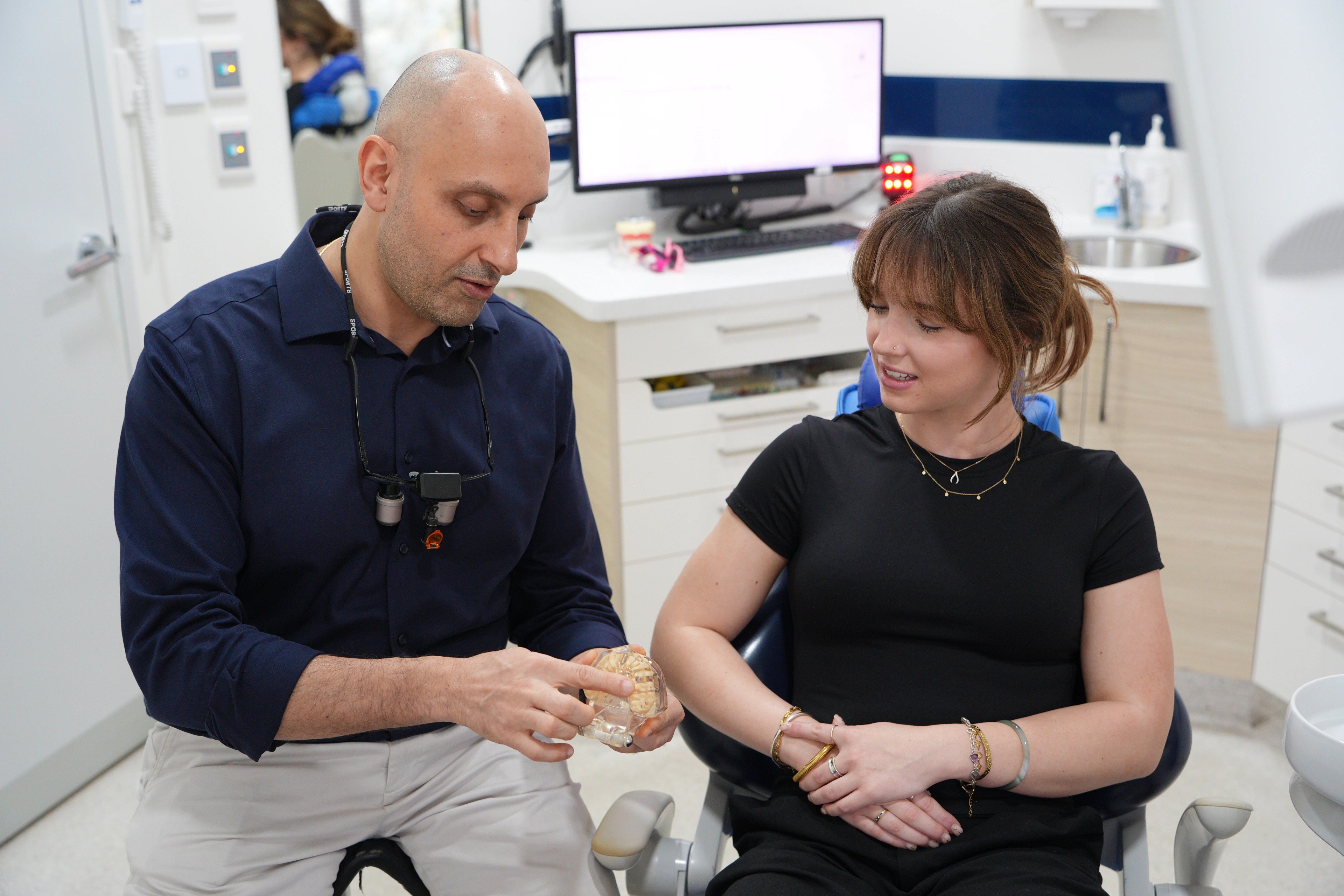
“It’s probably nothing, but…” is how plenty of visits here begin, and it’s a fine way to start. Your dentist has a proper look, explains what’s there in plain words, and gives you the cost before anything begins.
Our infection control and safety are checked independently against national standards.
Saturday mornings, 8 till 1, so a check-up doesn’t eat into the working week.
Before you ring
What’s changed in your mouth lately?
A twinge with cold water. Gums that bleed when you floss. A filling that feels rough under your tongue, or a mark on your child’s tooth you can’t stop looking at. Mention it when you book, with how long it’s been going on and whether there’s pain or swelling.
Most of these suit an ordinary visit of 30 to 60 minutes. If pain, swelling or a knock has made it urgent, ring (08) 9407 7888 and we’ll work out the timing with you on the phone. Either way, your dentist looks first, then explains whether prevention, a repair or gum care fits what they find.
General care options
Everything from a first tooth to a forty-year-old filling
Most of what we do is ordinary, unglamorous care that keeps teeth working: cleans, check-ups, fillings, and the odd tooth that has to come out. Your dentist checks first, then explains which of these fits.
Scale and clean
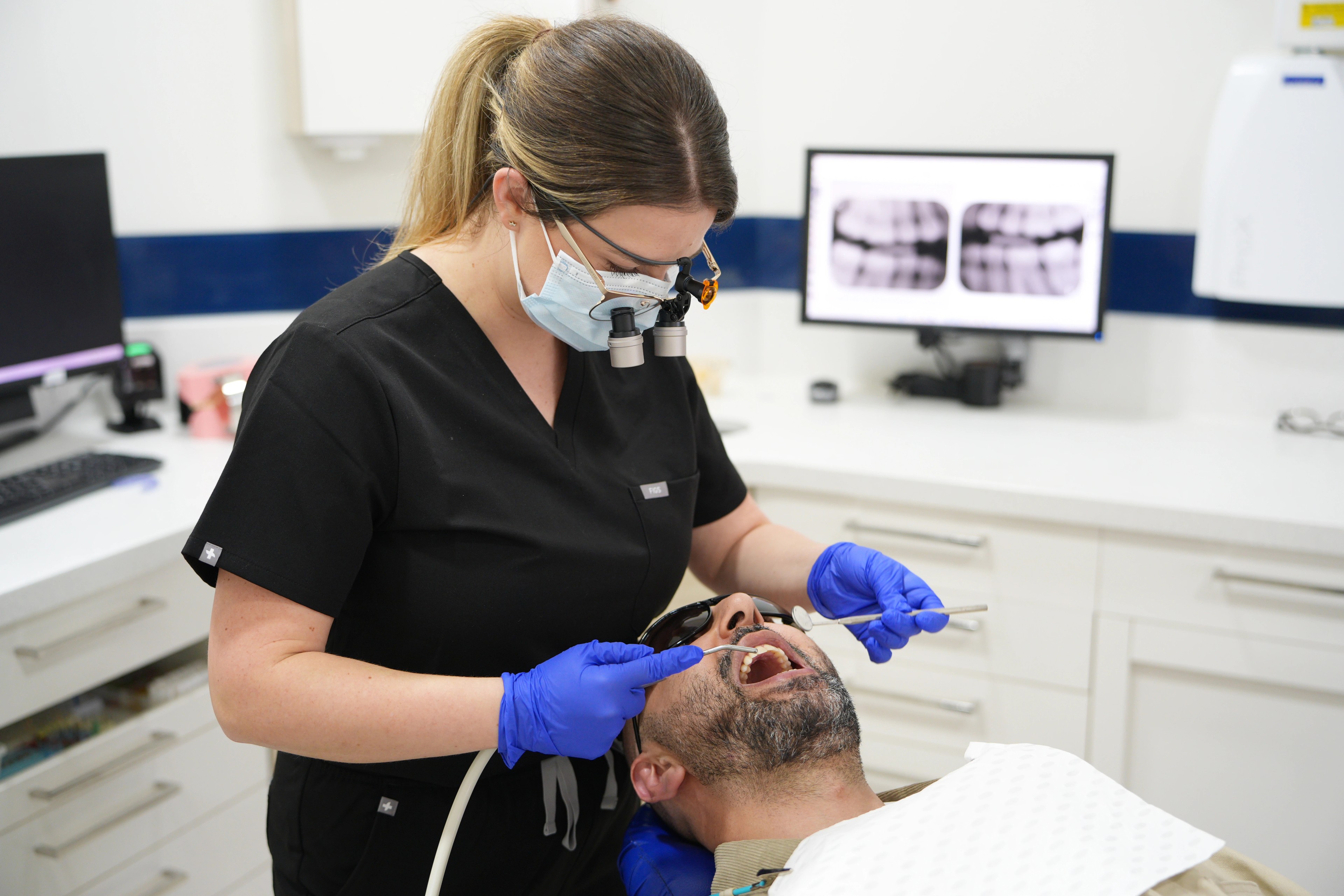
Tartar is the hard build-up a toothbrush can’t shift, and it’s often why gums bleed or feel tender. Your dentist checks your gums and where the build-up sits, then removes it. Numbing gel can be used if your gums are sensitive.

Dental check-ups
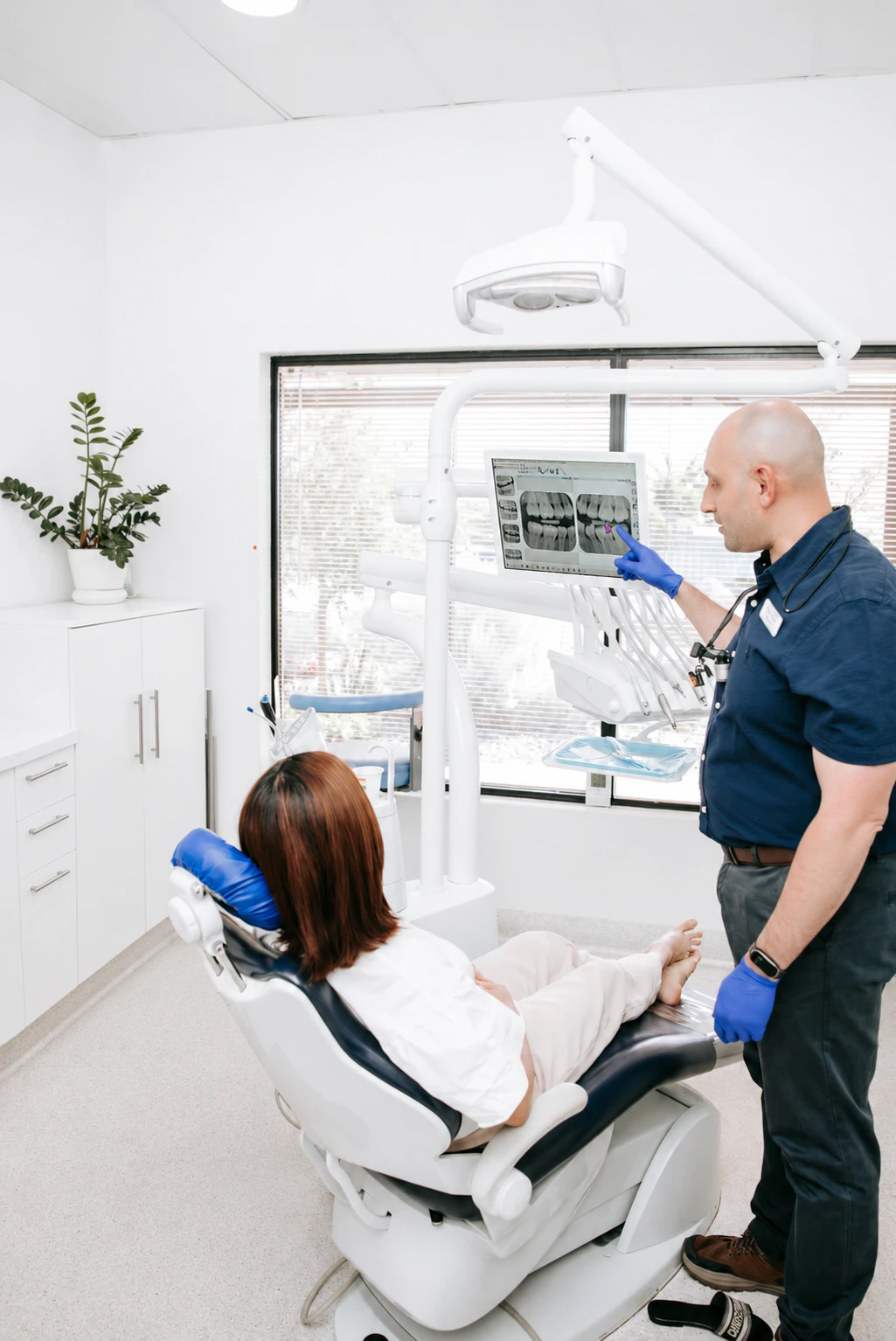
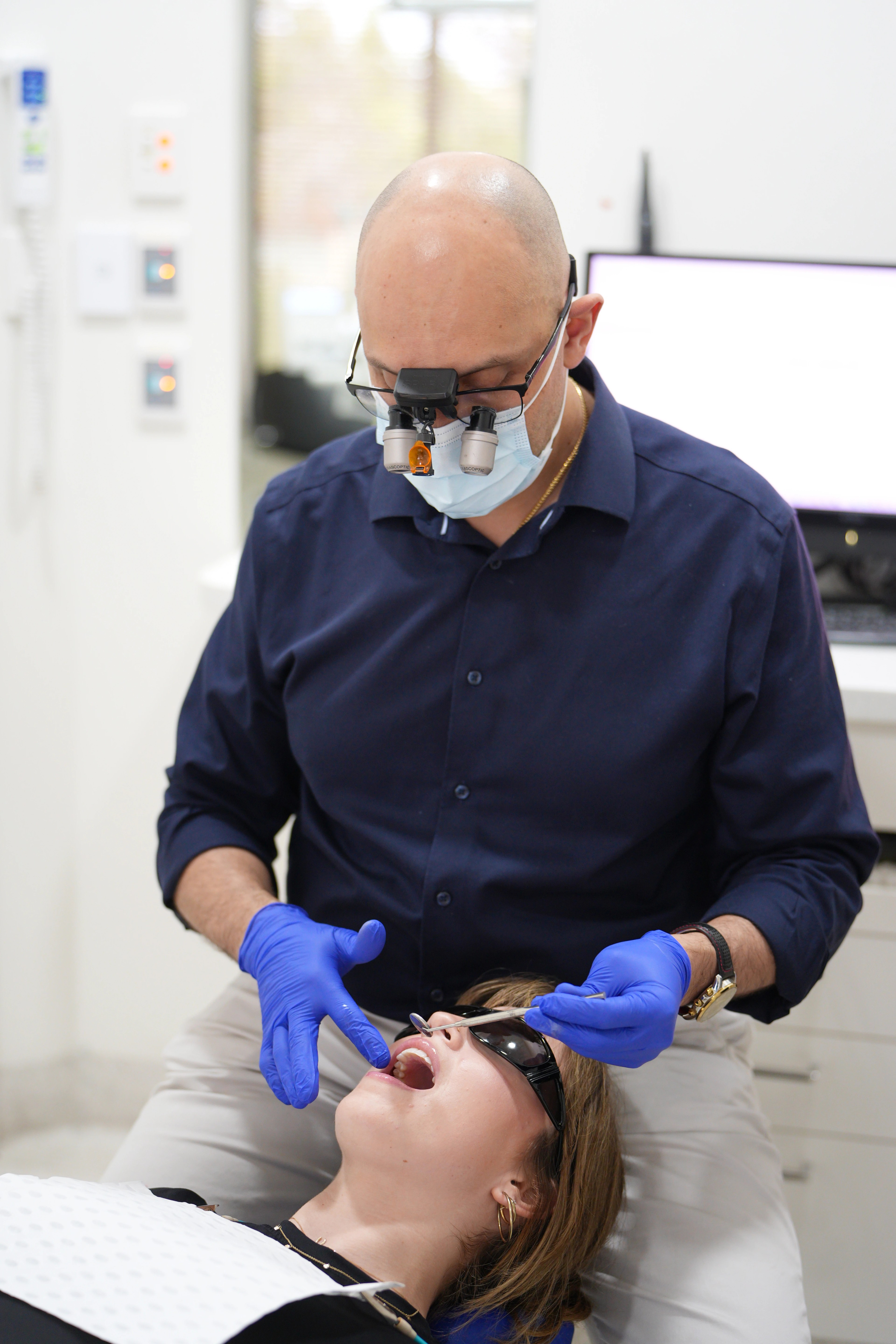
Overdue by a year, or by ten? A check-up takes 30 to 60 minutes. Your dentist checks your teeth, gums, bite and the soft tissues of your mouth, and takes X-rays only when looking isn’t enough.
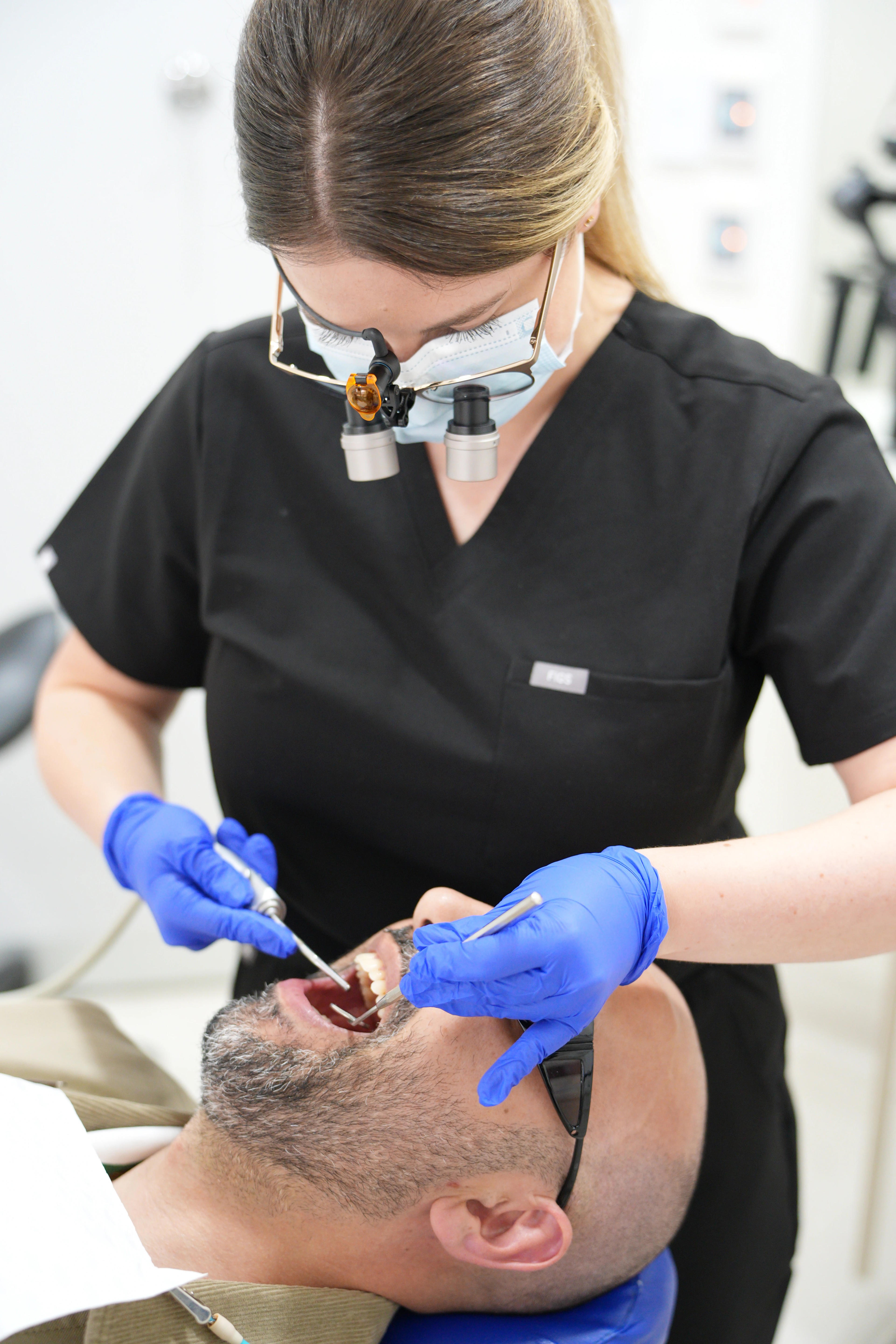
Dental fillings
A rough edge, a chip, a twinge or a spot where food always catches can mean decay, wear or an old filling giving up. Your dentist checks how much healthy tooth is left, then explains whether a tooth-coloured filling will do or the tooth needs something stronger.
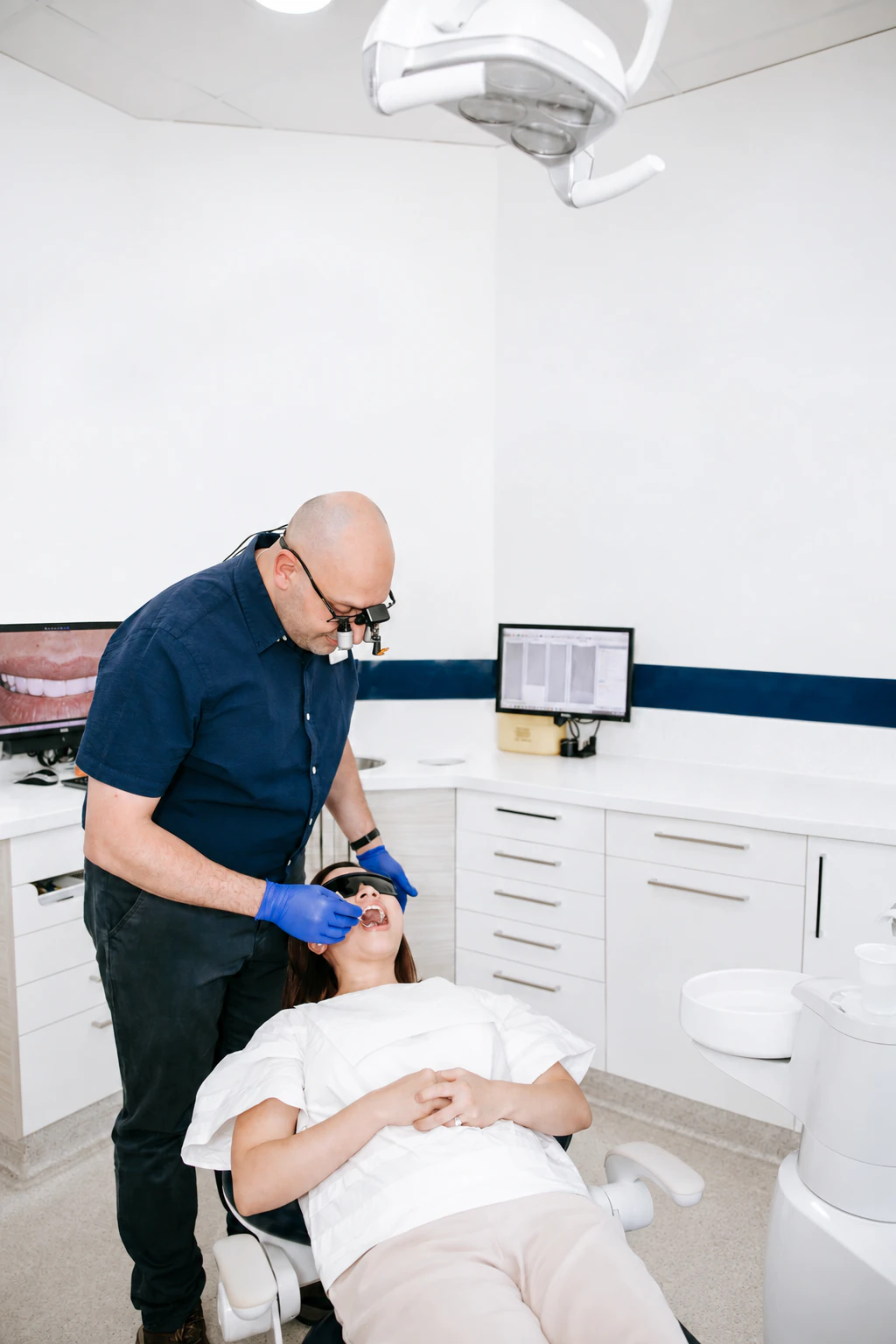
Gum disease treatment
Gums that bleed, swell, pull back or leave a tooth feeling less firm deserve more than a quick glance. Your dentist checks the gums and the support around each tooth, then explains whether a clean, a change at home or closer gum care comes next.
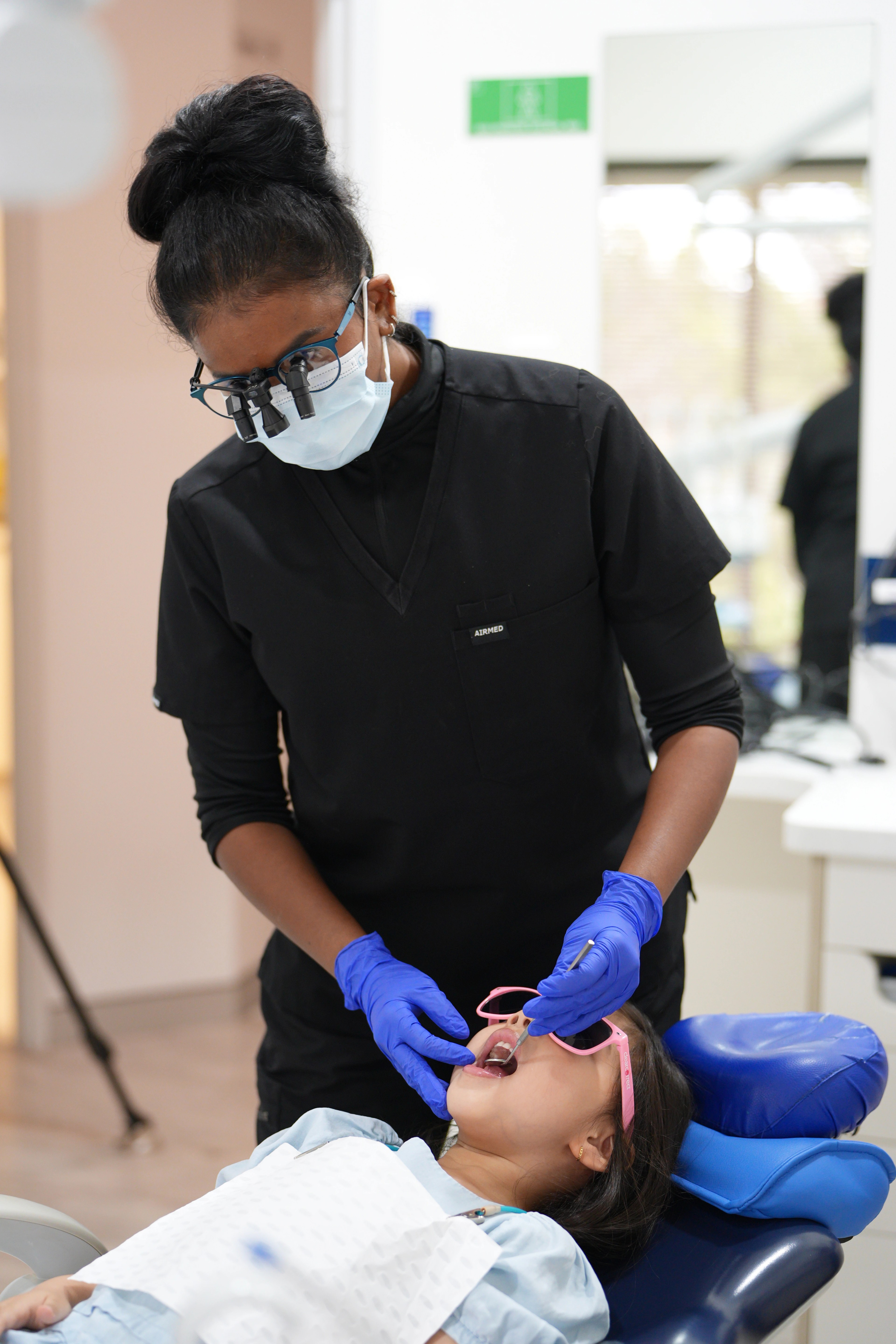
Children’s dentistry
Children are seen from their first tooth, and we suggest a first visit by the first birthday. Your dentist checks how the teeth are coming through, along with brushing and snacks, and explains it all at your child’s level. Eligible children are bulk billed under CDBS, within their benefit limit.
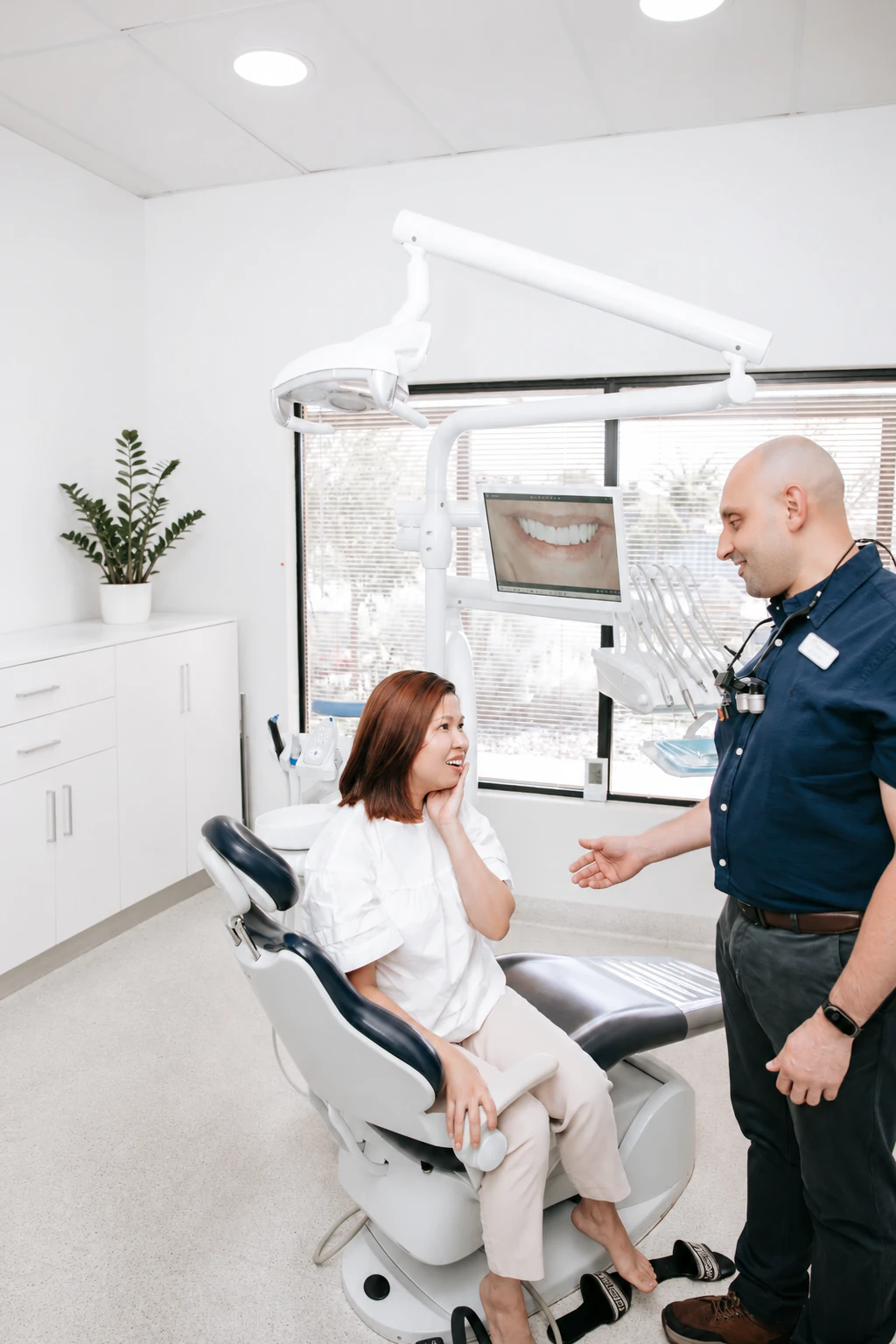
Tooth extractions
Sometimes a tooth is too broken or infected to keep. Your dentist checks first whether it can still be saved. If it does come out, most people take a day or two off after a simple extraction.
Wisdom teeth removal
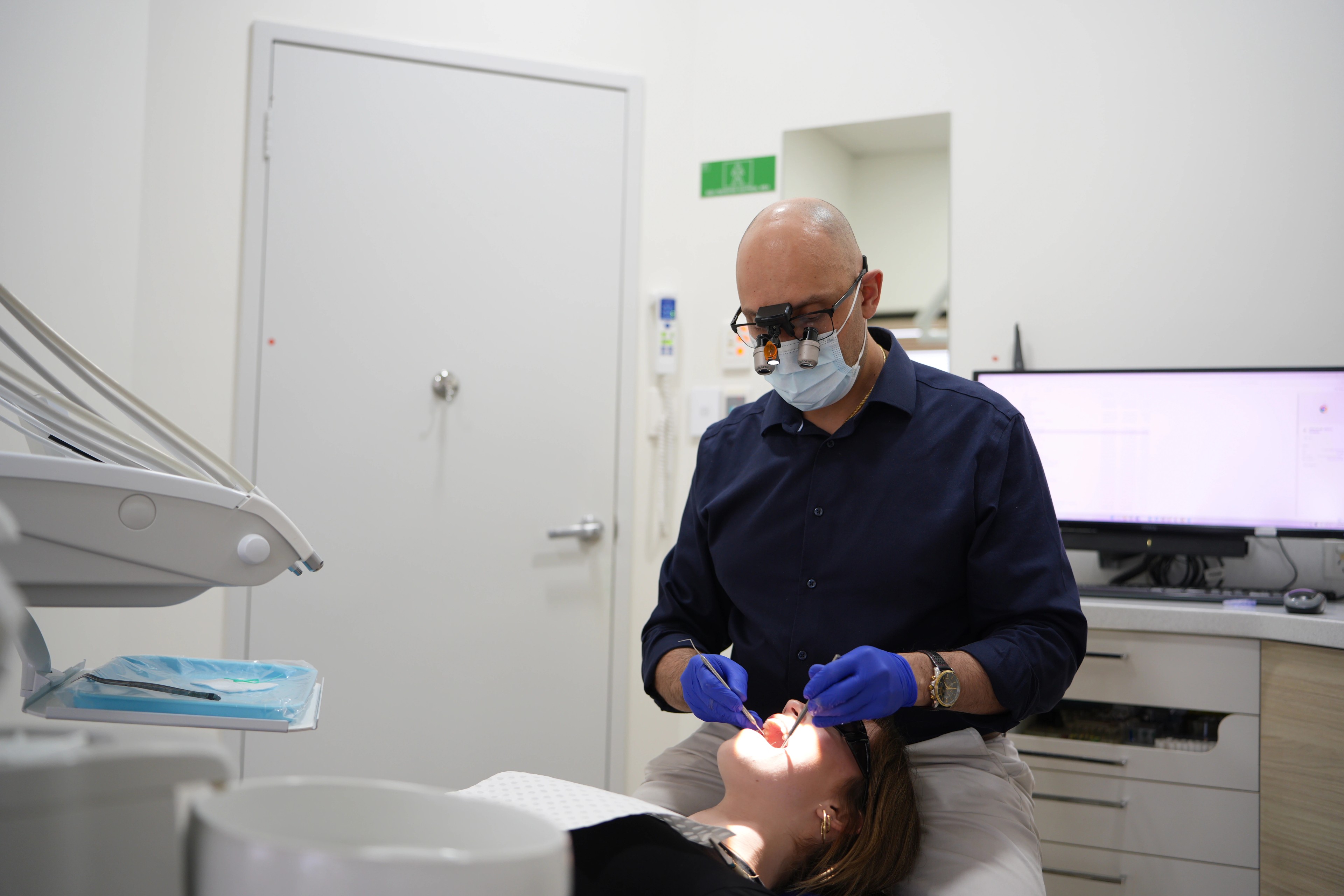
Swelling, trapped food or a sore gum right at the back can point to a wisdom tooth. Your dentist checks its angle and the gum around it, usually with an X-ray. If it needs to come out, allow one or two days off.
Root canal therapy
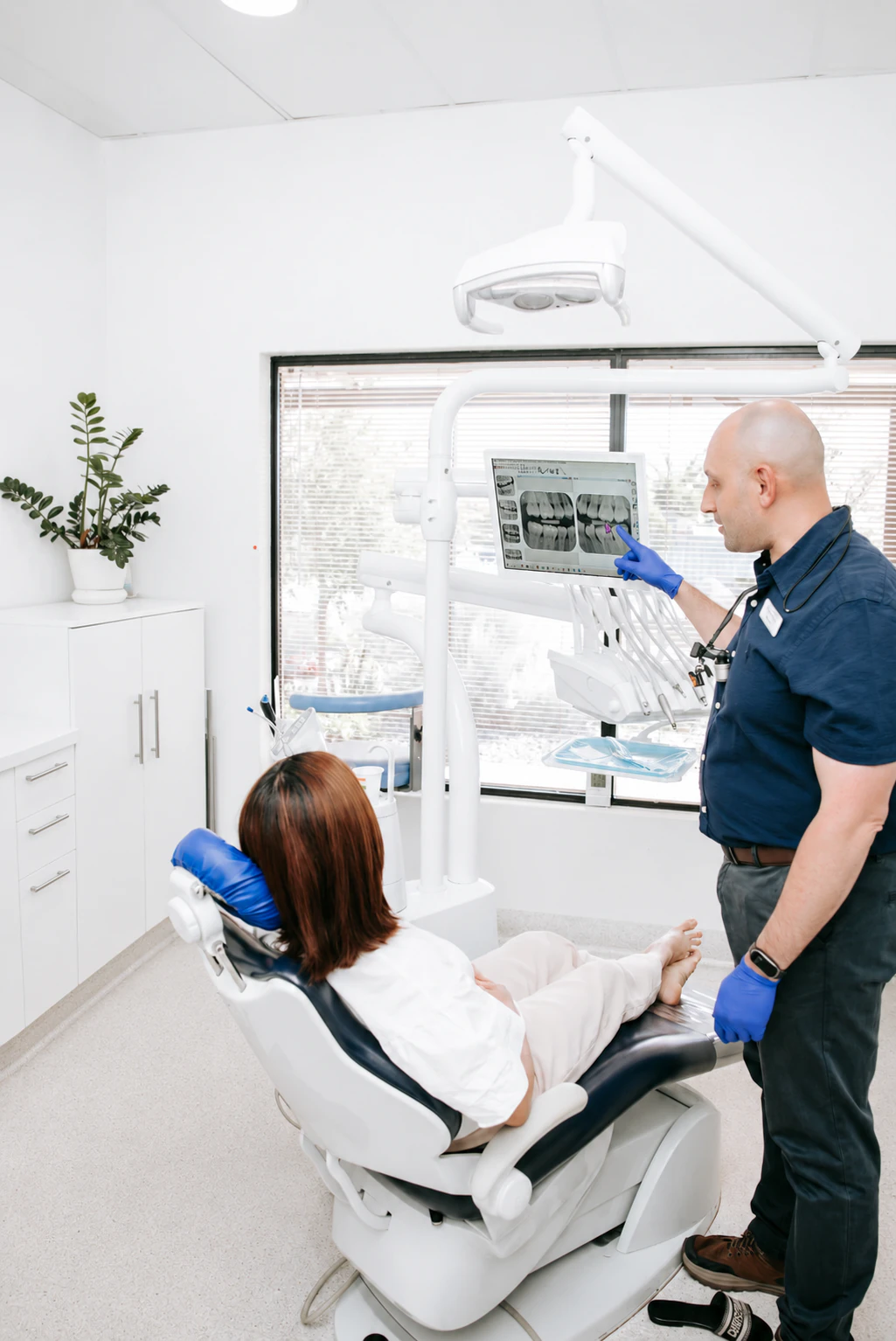
A toothache that lingers after a hot drink, or wakes you at night, can mean the nerve inside is in trouble. Your dentist checks whether it’s inflamed or infected. Root canal treatment is done under local anaesthetic, and most people are back at work or school the next day.
Custom mouthguards
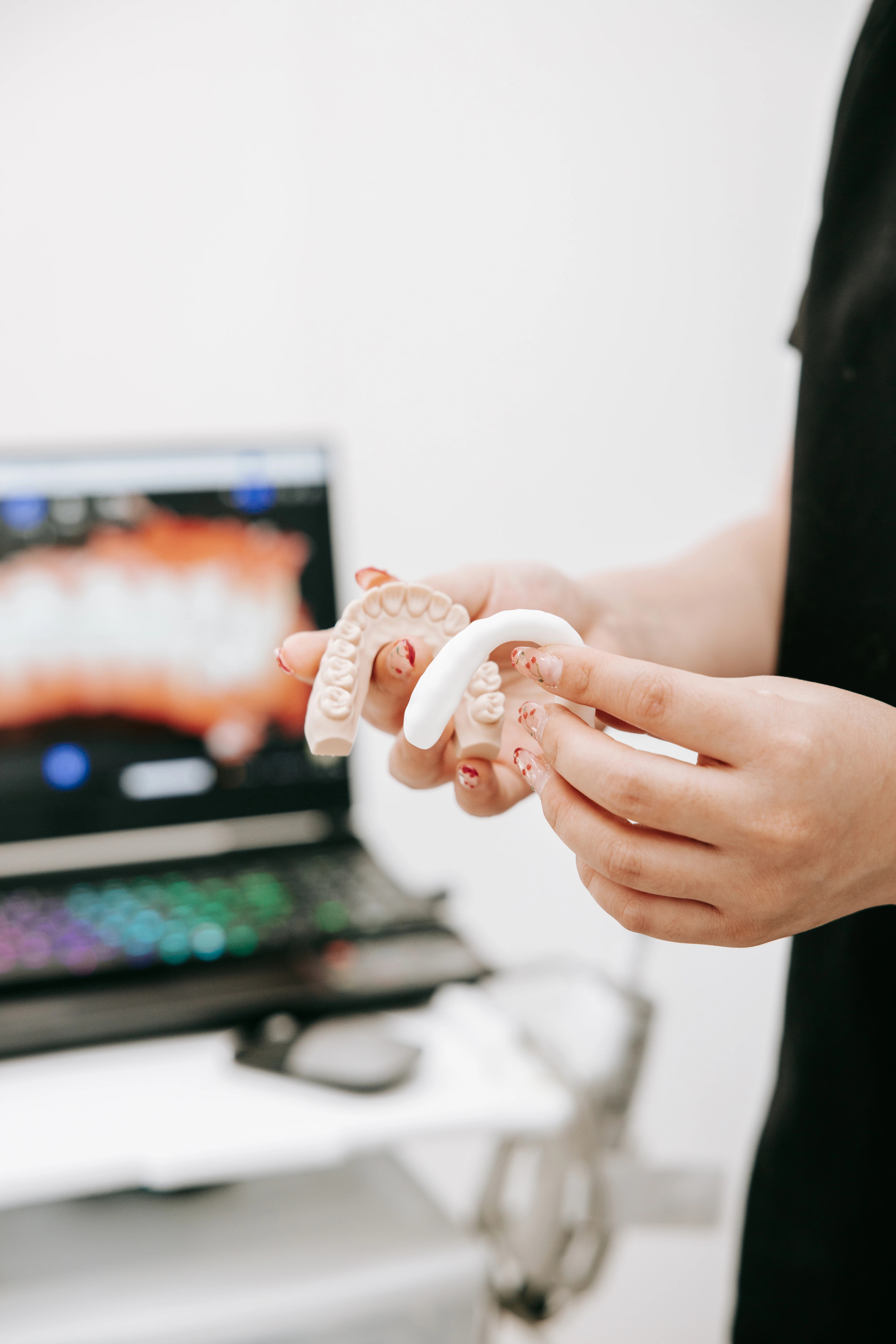
A mouthguard only protects you if it fits the teeth you have now. Your dentist checks your teeth and bite and takes an impression, and the guard is usually ready in 1–2 weeks. Night guards for grinding are made the same way.
During the visit
What happens once you’re in the chair?
First you talk and your dentist listens. Then comes a careful look, and an explanation of what they found, before anything else is suggested.

Before we look
You talk first
Say what’s changed, how long it’s been going on, and whether there’s pain, swelling or an injury. Your medical history and medicines matter too, because they change what’s safe and what’s sensible.Cost and cover
Knowing the cost before you say yes
Once your dentist has looked and explained, we’ll go through the estimate with you: what it covers, roughly what your health fund is likely to pay, and when payment is due. What you get back depends on your policy.
Book an Appointment
Private health-fund arrangements
We accept private health fund claims. We’re a Bupa Members First preferred provider, an HCF preferred provider and an nib preferred provider in the First Choice network. HBF is accepted, but check the provider arrangement that applies to your appointment. Your rebate depends on your policy, your annual limits and the item numbers for the visit. Before any treatment begins, we’ll check whether the claim can be lodged while you’re with us.
CDBS, DVA and payment choices
Eligible children are bulk billed for CDBS-covered services, within their benefit limit, and eligible DVA cardholders are welcome. To spread a bigger cost, ask about Zip Pay, Zip Money, an in-house payment plan, Pretty Penny Finance or Fund My Dental. Eligibility, approval and each provider’s terms apply.
How fees work here
Fees are much easier to pin down once your dentist has seen the problem. Then we can go through the recommended care, the item numbers, what your fund is likely to pay and when payment’s due, so you have the numbers before you agree to anything.
Before the visit
Mention any health fund or scheme you’ll be using. We’ll say how long to allow, usually 30 to 60 minutes for a check-up, and what to bring. If the fee depends on what your dentist finds, you’ll get the estimate once the tooth has been looked at.
- Bring your health fund card, and your Medicare, CDBS or DVA details if they apply.
Our dentists
Whose chair you’ll be in
Dr Michael Shams has led Anchorage since 2011, with Dr Charles Tricoli and Dr Maddi Sheppard alongside him. You’re welcome to ask for any of them when you ring.
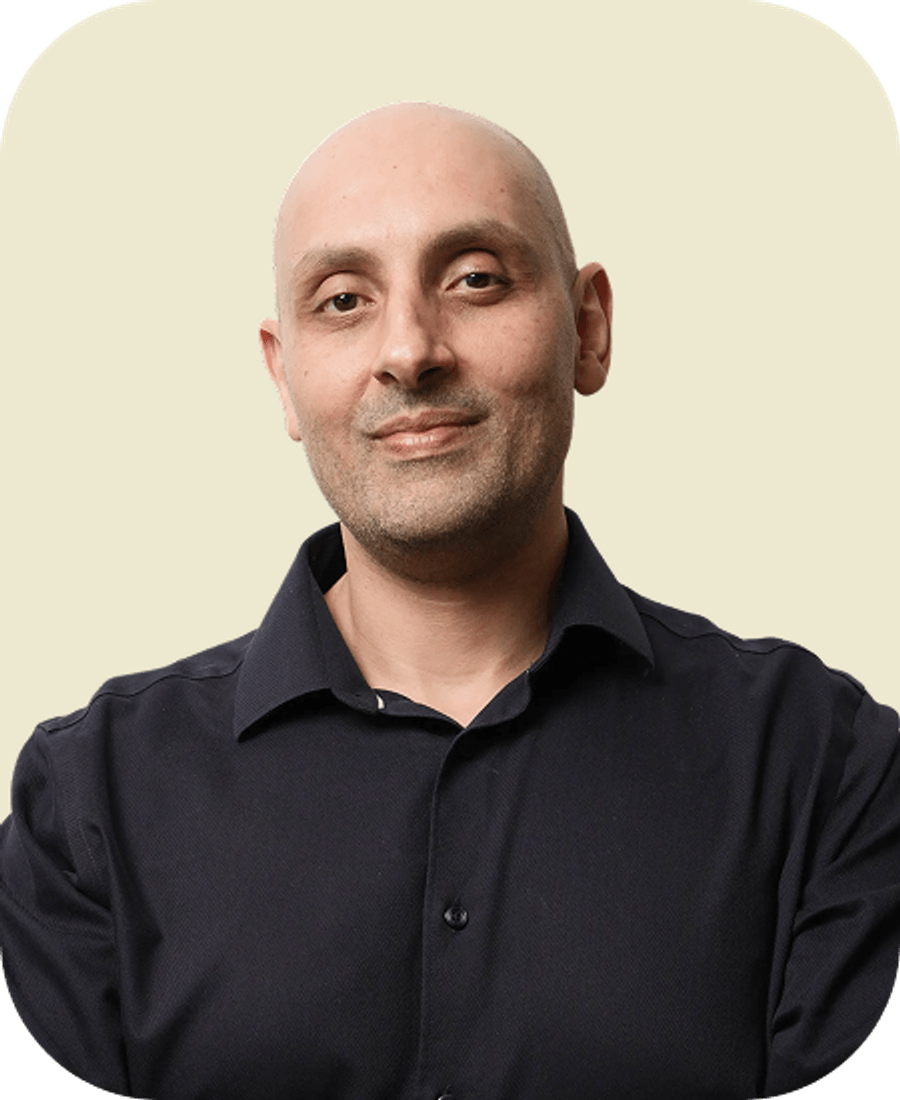
Principal Dentist
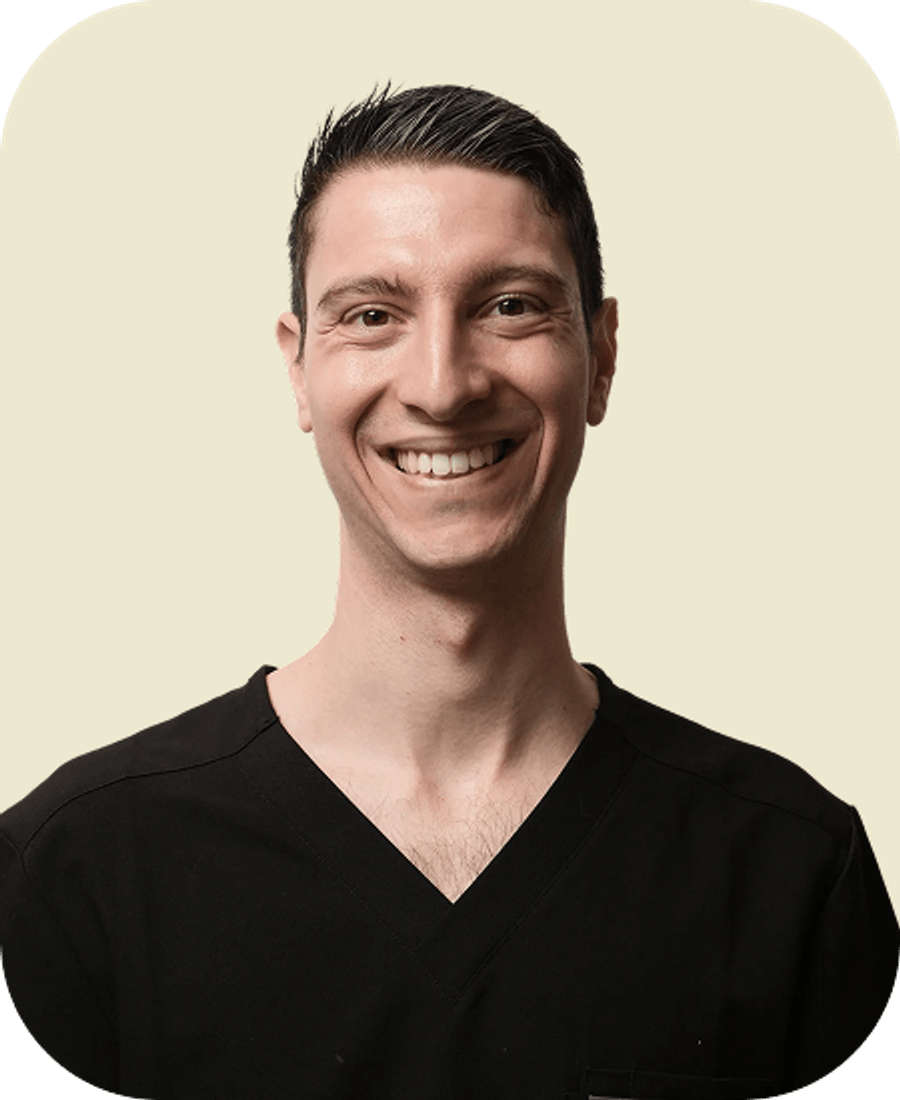
Dr Michael Shams
AHPRA Reg. DEN0001580551
Graduated from UWA in 2002 and has led Anchorage since 2011. Enjoys the bigger restorative and cosmetic work, from veneers to restoring implants.
General Dentist
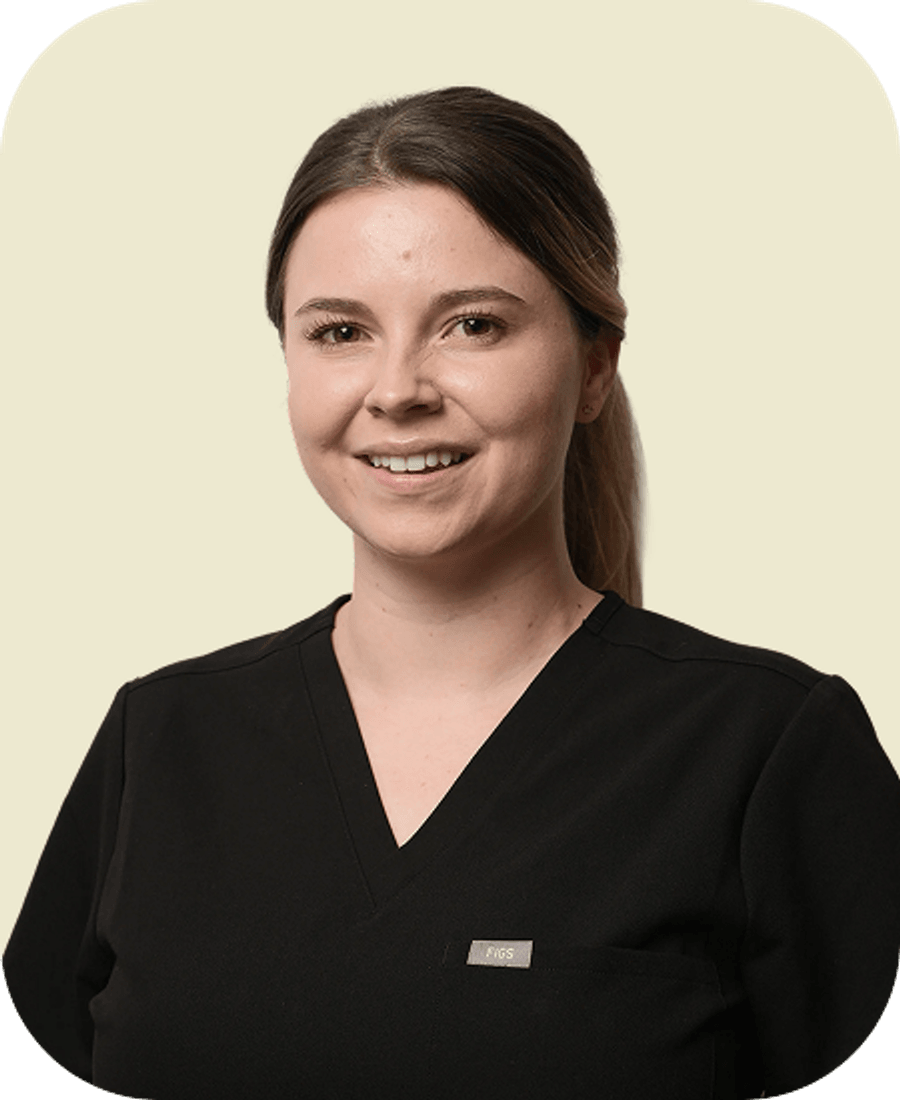
Dr Charles Tricoli
AHPRA Reg. DEN0002559634
Trained at UWA, graduating in 2021. His focus is preventive and restorative care: catching problems early and fixing them simply.
General Dentist
Dr Maddi Sheppard
AHPRA Reg. DEN0002871674
Trained at the University of Sheffield and moved to Perth in 2024. Has a soft spot for children, nervous patients, and anyone who wants to talk about their pets.
Related care
When it’s more than everyday care
Sometimes a check turns up something urgent, a tooth that needs more than a filling, or a change you’d like to make to how your smile looks. Each has its own page below, or ring us and we’ll point you the right way.
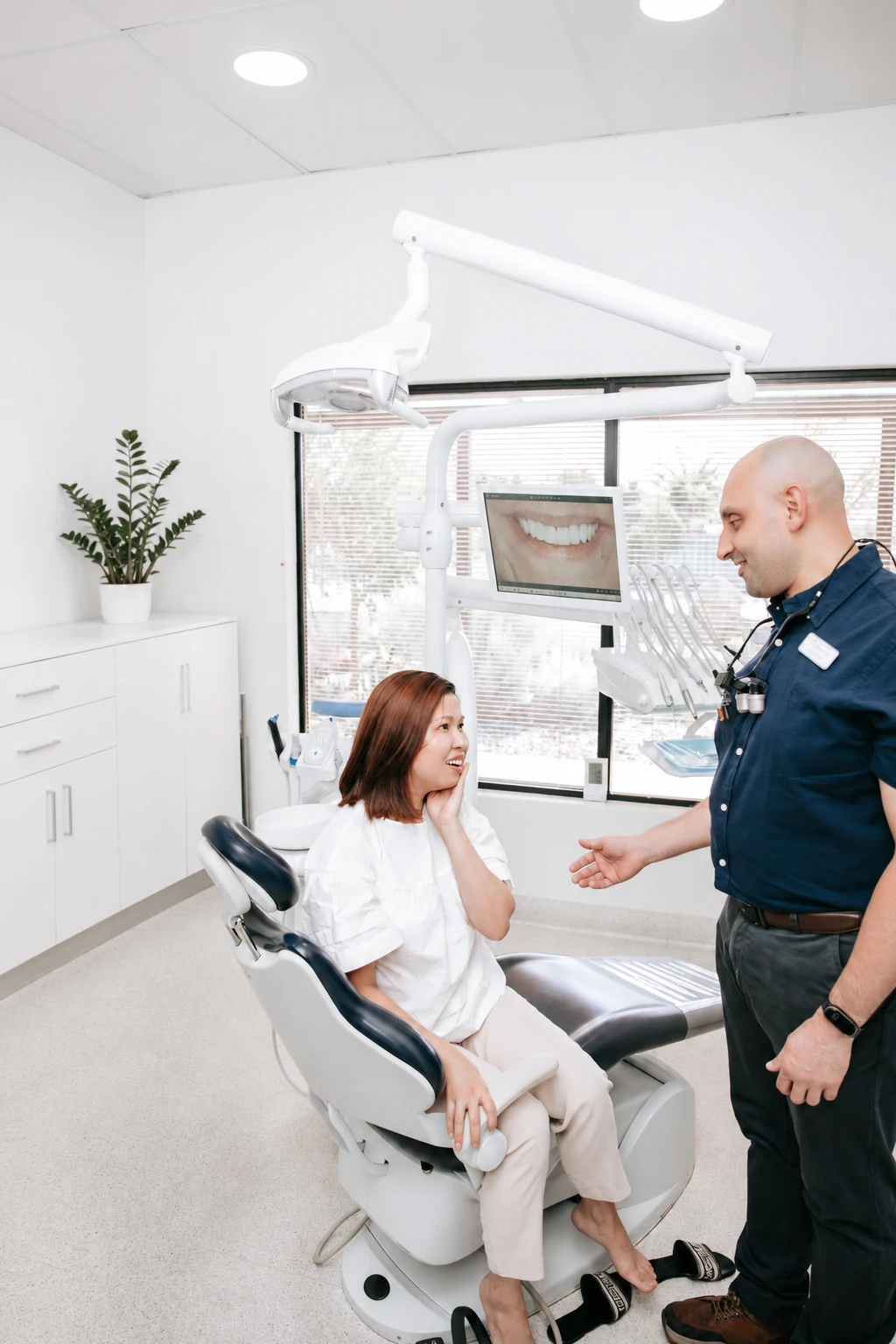
Emergency Dentist
Pain, swelling, a broken or knocked-out tooth, or a filling that’s fallen out. Ring (08) 9407 7888 early in the day and ask for a same-day assessment.
Call about urgent care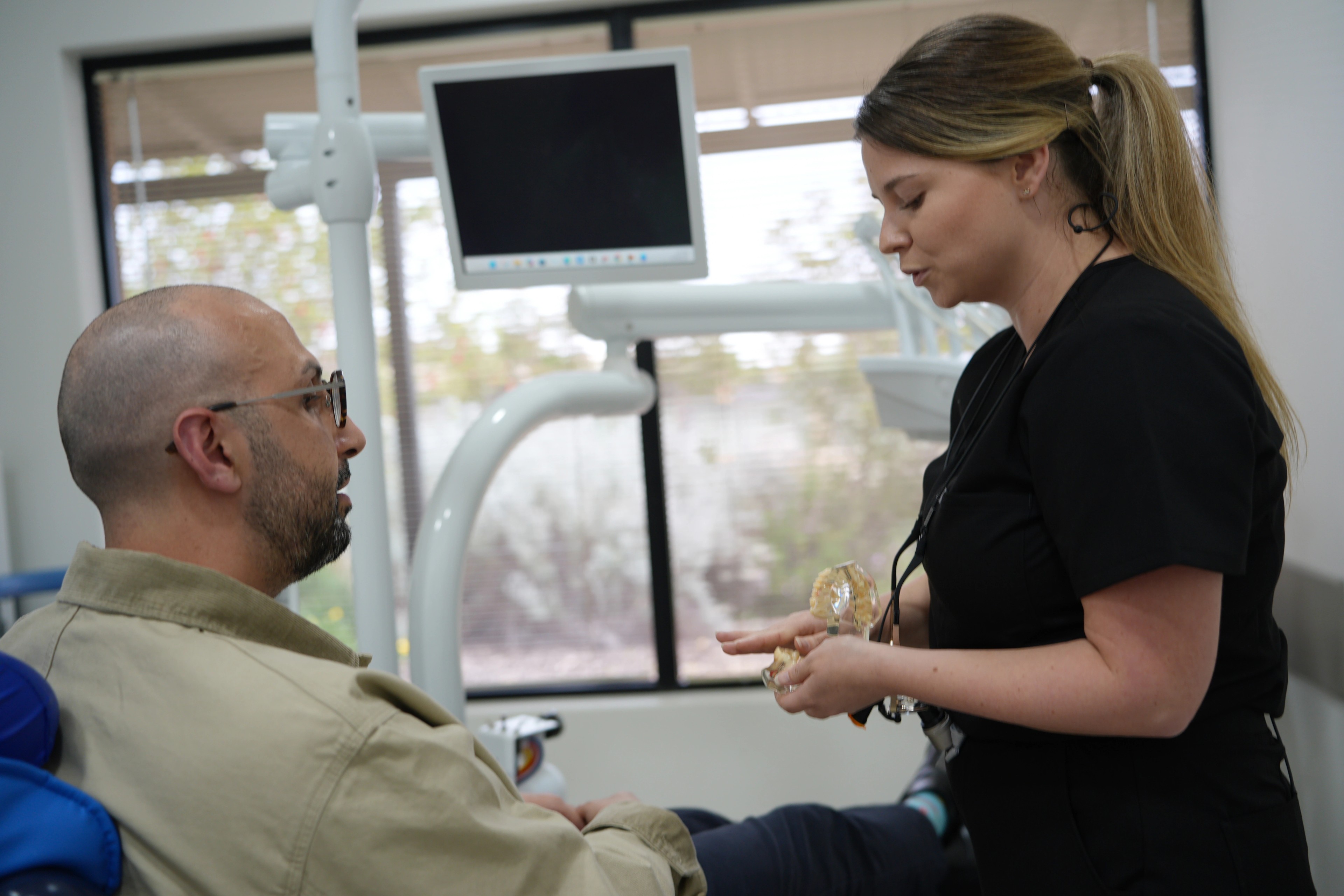
Restorative Dentistry
Crowns, bridges and dentures, for teeth that need more support than a filling can give. A crown is made in a lab, so it takes two visits.
See restorative options
Cosmetic Dentistry
Whitening, veneers, bonding or contouring. We make sure your teeth and gums are healthy first, then talk about which options would actually suit your smile.
Talk through your cosmetic optionsEveryday questions

Questions about general dentistry
Plain answers on X-rays, bleeding gums, costs and the rest. If something feels urgent, skip the reading and call (08) 9407 7888.
Use the words you would use at home: it’s sensitive, my gums bleed, a filling feels rough, I’ve chipped a tooth, food keeps getting stuck. Add how long it’s been going on and whether there’s pain, swelling or an injury, and we’ll note it on your booking.
That gives your dentist a head start. A sore tooth, bleeding gums, a broken filling and a child’s first visit all count as general dentistry, but each needs a different amount of time in the chair, and sometimes an X-ray.
When you call, lead with the main problem and anything that’s changed quickly. We’ll match it to the right appointment, and at the visit your dentist will explain whether it needs watching, prevention, gum care, a filling or something else.
A check-up usually takes 30 to 60 minutes. Your dentist goes over what’s bothering you and your medical and dental history, then examines your teeth, gums, bite and soft tissues, including your tongue and lips. X-rays are taken only when something can’t be seen clearly by looking.
Most adults come back every 6 to 12 months, and your dentist sets the gap around your teeth, gums, past dental work and risk of decay. A good check-up sorts things into piles: what’s healthy, what to keep an eye on, what needs care soon, and what you can do at home.
When you book, we’ll confirm what the visit includes and how long to allow. Before you leave, ask your dentist which one thing matters most.
No. X-rays aren’t something you get automatically at every dental visit. Your dentist takes them when there’s something a look alone can’t show: decay hiding between teeth, the bone around them, infection near a root, or where a wisdom tooth is sitting.
How often depends on your symptoms, your dental history and how recent your last images are. Someone with new pain, swelling or a heavily filled tooth usually needs one sooner than someone in for a routine check with nothing new to report. Ours are digital, with a lower dose than film X-rays.
If you’ve had X-rays at another practice recently, bring them or mention them when you arrive. Your dentist will explain what each new image is meant to show.
Usually it’s plaque and tartar sitting along the gumline, which inflames the gum. Hard-to-reach spots, new medicines, pregnancy, some medical conditions and brushing technique can all add to it, so bleeding is worth a proper look.
Your dentist examines the gums to find the cause and how far it goes. For many people, a professional clean and a change at home is enough; deeper gum problems need periodontal care and closer review. Continue your usual brushing and oral-hygiene routine unless your dentist or medical practitioner has given you different instructions.
If the bleeding is heavy, persistent or unexplained, or comes with swelling, loose teeth or strong pain, call us or your GP. When you book, mention the bleeding so we can give your gums extra time.
They can, from the first tooth. We see children for first visits, routine checks, cleans, fluoride and anything you’ve spotted at home, and we suggest a first visit by the first birthday or when the first tooth appears.
Your dentist checks how the teeth are coming through, talks about brushing and snacks, and brings up fluoride or a mouthguard where they fit. Some early visits are mostly about getting comfortable in the chair. Others need a closer look at pain, swelling, a knock or a tooth that’s slow to come through.
We bulk bill CDBS-covered services for eligible children within their available benefit limit. Bring your child’s Medicare card, and when you call, mention their age and what you’d like checked.
Let us know when you book, so your dentist knows before you sit down. For some people it’s needles or the sound of the drill; for others it’s cost, gagging, embarrassment, or one bad visit years ago.
Your dentist explains each step before starting, and you can raise a hand for a break at any point. Nothing goes ahead until the options have been talked through. For longer or more involved treatment, oral and IV sedation are options for some people, once your dentist has checked your medical history and the care involved.
When you call, a few words about what makes you nervous is plenty. We’ll pass it on, so nobody’s surprised on the day. Our dental anxiety page goes into more detail.
Both. Bupa Members First, HCF and nib, through its First Choice network, all have us as a preferred provider, and HBF is accepted too. What you get back depends on your policy, waiting periods, annual limits, what’s left this year and the item numbers.
We bulk bill covered services for eligible children under the Child Dental Benefits Schedule, within their available benefit limit. Eligible DVA cardholders can be seen here as well. What DVA covers depends on your card type, your clinical need and, for some cards, whether the treatment relates to an accepted condition.
Bring your fund card and any Medicare, CDBS or DVA details when you come in. We’ll check what applies once your dentist has explained the care being suggested.
Zip Pay, Zip Money, in-house payment plans, Pretty Penny Finance and Fund My Dental. Which one makes sense depends on the size of the estimate, each provider’s terms, and whether the treatment can sensibly be spread over more than one visit.
Each finance or payment provider sets its own eligibility, approval process, fees, interest and terms. Some ask for ID, proof of income, bank or loan statements, or an active debit or credit card.
If you’re thinking about finance, we’ll give you the estimate and item numbers first, so you can check the provider’s requirements against your treatment plan before you sign up.
Take the time you need to decide, unless your dentist explains that something won’t keep. Any recommendation should come with the reason for it, the options that make sense, what can be watched, and what’s likely to happen if you hold off.
Some findings are more time-sensitive than others. Pain, infection, swelling, deep decay, a knock or a tooth close to breaking usually can’t sit for long. A stable problem with no symptoms often gives you room to compare options or spread the work out.
Before you commit, we’ll go through what each visit is for, what the estimate covers and whether the work can be staged. Keep a copy of the estimate, then call us when you’re ready to go ahead.
For an urgent dental problem, call (08) 9407 7888 for guidance, including outside opening hours. Phone us rather than waiting for a routine visit if you have strong pain, swelling, a broken or knocked-out tooth, a knock to the mouth, a lost filling that hurts, bleeding that won’t settle, or a fever or bad taste that could mean infection.
For a serious medical emergency, call 000 or go to the nearest emergency department. Swelling that affects breathing, swallowing or talking needs urgent medical help. healthdirect (1800 022 222) also gives health advice around the clock.
If you’re not sure how urgent it is, call and say what’s happening, when it started and whether there’s swelling or an injury. If it can keep, we’ll find you a routine visit instead.
Often, if it doesn’t hurt and isn’t sharp. What matters is whether there’s pain, whether the tooth is cracked, and whether the edge is catching your tongue or cheek. A chip from a fall needs a quicker look than a tiny rough spot you found over dinner.
Your dentist checks how much tooth is involved, whether an old filling has broken, whether your bite is pressing on the spot and whether an X-ray is needed. The fix could be smoothing the edge, a tooth-coloured filling, keeping an eye on it, a bigger repair, or prompt care after an injury.
Call sooner if the chip is painful, sharp, loose, darkening or followed a knock. Bring any broken piece with you, kept in milk.
You’ll know once the tooth has been examined. Sensitivity, a cavity, an old filling wearing out, a crack, worn enamel and a broken edge can all feel much the same from the inside, but each needs a different level of support.
Your dentist checks how much healthy tooth is left, where your bite lands, whether there’s decay or a crack, and whether the nerve inside is involved. A small area usually suits a tooth-coloured filling. A weaker tooth often needs a crown, made in a lab over two visits, or a repair done in stages. The age of your existing dental work counts too.
Your dentist will name the main risk and compare a smaller repair with a more protective option. If anything’s unclear, ask, and we’ll go through what would change their advice.
If you have them, they’re worth bringing: recent X-rays, photos, estimates, referral letters or treatment plans. They show your dentist what’s already been checked and what you were told elsewhere.
Your dentist still needs to examine your mouth, because pain, gums, decay, bite and old dental work all change over time. Earlier records help the conversation, but they don’t replace a fresh look. If an X-ray is several years old, your dentist will explain whether it still helps or whether a new one is worth taking.
If you’re not sure they’re still useful, bring them anyway and we’ll sort through them. If you can’t find them, come anyway, and give us the name of your old practice so we know where they might be.
It’s where most general dentistry starts: checking gum health, how easy each area is to clean, decay risk, tooth wear, diet, fluoride, sports risk and habits like grinding.
Your dentist can point out where plaque or tartar collects, which teeth are at higher risk, whether a custom mouthguard is worth having, or whether a small spot can be watched instead of filled straight away. Prevention works when it fits your mouth, your history and what you can realistically keep up at home. It should feel like help you can use that same night.
Discuss one realistic home-care change with your dentist, based on where plaque or tartar collects, then focus on it before your next visit.
A tooth doesn’t come out just because it’s sore or damaged. Your dentist first checks whether it can reasonably be saved, perhaps with a filling or root canal treatment, and whether infection, a fracture, weak gum support or a wisdom tooth’s position is behind the problem.
If removal is the plan, you’ll go through timing, aftercare, cost, your medical history, whether a referral is needed and how the gap could be filled later. After a simple extraction, most people take a day or two off, and the gum is mostly healed in about two weeks. Sometimes the first job is easing pain or infection before the bigger picture is clear.
Taking a tooth out is surgery, so your dentist will go through the risks for your tooth, and you can check the other options before you decide. Any surgical or invasive procedure carries risks. Before proceeding, you should seek a second opinion from an appropriately qualified health practitioner.