Teeth and gums
Decay and gum disease are treated before any straightening, because moving teeth through inflamed gums can make things worse.

Those crowded bottom teeth you’ve noticed since your teens haven’t straightened themselves out, and the overlap seems a little worse each year. Before anyone mentions clear aligners, including Invisalign®, we check your gums, your bite and any fillings or crowns, because those decide what’s possible.
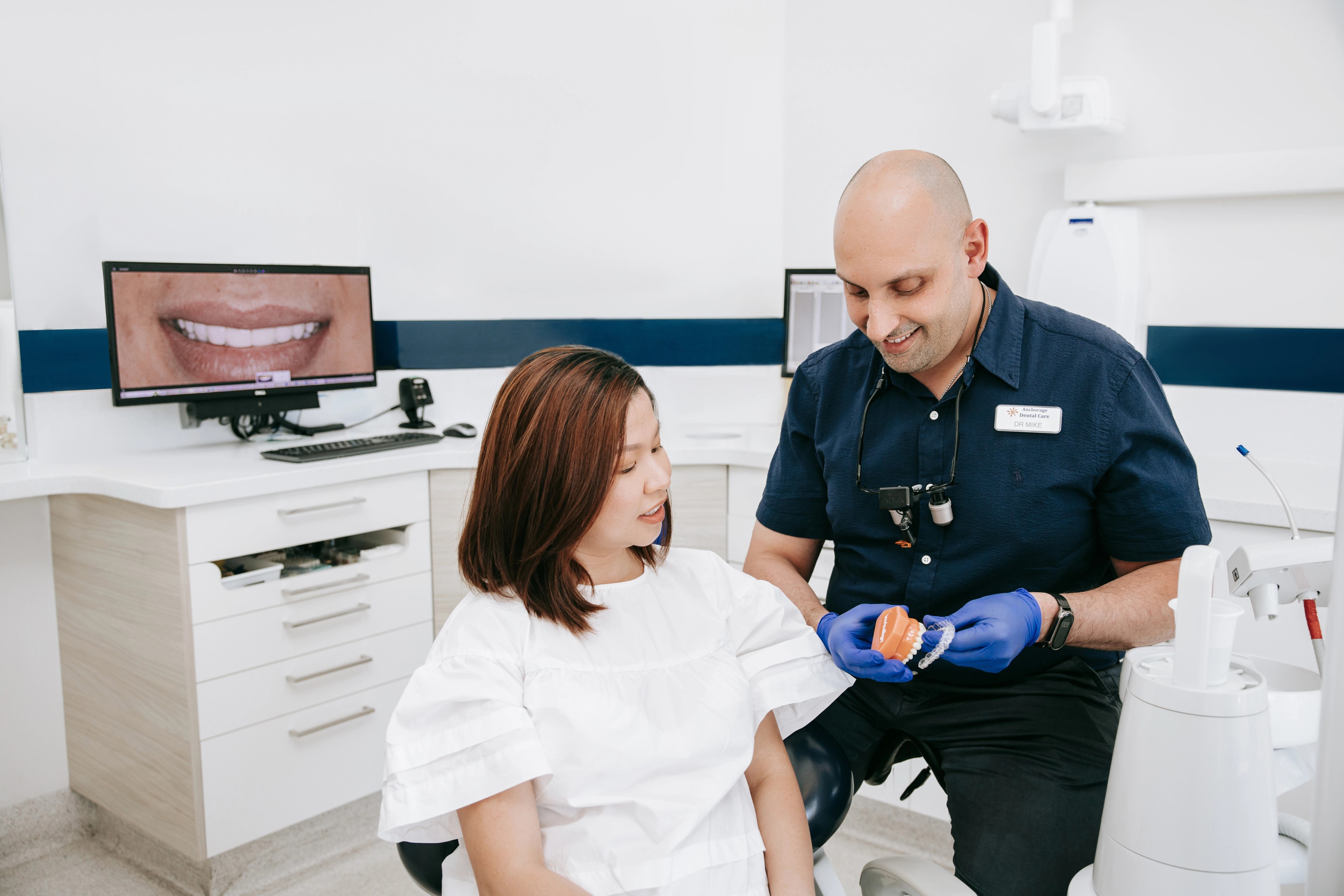
Teeth move through bone, so the gums and bone around them need to be healthy first. We check your teeth, gums, bite and any fillings or crowns, then explain which photos and X-rays a plan would need.
Decay and gum disease are treated before any straightening, because moving teeth through inflamed gums can make things worse.
Overlaps, gaps and how your top and bottom teeth meet decide what needs to move, and how far.
Existing work changes how teeth can be moved, and what we keep a closer eye on along the way.
Aligners only work when they’re worn as directed, so we’ll ask how that fits around work, school, sport and meals.
Clear aligners are removable trays that move teeth in small steps, and Invisalign® is one brand of them. The brand matters less than whether your teeth, gums and bite suit aligners, and whether you can wear them the way the plan asks.

Aligners are a daily habit, not something you pop in for photos. They come out when you eat, you brush before they go back in, and you move to the next set when your dentist says.
Your gums need to stay healthy the whole way through, so keep up your regular cleans. Crowns, fillings or other work can change the order of moves, or the records needed to plan them safely.
Aligners can rub your cheeks or cause mouth ulcers. If cleaning slips, plaque can lead to decay, discolouration or gum infection, and teeth can drift back if you don’t wear retainers as advised. Results vary between people, so ask how often you’ll be reviewed and what to do if you lose an aligner.
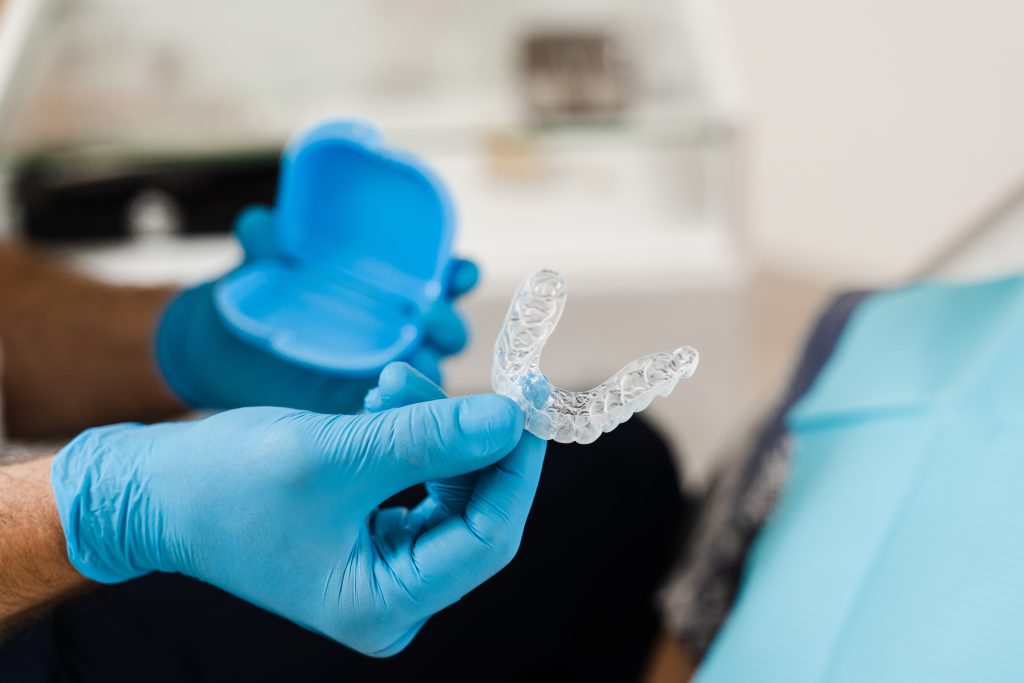
The visit is as much about whether aligners suit you as how your smile could look. Bring a photo of what bothers you, and mention any date you’re working towards, like a wedding.
Crowding, a gap, a tooth that sits forward or a bite that feels off, and how it bothers you day to day.
We examine your teeth, gums, jaw, bite and mouth, and ask about any crowns or fillings.
Which photos and X-rays a clear aligner plan, including Invisalign®, would need, and how often you’d come back for check-ins.
If aligners suit you, we explain the likely timeline and confirm the cost before anything starts.
A few slightly crowded teeth usually means a shorter plan than a bite that needs correcting. We’ll explain which records are needed, and whether anything found at the check changes the order.
Book a straightening appointmentAsk us to link the plan to the exact movements it’s aiming for, and what happens if you miss a review or fall behind on wear.
One page explains aligners in general, one covers the Invisalign® brand, and one is about getting your teeth checked before anything else.
You might also want to read
You might also want to read
You might also want to read
Age, wear time, fillings and crowns, bite problems and cost, answered before you book.
Yes, both can ask about them, and age on its own doesn’t decide it. We look at tooth position, gum health, bite, existing work and whether the wear routine is realistic. For a teenager, that means a plan that works around school, sport, meals and remembering to put the aligners back in.
Bring along any practical worries, yours or your teenager’s. We’ll explain which records are needed, what the plan is meant to change, and whether clear aligners make sense for those teeth.
Invisalign® is one brand of clear aligner. “Clear aligners” is the general name for removable trays that straighten teeth in stages. Invisalign® is a registered trademark of Align Technology, Inc. Whatever the brand, we check your teeth, gums, bite and any fillings or crowns first.
Then ask what the plan is designed to fix, what wearing it involves, how often you’d be reviewed and what the quote includes. Those answers tell you more than a brand name about whether it fits your mouth and your week.
As many as your plan says, and you’ll get the exact hours at the start. Aligners only make the planned movements when they’re worn as directed, so meals, cleaning and keeping them in their case all count. How long treatment runs overall comes down to which teeth are moving, and how far.
We’ll explain how often you’ll come back for reviews, what to do if you lose one, and what a few days off would do to the plan, so you know what the routine asks of you before you say yes.
Often, yes. Fillings and crowns become part of the examination and the plan rather than ruling you out. We check the teeth and gums around them, how each one sits in your bite, and whether they change the order of moves or need watching.
A tooth that feels different, or a crown that’s been loose, is worth telling us about. Then we can work out together whether a check-up, a repair or the aligner plan comes first, and what straightening can reasonably change around the existing work.
Sometimes. We look at both together, and the result isn’t the same for everyone. We check how your top and bottom teeth meet, which movements would help, and how healthy your gums are before saying what aligners could improve.
Describe the bite problem in everyday terms: one tooth hits first, the front teeth don’t meet, or your lips don’t close easily over your teeth. We’ll say whether aligners suit it, whether more records are needed, or whether a different approach makes more sense.
No. The cost rests on how complex the tooth positions and bite are, the records and reviews needed, any existing work, how long the plan runs and the system used. That’s worked out at the examination, not guessed from a photo or a brand name.
The quote spells out what it includes, which reviews are part of it, and what could add to it, like replacement aligners or retainers. Payment plans are on our payment options page, and any health fund rebate comes down to your policy and its orthodontic cover.