

The main difference between All-on-4 and traditional full arch is the number of dental implants used. All-on-4 uses four strategically placed implants per arch. Traditional full arch approaches use six or more implants.
However, they differ in surgical technique, candidacy requirements, and overall treatment approach. Choosing between these options depends on your circumstances and clinical needs. This guide explains the key differences to help you understand your options.
Contents Navigation
Summary of the Content:
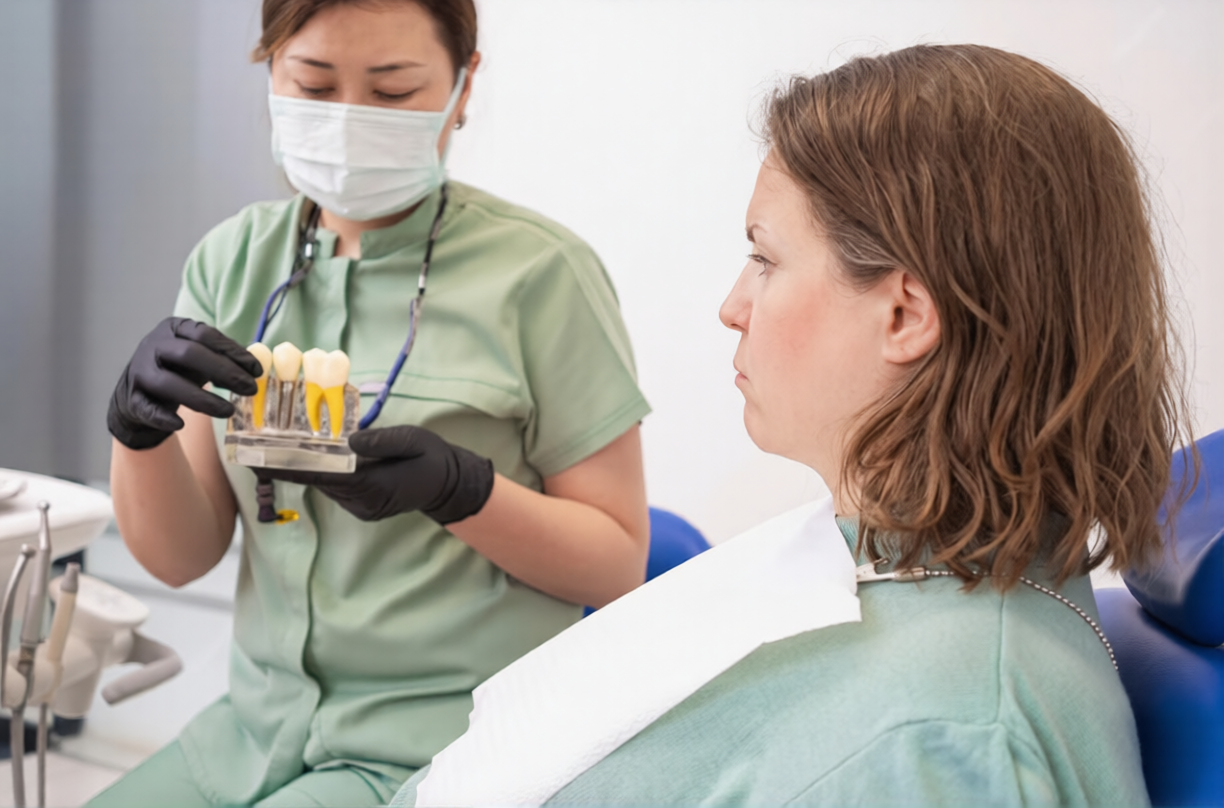
- All-on-4 uses four implants per arch, while traditional approaches use six to eight or more.
- The All-on-4’s angled placement may help some patients avoid bone grafting.
- Suitability depends on bone density, overall health, oral condition, and individual treatment goals.
- All-on-4 may offer a faster timeline, while traditional approaches may involve staged procedures.
- A comprehensive consultation with 3D imaging helps determine the most appropriate option for you.
What Are All-on-4 and Traditional Full Arch Dental Implants?
All-on-4 uses four dental implants per arch to support a fixed prosthesis. Two implants are placed vertically at the front of the jaw. Two are angled at the back to maximise the use of available bone.
Traditional full-arch treatment uses six to eight, or more, implants per arch. These implants are generally placed vertically throughout the jaw. Both approaches support a fixed bridge of replacement teeth.
Understanding the All-on-4 Concept
The All-on-4 approach uses strategic implant placement to support a full arch of teeth. Two implants are positioned vertically in the front region, where bone density is often adequate. The posterior implants are angled up to 45 degrees to engage available bone. This angled placement may help avoid areas with reduced bone volume in many cases.
The technique was designed to distribute forces effectively across the four implants. In appropriate cases, provisional teeth may be attached on the same day as surgery. This is known as immediate loading and depends on achieving adequate initial implant stability. The final prosthesis is placed after a healing period of several months.
How Traditional Full Arch Implants Work
Traditional full arch restoration uses six, eight, or more implants distributed throughout the jaw. Dental implants are placed vertically at sites corresponding to the natural teeth. This approach provides multiple points of support across the dental arch. The placement pattern may be adjusted based on available bone and individual anatomical considerations.
When bone volume is insufficient, bone grafting may be recommended before implant placement. This can extend the overall treatment timeline by several months. Once implants have integrated with the bone, a fixed prosthesis is attached. The prosthesis remains securely in place and functions like natural teeth.
All-on-4 and traditional approaches require regular maintenance and professional care. Individual suitability for either option depends on a comprehensive clinical assessment by a qualified dentist.
How Do These Two Treatment Approaches Differ?
All-on-4 and traditional full arch implants differ in several key clinical aspects. The table below summarises the main distinctions between these two treatment options.
All-on-4 vs. traditional full arch implants
| Factor | All-on-4 | Traditional Full Arch |
| Number of implants | 4 per arch | 6-8+ per arch |
| Implant placement | 2 angled, 2 vertical | Typically vertical |
| Bone grafting | Often avoided | May be required |
| Treatment time | Often faster timeline | Maybe longer |
| Surgical complexity | Single procedure in many cases | May involve multiple procedures |
Number of Implants and Placement
The most obvious difference is the number of implants used to support the prosthesis. All-on-4 uses four implants per arch, while traditional approaches may use six to eight or more. In All-on-4, two implants are placed vertically at the front of the mouth. The two posterior implants are angled to engage areas of denser bone. This angulation allows the dental implants to anchor in available bone.
Traditional full arch placement involves positioning implants vertically at multiple sites along the jawbone. More implants may distribute biting forces across additional points of contact. The choice between approaches depends on your bone structure and clinical needs.
Bone Grafting Considerations
Bone grafting adds bone material to areas with insufficient volume for implant placement. The angled implants in All-on-4 are designed to maximise the use of existing bone. This may help some patients avoid the need for bone grafting. Traditional vertical placement may require adequate bone depth at each implant site.
When bone volume is insufficient, grafting procedures may be recommended before implant surgery. Bone grafting typically adds several months to the overall treatment timeline. Your dentist will assess your bone structure using 3D imaging during your consultation. This assessment helps determine whether grafting may be necessary for your situation.
Treatment Timeline and Process
Treatment timelines can vary significantly based on individual clinical circumstances. Both approaches follow structured protocols designed to support successful outcomes.
All-on-4 Timeline:
- All-on-4 was designed for immediate loading in suitable cases. This means provisional teeth may be attached on the same day as implant surgery.
- Not all patients are candidates for immediate loading. It depends on achieving adequate implant stability during surgery.
- The final prosthesis is placed after implants have fully integrated with the bone.
Traditional Full Arch Timeline:
- Traditional approaches may involve a staged process with healing periods between procedures.
- If bone grafting is required, an additional three to six months of healing may be needed.
- Dental implants are placed after any necessary grafting sites have adequately healed.
- The final prosthesis is attached once implants have integrated with the jawbone.
Your dentist will outline an estimated timeline based on your treatment plan. Regular follow-up appointments are essential for tracking your healing progress and identifying any concerns early.
Who May Be Suitable for Each Approach?
Suitability depends on multiple factors assessed during a comprehensive consultation. Your dentist will evaluate bone density, overall health, oral health condition, and treatment goals. Factors such as smoking status and certain medical conditions may also influence treatment planning.
Individual assessment using 3D imaging helps determine which approach may be appropriate for your situation. Age is rarely a limiting factor, as both approaches have been used across adult age ranges.
Considerations for All-on-4 Candidacy
All-on-4 may be suitable for patients with some degree of bone loss. The angled implant placement is designed to maximise the use of available bone structure. This approach may help some patients avoid bone grafting procedures. Patients who prefer a potentially shorter treatment timeline may find this option appealing.
Those seeking the possibility of immediate provisional teeth may also be candidates. However, adequate bone quality and density are still essential for successful implant integration. Your dentist will assess whether your bone structure can support the four-implant configuration. Medical history and oral health status are also important factors in determining candidacy.
Considerations for Traditional Full Arch Candidacy
Traditional full-arch implants may be suitable for patients with adequate bone density throughout the jaw. The additional implants provide multiple points of support across the dental arch.
Patients with specific bite patterns or force-distribution requirements may benefit from this option. Those who are not candidates for angled implant placement may find this approach more suitable. Traditional placement allows for flexible positioning based on available bone at each site. Your dentist will evaluate whether this approach aligns with your clinical needs and treatment goals.
When Alternatives May Be Recommended
In cases of severe bone loss, alternative approaches such as zygomatic implants may be considered. Zygomatic implants are anchored in the zygomatic bone rather than the mandible. This option may be suitable for patients who cannot undergo extensive bone grafting procedures.
Implant-supported overdentures are another option for full-arch restoration. These use fewer implants to secure a removable prosthesis. Certain medical conditions may require modifications to standard treatment protocols.
Uncontrolled diabetes, autoimmune disorders, and active smoking can affect healing and implant success. Your dentist will discuss all available options based on your health profile. A thorough consultation provides recommendations tailored to your specific situation.
What Are the Potential Benefits and Considerations of Each Option?
All-on-4 and traditional full-arch dental implants offer potential benefits for suitable candidates. Each approach also has considerations that should be understood before proceeding with treatment. The most appropriate option depends on your clinical circumstances and treatment goals.
Your dentist will discuss the benefits and considerations relevant to your specific situation. This section provides a balanced overview to support informed discussions with your dental professional.
Potential Benefits of All-on-4:
Fewer implants may mean less invasive surgery for some patients.
- The angled placement technique can reduce or eliminate the need for bone grafting in many cases. This may allow for a faster overall treatment timeline.
- Immediate provisional teeth may be possible on the same day as surgery in suitable cases. The approach was designed to maximise the use of available bone structure.
- Reduced number of surgical sites may support a more streamlined healing process.
Considerations for All-on-4:
- This approach relies on four implants to support a full-arch prosthesis.
- Precise implant placement by an experienced dentist is essential for optimal outcomes.
- Not all patients are suitable candidates based on bone structure and health factors.
- The angled posterior implants require specific anatomical conditions to be effective.
- Individual results depend on bone quality, oral hygiene, and adherence to care instructions.
Potential Benefits of Traditional Full Arch:
- More implants may distribute biting forces across additional points of support.
- Clinicians can achieve improved flexibility in implant positioning based on available bone at each site.
- Additional implants can provide added stability if one implant experiences complications.
- The vertical placement pattern follows established long-term clinical protocols.
Considerations for Traditional Full Arch:
- This approach may require bone grafting procedures if bone volume is insufficient.
- More implants mean more surgical sites, which may extend the healing process.
- Treatment may take longer in cases requiring bone grafting or staged procedures.
- The overall cost may be higher due to additional implants and possible grafting.
- Individual treatment timelines vary based on the progress of bone healing and integration.
Success Rates and Longevity
Clinical studies on All-on-4 show implant survival rates of approximately 93% at 10-18 years follow-up. Prosthesis survival rates have been reported to be 98.8% in long-term follow-up studies. Traditional full-arch implants demonstrate high success rates in published clinical research; systematic reviews report implant survival rates ranging from 87.89% to 100% over 5-10 years, and long-term studies show survival rates of 93.3% at 10 years and 87.1% at 20 years.
Individual outcomes depend on factors including bone quality, oral hygiene, and regular professional maintenance. Smoking has been associated with increased risk of complications and marginal bone loss. Conditions such as uncontrolled diabetes may also affect healing and long-term implant success.
All-on-4 and traditional full-arch dental implants require consistent oral care and regular dental checkups to support longevity. Results vary depending on individual circumstances and adherence to post-treatment care instructions.
Risks and Complications
Any surgical or invasive procedure carries risks. Before proceeding, you should seek a second opinion from an appropriately qualified dental practitioner. All-on-4 and traditional full arch implants involve surgical procedures with risks:
- Infection at surgical sites is possible with any surgical procedure. Proper sterile technique and post-operative care help reduce this risk.
- Implant failure can occur in less than 5% of properly placed implants.
- Nerve damage is rare but possible, particularly in the lower jaw.
- Sinus complications may occur with upper-jaw implants if proper planning is not implemented.
- Bleeding, swelling, and discomfort are common short-term effects following implant surgery.
- Proper pre-surgical planning using 3D imaging helps minimise risks of anatomical complications.
- Experienced dentists and adherence to clinical protocols help reduce the chance of complications.
- Smoking increases the risk of implant failure and healing complications.
- Certain medical conditions may affect healing and require special consideration during treatment planning.
- Regular follow-up care allows early identification and management of any potential issues.
Individual results may vary. The outcomes of dental treatment depend on many factors, including your circumstances and adherence to care instructions.
Frequently Asked Questions
How much do All-on-4 vs traditional full-arch implants cost in Australia?
All-on-4 treatment typically ranges from $18,000 to $35,000 per arch in Australia as of 2025. Traditional full-arch treatment with more units often cost more due to the additional implants. All pricing is indicative only, and a comprehensive quote including all terms and conditions will be provided during your consultation.
Bone grafting procedures, if required, add to the overall investment. Costs vary significantly depending on individual treatment needs, materials used, and the dentist’s experience. Geographic location and clinic facilities also influence pricing. The complexity of your specific case affects the final cost.
Is All-on-4 or traditional implants better for someone with bone loss?
All-on-4’s angled implant placement was designed to maximise available bone in many cases. This approach may reduce the need for bone grafting procedures in patients with moderate bone loss. However, neither option is universally “better” as suitability depends on individual assessment. Severe bone loss may require alternative options such as zygomatic implants or extensive grafting.
A 3D CBCT scan during consultation helps your dentist accurately assess bone availability. Your bone quality, density, and distribution determine which approach may be most appropriate.
How long do All-on-4 dental implants last compared to traditional implants?
Longitudinal studies published in peer-reviewed journals show All-on-4 implant survival rates of 93-98% at 10-18 years. Traditional full-arch implants also demonstrate high long-term success in clinical research over 10-20 year follow-up periods.
The quality of initial treatment and adherence to post-operative care instructions also influence outcomes. The prosthesis may require maintenance or replacement over time, even if implants remain successful. Individual results vary depending on your specific circumstances and commitment to ongoing care.
Can I get teeth on the same day with All-on-4?
All-on-4 was designed with immediate loading capability in mind for suitable candidates. Provisional teeth may be attached on the same day as implant placement in many cases. This depends on achieving adequate implant stability during surgery. Not all patients are eligible for same-day teeth due to bone quality and surgical outcomes.
Final prostheses are placed after a healing period of approximately three to six months. Traditional full-arch approaches may also support immediate loading in appropriate clinical situations.
Are there risks or complications with full-arch dental implants?
All-on-4 and traditional full arch implants are surgical procedures that carry risks. Implant failure occurs in fewer than 5% of cases when implants are properly placed. Infection at surgical sites is possible, though uncommon, with proper sterile protocols. Nerve damage is rare but can occur, particularly in the lower jaw, without proper planning.
Sinus complications may occur with upper-jaw implants if adequate assessment is not performed. Proper pre-surgical planning using 3D imaging helps minimise risks of anatomical complications. Factors that increase risk include smoking, uncontrolled diabetes, and poor oral hygiene practices. Experienced dentists who follow established protocols help reduce the risk of complications.
Regular follow-up appointments allow early identification and management of potential issues. A consultation with a qualified dentist helps you understand the risks relevant to your situation.
Final Thoughts
All-on-4 and traditional full arch implants address extensive tooth loss. All-on-4 uses four strategically placed implants, while traditional approaches use six or more. Each option has considerations based on individual circumstances. The most suitable approach depends on your bone structure, overall health, and treatment goals.
A comprehensive assessment helps determine which option may be appropriate for you. Contact Anchorage Dental Care to arrange a consultation.
Written by: Dr. Michael Shams, Principal Dentist, BDSc (University of Western Australia)
AHPRA Registration: DEN0001580551



 How We Can Help
 General Dentistry
 Emergency Dentist
 Cosmetic Dentistry
 Dental Implants
 Restorative Dentistry
 Cosmetic Procedures
 Orthodontics
 Sedation and Sleep Dentistry
 Preferred Provider
 Other Payment Options
 Government Scheme