

Tilted implants in All-on-4 dental implants maximise bone contact through strategic angled placement at 30-45 degrees. This biomechanical approach enables longer implants to engage denser anterior bone tissue. The angulation provides three key advantages for patients with bone loss.
First, tilting posterior implants allows placement of longer fixtures in areas where bone quality remains adequate. Second, the angled position increases the surface area of implant-to-bone contact compared to shorter vertical implants. Third, this strategic positioning bypasses key anatomical structures that would otherwise limit implant placement.
In the upper jaw, tilted implants are positioned anterior to the maxillary sinus cavity. In the lower jaw, the angled placement avoids the mental foramen and inferior alveolar nerve. This anatomical navigation may reduce the need for bone grafting procedures in many cases.
The 30-45-degree angulation also influences how forces are distributed throughout the bone during chewing. This stress distribution pattern differs significantly from traditional straight implant configurations. Understanding these biomechanical principles helps explain why tilted implant protocols have demonstrated favourable clinical outcomes.
Individual results depend on bone quality, overall health, and adherence to post-treatment care protocols. A comprehensive assessment is required to determine if this treatment approach may suit your situation.
Contents Navigation
- 1. Summary of the Content:
- 2. Why Implants Are Tilted: The Biomechanical Foundation
- 3. The Optimal Angle: 30-45 Degrees Explained
- 4. Maximising Bone Contact: How Angulation Works
- 5. Stress Distribution: The Physics of Angled Placement
- 6. Clinical Advantages: Avoiding Bone Grafting and Anatomical Structures
- 7. Frequently Asked Questions
- 8. Final Thoughts
Summary of the Content:
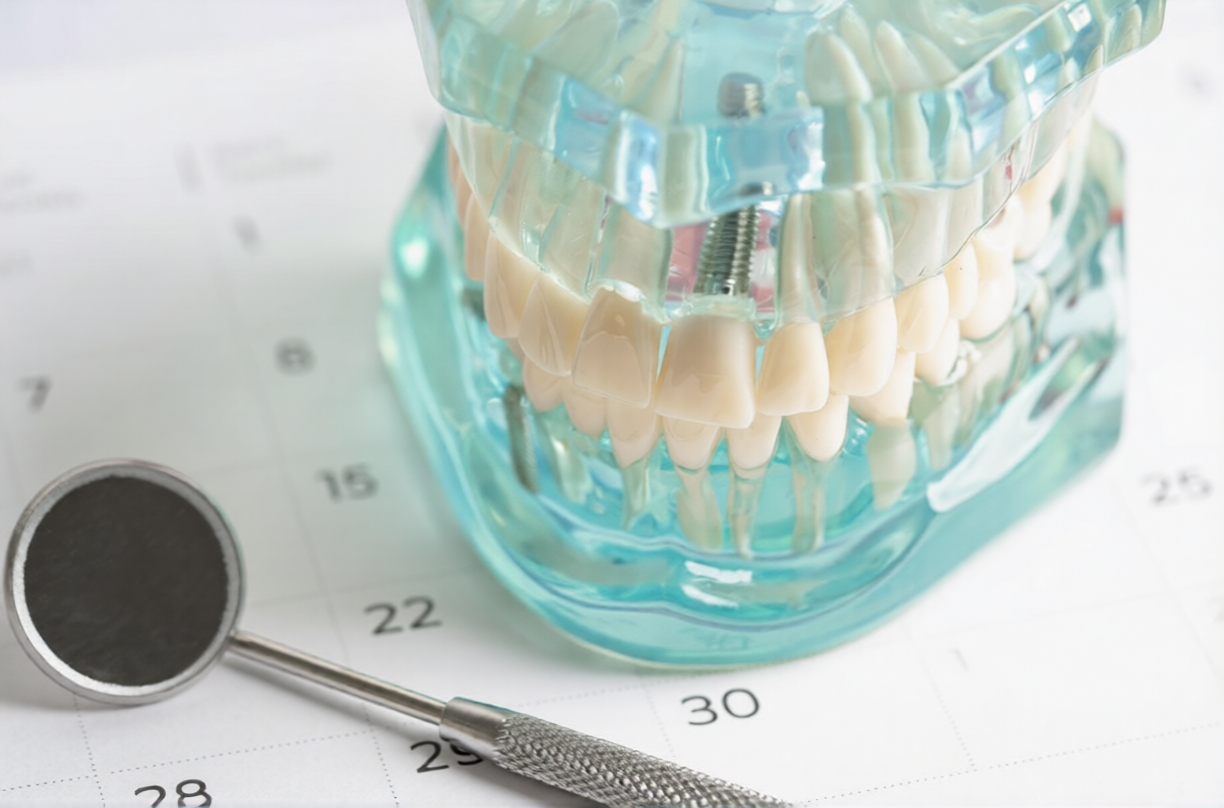
- Posterior implants are tilted 30-45 degrees to engage denser anterior bone and avoid anatomical structures.
- Strategic angulation can reduce stress in compact and cancellous bone compared to vertical placement.
- Tilted placement allows longer implants and reduces cantilever length, improving load distribution across the framework. This approach may reduce the need for bone grafting procedures in suitable candidates with adequate bone.
- Minimum bone requirements are 5mm width (both jaws), 10mm height (maxilla), and 8mm height (mandible).
Why Implants Are Tilted: The Biomechanical Foundation
Implants are tilted to maximise available bone and avoid anatomical structures that limit vertical placement. Tilting posterior implants at 30-45 degrees allows longer fixtures to engage denser anterior bone. This angulation increases the anteroposterior spread between implants, improving stability and load distribution. The approach addresses bone loss patterns commonly seen in patients who are missing all their teeth.
The All-on-4 configuration uses two straight anterior implants and two posterior implants tilted up to 45 degrees. This design distributes support across a wider area of the jaw. Research published in BMC Oral Health in 2022 confirms that 45 degrees is the maximum effective angulation. Beyond this angle, biomechanical complications may increase, and prosthetic management becomes more challenging.
Anatomical Challenges in the Posterior Jaw
In the upper jaw, the maxillary sinus occupies much of the posterior region. This air-filled cavity limits the bone height available for vertical implant placement. Tilted implants are positioned anterior to the sinus, engaging bone where adequate height remains. This navigation may reduce the need for sinus lift procedures in many cases.
In the lower jaw, the mental foramen and inferior alveolar nerve canal present constraints. The mental foramen is located in the premolar region on each side. Tilting implants forward avoids these structures while utilising stronger bone in the anterior mandible. This positioning protects nerve structures and provides access to less-affected bone.
Patients with severe bone loss, called atrophic or resorbed jaws, often benefit from this approach. Bone resorption typically progresses from the posterior areas forward over time. The anterior region usually retains better bone quality and quantity compared to posterior sites.
The A-P Spread Advantage
Anteroposterior spread refers to the front-to-back distance between the furthest anterior and posterior implants. Tilting posterior implants significantly increases this spread compared with placing all implants vertically. A-P spread improves the prosthetic foundation and enhances resistance to rotational forces during chewing.
This increased spread also reduces the cantilever length required for the prosthetic bridge. A cantilever is the portion of prosthetic teeth extending beyond the last implant support. Shorter cantilevers experience less lever force, reducing stress on the implants and the surrounding bone. This biomechanical advantage contributes to the long-term stability of the restoration.
The tilted configuration may allow immediate or early loading in suitable cases, usually within several days. The specific angle and placement depend on individual bone anatomy and are determined during treatment planning.
The Optimal Angle: 30-45 Degrees Explained
The standard angulation range for posterior implants in All-on-4 protocols is 30 to 45 degrees. This range is supported by extensive biomechanical research and clinical outcome data spanning multiple studies. The specific angle selected depends on individual bone anatomy and the locations of anatomical structures.
- A systematic review published in BMC Oral Health in 2022 confirms the 30-45-degree protocol standard. Posterior implants are tilted within this range to avoid the maxillary sinus and mental foramen. This angulation provides optimal balance between anatomical navigation and biomechanical performance in most cases.
- Research published in BMC Oral Health in 2022 demonstrated that 45-degree distal implants showed the lowest stress levels. Loading was measured at the central fossa of the first molar position. This finding confirms that strategic angulation within the established range improves force distribution patterns.
- Bevilacqua et al. (2011) found that tilting the distal implant by 30° — with consequent elimination of the posterior cantilever — reduced peri-implant stress by approximately 52.6% in cortical bone and 47.5% in cancellous bone, compared to vertical implants with a 13 mm cantilever.
- Studies using minimised cantilever lengths at 30-45 degree angulation enhance stress distribution and clinical predictability. Photoelastic studies and finite element analysis have measured stress distribution at various implant angles. These research methods use advanced modelling to simulate forces throughout the implant-bone interface. Results consistently support the 30-45 degree range for biomechanical outcomes in suitable cases.
- When implants are tilted 30 degrees or more, they should be splinted together. Splinting connects the implants with a rigid prosthesis that distributes forces across the framework. Custom surgical guides allow precise angulation during placement according to pre-planned specifications.
Why Not More Than 45 Degrees?
Angulation beyond 45 degrees may compromise biomechanical stability and prosthetic management in several ways. Excessive tilt increases torque forces on the implant during function. This may affect osseointegration patterns and long-term stability in some cases.
Surgical access becomes more challenging at steeper angles, increasing the technical complexity of placement. Prosthetic complications also increase with angulation exceeding 45 degrees in many patient situations. Angled abutments required to align the prosthetic emergence may exceed their mechanical limits.
The connection between the implant and abutment experiences higher lateral forces at angulations beyond 45 degrees. Multiple studies published in PMC and All-on-4 reference protocols establish 45 degrees as the maximum. This upper limit is based on decades of clinical research and biomechanical testing data.
Success rates are derived from clinical studies, and individual outcomes may vary based on patient-specific factors.
Maximising Bone Contact: How Angulation Works
Angled placement maximises bone contact by allowing longer implants to engage denser anterior bone tissue. Tilting posterior implants up to 45 degrees increases the implant surface area in direct contact with bone. This strategic positioning provides optimal support while avoiding anatomical structures that would limit vertical placement.
Key mechanisms of how angulation maximises bone contact:
- Bone contact refers to the implant surface area in direct physical contact with surrounding bone tissue.
- Increased surface contact enhances initial stability and supports long-term osseointegration of the implant fixture.
- Tilted implants can achieve increased contact even in jaws affected by bone loss.
- The All-on-4 protocol uses just four strategically angled implants to support a full-arch prosthesis.
- Posterior implants are tilted to utilise available bone in anterior regions where density remains adequate.
- This approach may reduce the need for bone grafting procedures in many suitable cases.
- PMC All-on-4 reference protocols establish minimum bone requirements for treatment candidacy.
- The maxilla requires a minimum width of 5mm and a height of 10mm in the canine-to-canine region.
- The mandible requires a minimum width of 5mm and a height of 8mm in the anterior segment.
- Tilting enables placement of longer implants where vertical space would otherwise be insufficient for adequate support.
- Longer implants provide more surface area for bone integration compared to shorter vertical fixtures.
- This increased surface area enhances stability and load distribution across the prosthetic framework.
Engaging Denser Anterior Bone
Implants are positioned in areas of denser bone rather than compromised posterior regions affected by resorption. The anterior jaw typically retains better bone quality and quantity compared to posterior sites. Tilted posterior implants engage the stronger anterior bone while avoiding anatomical limitations in the posterior regions.
Bone density varies throughout the jaw, with the anterior mandible typically offering the densest bone. The anterior maxilla provides better bone quality than the posterior regions affected by the maxillary sinus. Strategic angulation allows implants to achieve optimal bone contact.
The Osseointegration Advantage
Osseointegration is the biological process where bone tissue grows around and integrates with the implant. Titanium implants are biocompatible, meaning bone cells accept and bond with the implant surface. This integration anchors the implant securely within the jaw over a period of months.
New bone tissue forms at the implant surface and gradually increases in density and strength. The increased surface area provided by longer, tilted implants supports enhanced potential for osseointegration. This biological integration provides the foundation for long-term stability of the restoration.
Clinical research suggests tilted implants may achieve survival rates of approximately 96.93% after five or more years of function — comparable to axially placed implants, according to a systematic review and meta-analysis published in PMC.
The degree of bone contact and osseointegration success varies based on individual factors. These include bone quality, overall health, and adherence to post-operative care protocols. Success rates cited from clinical studies; individual results may differ.
Stress Distribution: The Physics of Angled Placement
Do tilting implants create more stress on the bone? No, when properly executed with splinting and controlled cantilevers, tilted implants distribute stress favourably. Research-backed protocols establish specific bone requirements and angulation parameters to support predictable outcomes when properly executed.
Key biomechanical findings on stress distribution with angled implants:
- Biomechanical analysis shows tilted implants provide improved stress distribution compared to axially placed implants.
- This advantage is particularly evident in the posterior region, which is key to reducing the risk of implant failure.
- Tilted implants in a splinted framework distribute forces more evenly across the bone-implant interface.
- A 45-degree distal implant demonstrated lower stress when loading at the central fossa.
- The 0-degree vertical distal implant demonstrated higher stress under the same loading conditions.
- Splinting implants together with a rigid prosthesis is essential to effective stress management.
- The rigid bridge connects all implants and distributes forces across the entire framework rather than individual fixtures.
- This cross-arch splinting creates a biomechanical unit that resists rotational and lateral forces during function.
- Angled abutments on tilted implants in a curved arch with cross-arch splinting decrease stresses around distal implants.
The Role of Cantilever Reduction
A cantilever is the portion of prosthetic teeth extending beyond the last implant support point. This overhang creates a leverage effect where forces are magnified at the implant closest to the extension. Cantilever length plays a key role in stress reduction throughout the implant-supported prosthesis. With the same distal implant inclination, peri-implant bone stress increases proportionally with cantilever length.
Tilting posterior implants reduces the cantilever length required to achieve full-arch tooth replacement. The optimal cantilever length for angled implants is shorter than that of traditional vertical implant configurations. A more distal position of the posterior implant, achieved by tilting, reduces stress on the framework. An increased prosthetic base from tilting reduces the force magnitude experienced by individual implants.
When an implant is part of a multi-implant prosthesis, the spread and stiffness reduce bending forces. Shorter cantilevers reduce stress on the implant-bone interface, contributing to long-term stability and preservation. Long-term data from published studies suggest positive outcomes for many patients in appropriate clinical situations. Stress distribution patterns depend on individual bone quality, occlusal forces, and prosthetic design factors. Your dentist will plan placement based on your specific anatomy and functional requirements.
Clinical Advantages: Avoiding Bone Grafting and Anatomical Structures
The primary clinical advantage of tilted implant placement is the potential to avoid bone grafting procedures. Tilted implants allow treatment of patients with severe bone loss without requiring sinus lifts or ridge augmentation. Strategic angulation navigates around critical anatomical structures, utilising available bone in areas where density and volume remain adequate.
Bone grafting procedures usually require a healing period of 6-12 months before implant placement. Tilted implant protocols may allow for early loading, with prosthetic placement potentially within days of surgery. Treatment may be completed in months rather than 12-18 months or longer with grafting procedures. Avoiding bone grafting may reduce overall treatment costs for suitable patients; actual savings depend on individual treatment requirements.
Bypassing the Maxillary Sinus
The maxillary sinus is a large air-filled cavity located in the upper jaw above the back teeth. Bone loss in the posterior maxilla often leaves insufficient vertical height between the sinus and oral cavity. Vertical implant placement in this area would penetrate the sinus or require a sinus lift procedure.
Posterior implants are tilted to avoid the maxillary sinus, placing them anterior to the sinus cavity. This allows placement of longer implants in the denser bone anterior to the sinus where volume remains. Strategic angulation bypasses the sinus entirely while achieving adequate implant length for stability and osseointegration.
Avoiding the Inferior Alveolar Nerve
The inferior alveolar nerve runs through a canal in the lower jawbone, providing sensation to the teeth. The mental foramen is the opening where this nerve exits the jaw near the premolar area. Tilted implants in the mandible are placed anterior to the mental foramen and nerve canal structures. This positioning utilises stronger anterior bone while reducing the risk of nerve contact during implant placement.
CBCT scanning is essential for precise surgical planning to map the exact location of anatomical structures. Three-dimensional imaging allows detailed assessment of bone volume, sinus position, and nerve canal location before surgery. A PubMed study reports a 95.2% success rate for tilted implants after five years of clinical follow-up. All-on-4 is a surgical procedure carrying risks; a comprehensive assessment is required to determine your suitability.
Frequently Asked Questions
Do tilted implants have the same success rate as straight implants?
Research suggests outcomes between tilted and straight implants may be comparable in suitable patients. A systematic review and meta-analysis published in PMC found similar survival and success rates for both implant types after more than five years of function, with no statistically significant differences in marginal bone loss. Tilted and axial implants demonstrate approximately 97% survival at 10 years in clinical studies.
Success depends on proper case selection, precise surgical technique, and patient factors, including bone quality and oral hygiene. Success rates are derived from clinical studies; individual outcomes may vary based on your specific circumstances.
What happens if a tilted implant fails? Can it be replaced?
While implant failure is uncommon, options are available if it occurs. The remaining three implants may temporarily support the prosthesis, depending on which implant failed and its position. A replacement implant can often be placed after healing, potentially at a different angle or position. Your dental team will discuss contingency planning during treatment planning to address potential complications.
How does the angled placement affect cleaning and maintenance?
The prosthetic bridge attached to tilted implants is designed to allow effective access for hygiene and cleaning. Angled abutments orient the prosthetic teeth to proper alignment despite the underlying implant angulation. Most All-on-4 prosthetics have a hygiene gap between the bridge and the gums to provide cleaning access. Your dental team will provide specific cleaning techniques and tools suited to your prosthetic design.
Can tilted implants support the same chewing force as straight implants?
When properly placed and splinted together, tilted implants are generally designed to distribute forces across the framework in suitable cases. The All-on-4 configuration creates a biomechanical unit where four implants work together to manage chewing forces. Tilted posterior placement with reduced cantilever length can provide a favourable stress distribution in the bone-implant interface. Actual load tolerance depends on bone quality, implant integration, and prosthetic design for your specific case.
Is All-on-4 with tilted implants suitable for both upper and lower jaws?
Yes, but biomechanics differ slightly between the maxilla and mandible due to differences in bone density and anatomy. The mandible has denser bone and simpler anatomy, making All-on-4 a well-supported option in this location. The maxilla requires navigation around the maxillary sinus, often necessitating slightly higher tilt angles near 45 degrees. Your dentist will assess your bone quality and anatomy to determine the optimal configuration for each arch.
How long do the actual tilted implants last compared to straight implants?
Tilted implants in All-on-4 are designed for long-term integration and may remain functional for years with appropriate care. Lifespan depends on oral hygiene, smoking status, systemic health, occlusal forces, and regular professional maintenance visits. The prosthetic component may require replacement or refurbishment over time due to wear and material ageing. Individual outcomes vary; your dentist will discuss expected longevity based on your specific risk factors and circumstances.
Does the surgical technique for placing tilted implants require special training?
Yes, All-on-4 with tilted implants requires advanced training in surgical planning, complex anatomy, and guided surgery protocols. Most dentists offering this treatment have completed focused training programmes and use computer-guided surgical systems to enhance accuracy. CBCT imaging and digital planning software are essential for pre-surgical planning to meet specific bone requirements. Surgical guides are custom-fabricated for each patient to guide implant placement according to the digital plan.
Final Thoughts
Tilted implant placement in All-on-4 is an established, research-based approach developed over decades of biomechanical study. The 30-45 degree angulation is strategic, maximising bone contact, optimising stress distribution, and avoiding important anatomical structures. Strategic positioning allows placement of longer implants in denser anterior bone while bypassing the maxillary sinus. This approach may reduce the need for bone grafting, potentially shortening treatment timelines for suitable candidates.
The widespread adoption of All-on-4 protocols globally reflects the growing body of clinical evidence supporting angled implant placement in suitable candidates. This treatment represents a careful balance of anatomy, physics, and clinical judgement rather than a shortcut. Understanding these biomechanical principles helps patients understand their options for full-arch implant restoration treatment.
All-on-4 with tilted implants is not suitable for everyone due to specific requirements. A comprehensive assessment, including CBCT imaging, is required to determine if this approach may be appropriate. The team at Anchorage Dental Care Mindarie can assess your suitability and explain treatment options. Individual results vary based on bone quality, overall health, and adherence to post-treatment care.
Written by: Dr Michael Shams, BDSc
General Dental Practitioner
AHPRA Registration: DEN0001580551
Dr Shams has 21 years of experience in general dentistry with a focus on implant restoration. He provides comprehensive dental care at Anchorage Dental Care Mindarie.





 How We Can Help
 General Dentistry
 Emergency Dentist
 Cosmetic Dentistry
 Dental Implants
 Restorative Dentistry
 Cosmetic Procedures
 Orthodontics
 Sedation and Sleep Dentistry
 Preferred Provider
 Other Payment Options
 Government Scheme