

Thinking about getting veneers can feel exciting and a little overwhelming. Many people wonder what the process looks like and what it means for their natural teeth.
If you’re considering dental veneers, understanding each stage helps you feel more prepared and comfortable about the process. From the initial consultation to temporary veneers and long-term care, knowing what to expect can make the treatment easier.
In this guide, you’ll find practical details about the dental veneers procedure, recovery, and tips for caring for your smile. You’ll gain clear insights into what happens before, during, and after treatment.
- Dental veneers are thin shells made from porcelain or composite resin that bond to the front surface of teeth to change their appearance.
- Veneers may improve the appearance of your teeth by covering discoloured teeth, chipped or broken teeth, crooked teeth, misshapen teeth, or worn teeth.
- The dental veneer procedure includes an initial consultation, tooth preparation, and final veneer placement, with temporary dental veneers often used in between.
- Tooth preparation involves removing a thin layer of tooth enamel, which is an irreversible procedure that may cause short-term sensitivity.
- After placement, patients may experience mild sensitivity, temporary speech adjustments, and the need to modify eating habits, such as avoiding hard foods or chewy foods.
- With proper care, veneers can last 10–25 years, though replacement may be needed over time.
- Good oral hygiene, regular dental check-ups, and limiting staining foods help maintain the appearance of your smile.
The Veneer Process
Veneer treatment is a planned cosmetic procedure that involves assessment, preparation, fabrication, and final bonding. After an initial evaluation to determine suitability, the teeth may be conservatively prepared, and impressions or digital scans are taken to guide veneer design. Depending on the material chosen, veneers are either custom-made in a dental laboratory or placed directly.
Once ready, the veneers are carefully fitted and bonded to the teeth, with adjustments made to ensure comfort and proper function. Follow-up care and regular dental reviews help maintain the health, appearance, and longevity of the restorations.
What Are Veneers?
Dental veneers are thin shells that bond to the front surface of teeth using dental cement. They can change the appearance of your teeth.
Most veneers are made in a dental laboratory from either porcelain or composite resin. Porcelain veneers are durable and more stain-resistant. Composite veneers may be applied directly in one visit.
Because veneers are thin and custom-fitted to the front surface of teeth, they preserve most of the natural tooth structure and require only minimal enamel removal. Unlike dental crowns, which fully encase the tooth, veneers enhance the appearance of the tooth, making them a popular choice for cosmetic dental treatments.
Who Might Consider Veneers?
Patients often consider veneer treatment for aesthetic dental concerns. While not everyone is a good candidate, common reasons include the following:
- Discoloured teeth:
Some stains do not respond to whitening treatments. Porcelain or composite dental veneers can change the colour of the front teeth. - Chipped or broken teeth:
Custom veneers can cover minor chips or cracks, improving the appearance of your smile. - Crooked, misaligned, or uneven teeth:
Veneers cover the front surface to address gaps or minor misalignments. - Misshapen teeth:
Teeth that are irregular in shape can be covered by veneers to make them look more uniform. - Worn teeth:
Teeth may become worn down with age or grinding. Porcelain veneers or composite veneers can be used to restore teeth to their original structure.
Suitability for cosmetic veneers varies and depends on your oral health and dental hygiene routine. The decision is confirmed during an initial consultation, in which a qualified dentist examines your teeth.
What Happens During the Dental Veneer Procedure
Here is a transparent overview of the steps from consultation to bonding. Details may vary based on your oral health and treatment plan.
Initial Consultation and Assessment
The process begins with an initial consultation, where the dentist evaluates your teeth, gums, and overall oral health. This may involve X-rays, photographs, and dental impressions or digital scans. The dentist will also discuss treatment options and confirm whether veneer treatment is appropriate.
Tooth Preparation and Temporary Dental Veneers
If you are suitable, the next stage is tooth preparation. A thin layer of tooth enamel is removed from the front surface of the teeth to make space for the veneers. Because veneers are thin, the amount of tooth reduction is usually limited. An impression or digital intraoral scan is then taken and forwarded to the dental laboratory for fabrication of the veneers. Provisional (temporary) veneers are placed to protect the prepared surfaces and maintain aesthetics and function while the final veneers are being fabricated. Some patients may experience transient sensitivity during this period.
Final Veneer Placement and Adjustment
Once your veneers are ready, you return for the final veneer placement. The dentist positions the custom-made shells on your teeth for a trial fitting, allowing you to provide feedback on the shape and colour. When the fit is confirmed, the veneers are bonded to your teeth with dental cement, which is hardened using a special light. The dentist then removes excess cement, checks your bite, and makes necessary adjustments for comfort. A follow-up appointment is usually scheduled to assess the fit and gum response.
What to Expect After Getting Veneers
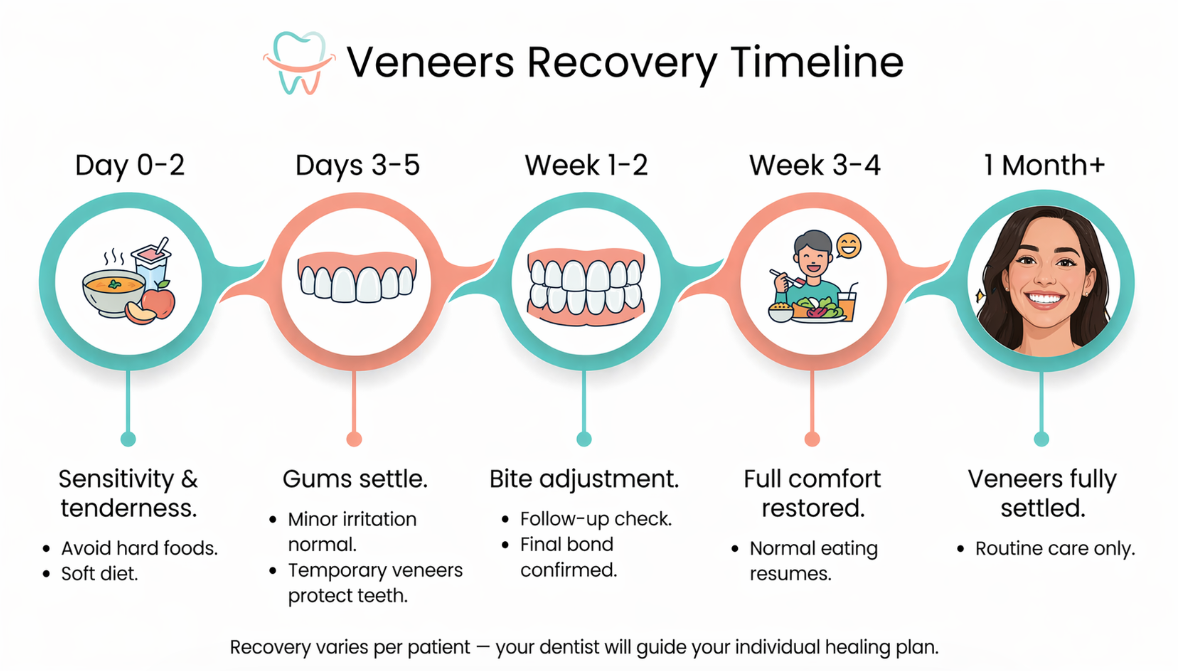
After receiving dental veneers, recovery is usually straightforward. Most patients go through a similar adjustment period, though experiences vary. Here’s what you may expect:
Initial Recovery and Sensitivity
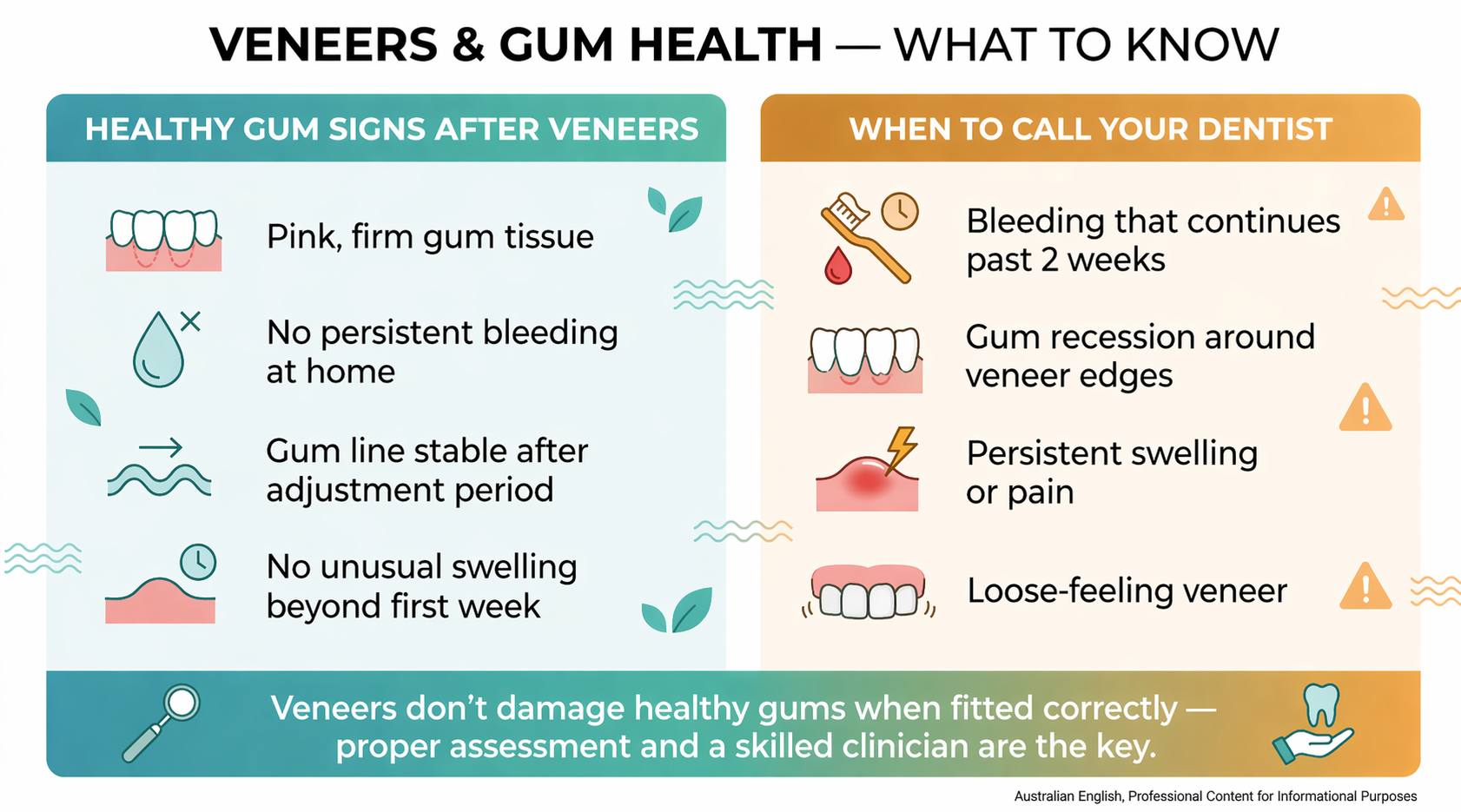
Some patients may notice mild sensitivity to cold foods or drinks such as ice water, chilled fruit, or yoghurt. This feeling usually improves within a few days and often within two weeks. Using a soft-bristled toothbrush and non-abrasive toothpaste promotes comfort. If sensitivity continues beyond two weeks, contact your dentist for review.
Getting Used to Your Veneers
Speech changes may occur, especially with the pronunciation of “s” or “th” sounds, and these changes typically settle within one to two weeks; however, the duration can vary. Eating habits may also need adjustment. Avoid biting directly into hard foods like raw carrots, nuts, or ice. Take care with chewy foods such as lollies or chewy bread, as they can place excessive pressure on the veneers. Cutting firm foods into smaller pieces reduces pressure on the veneers.
Long-Term Maintenance and Check-Ups
A proper dental hygiene routine, such as brushing and flossing, remains essential. Limiting frequent intake of staining foods and drinks such as coffee, tea, red wine, soy sauce, and curries helps maintain the appearance of your teeth. Regular dental check-ups every six months allow the dentist to assess gum health, check for any dental concerns, and confirm that the veneers work comfortably. A follow-up visit is usually scheduled within the first few weeks after placement to review comfort and fit.
Pros and Limitations of Veneers
Choosing dental veneers is a significant decision. While they are often used in cosmetic dental procedures, it’s important to understand both the potential benefits and the considerations involved. This balanced view helps you approach the treatment with realistic expectations.
Common Benefits of Veneers
People consider veneer treatment for many different dental concerns. Here are some of the common benefits:
- Improved appearance of your teeth:
Porcelain or composite veneers may enhance your smile by covering discoloured, worn, misshapen, or small-gapped teeth. - Natural look:
Because veneers are thin, they adapt to your natural tooth structure, changing the look of the front surface without covering the entire tooth. - Stain resistance:
Porcelain veneers are stain-resistant, which may help limit visible colour changes when exposed to foods and drinks such as coffee, tea, or red wine. - Customisation:
Dental veneers are designed to match your tooth shade and shape, allowing adjustments to align with your teeth’s appearance.
Considerations and Limitations
Like any cosmetic procedure, veneers come with certain considerations. Knowing these limitations will help you decide whether this treatment aligns with your needs:
- Cost of veneers:
The cost of veneers varies depending on the material, the number of teeth involved, and whether you choose traditional porcelain veneers or composite tooth veneers. - Replacement over time:
Veneers can last 10–25 years with proper care, though longevity varies with oral health and lifestyle habits. - Irreversible procedure:
Tooth preparation for traditional porcelain veneers usually requires removing a thin layer of tooth enamel, which is an irreversible procedure. - Not suitable for everyone:
Suitability depends on your oral health, gum condition, and dental hygiene routine. A qualified dentist will assess candidacy during an initial consultation.
Questions to Ask Before Getting Veneers
Before deciding on veneer treatment, it helps to ask clear questions during your initial consultation. Doing so helps you understand the process, costs, and long-term care. Here are some examples you may wish to consider:
- Am I a suitable candidate for veneers?
This helps determine whether your oral health, tooth structure, and gums are suitable for the dental veneers procedure. - What type of veneers may suit my needs?
Asking about porcelain veneers, composite veneers, or no-prep veneers helps you learn how each option is designed and applied. - How much do veneers cost?
Discussing the cost of veneers clarifies fees, payment stages, and how the price may vary based on materials and the number of teeth involved. - What is involved in tooth preparation?
Knowing whether tooth enamel needs to be reduced and if temporary dental veneers will be placed helps set realistic expectations. - How long do veneers last?
Asking about the expected longevity of veneers allows you to plan for potential future replacement. - What follow-up care is recommended?
Understanding the need for a follow-up appointment, regular dental check-ups, and maintaining a consistent dental hygiene routine supports long-term success.
Final Thoughts
Considering dental veneers is a personal decision that depends on your oral health, treatment goals, and expectations. Learning about the process, benefits, and limitations helps you approach veneer treatment with realistic expectations.
An initial consultation at Anchorage Dental Care Mindarie provides an opportunity to discuss your options with a dentist. During this visit, you can ask questions, review your dental concerns, and learn whether veneers are suitable for your needs.


 How We Can Help
 General Dentistry
 Emergency Dentist
 Cosmetic Dentistry
 Dental Implants
 Restorative Dentistry
 Cosmetic Procedures
 Orthodontics
 Sedation and Sleep Dentistry
 Preferred Provider
 Other Payment Options
 Government Scheme