

Getting veneers is exciting — you’ve made the decision, you’ve had your consultation, and you’re picturing the result. But somewhere between booking and the actual appointment, most patients start wondering about the recovery. Will it hurt? How long before things feel normal? What if something doesn’t feel right?
These are the right questions to ask, and they deserve honest, detailed answers.
This post covers the physical recovery process after veneer placement — from the first 24 hours through to the point where your mouth feels completely settled. If you’re looking for information about getting used to the feel and bite of your new veneers (adapting to how they look and function), that’s covered in our separate post: How Long Does It Take to Adjust to New Veneers?. Recovery and adjustment are related, but they’re different things — and we want to give each the attention it deserves.
Quick Answer: Most patients experience the majority of physical recovery from veneers within one to two weeks. The first 24–48 hours typically involve the most noticeable sensitivity and gum tenderness. Tooth sensitivity — particularly to temperature — may continue for two to four weeks as your teeth settle. Individual recovery times vary depending on whether you have porcelain or composite veneers, how many teeth were treated, and your existing tooth sensitivity.
What Happens to Your Teeth During the Veneer Process?
Understanding recovery starts with understanding what your teeth go through during preparation.
For porcelain veneers, a small amount of enamel — typically 0.3 to 0.7 millimetres — is removed from the front surface of each tooth. This creates space for the veneer to sit flush without making the tooth look bulky. Because enamel doesn’t regenerate, this is an irreversible process.
Composite veneers typically require less or no enamel reduction, depending on the technique and the individual tooth’s shape.
Why does enamel removal cause sensitivity?
Enamel is the tooth’s protective outer layer. When it’s reduced, the underlying dentine — which contains microscopic tubules connected to the tooth’s nerve — becomes more exposed. This is why temperature sensitivity (hot drinks, cold foods, cool air) is so common in the days following veneer preparation. It’s your tooth’s nerve responding to changed conditions, not necessarily a sign that something has gone wrong.
During the period between preparation and your final veneer fitting (if you’re having porcelain veneers, this is typically one to two weeks while your veneers are made in a dental laboratory), you’ll likely wear temporary veneers. These protect the prepared teeth but are thinner and less insulating than the final porcelain — so some sensitivity during this interim period is completely normal.
What to Expect in the First 24–48 Hours After Veneers
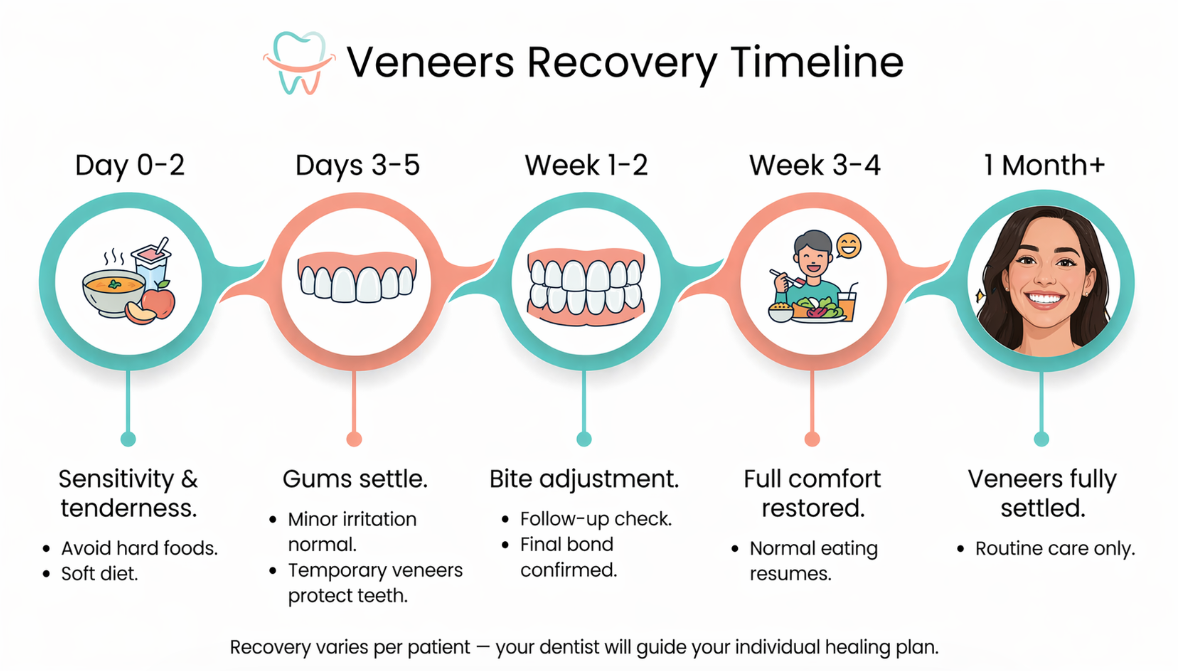
The first two days after veneer placement tend to involve the most noticeable symptoms. Here’s what most patients experience:
Tooth Sensitivity
Temperature sensitivity is the most common complaint. Cold water, ice cream, or even a cold breeze may produce a brief, sharp sensation in one or more of the treated teeth. Hot food and drinks can trigger a similar reaction.
This happens because the tooth’s nerve is responding to the enamel reduction and to the bonding process itself. The adhesive used to bond your veneer generates a mild chemical reaction during the curing process that some nerves register.
In most cases, this sensitivity is transient — it reduces noticeably within the first week.
Gum Tenderness
Your gum tissue around the treated teeth may feel sore or tender. The veneer edge sits close to the gum line, and the process of preparing, taking impressions, and placing the veneer involves contact with gum tissue that isn’t used to it.
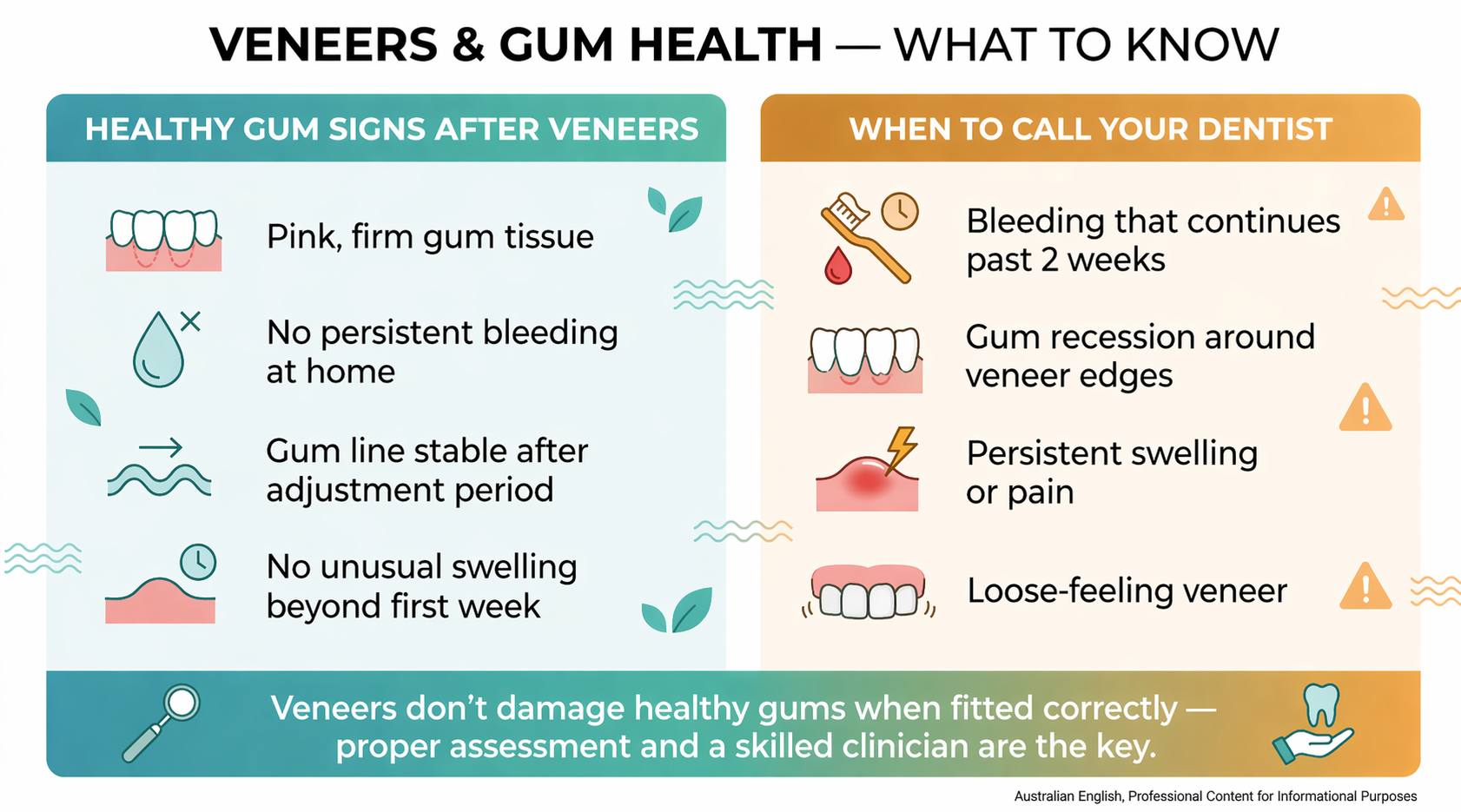
Mild gum puffiness or bleeding when you brush near the veneers in the first day or two is not unusual. If significant swelling or pain develops, contact your dentist.
Bite Awareness
You may feel very aware of your bite in the hours after placement. This is partly heightened nerve sensitivity, partly your brain recalibrating to slightly changed tooth surfaces. Your dentist will check your bite at the time of placement and make adjustments, but it can take a day or two for your jaw muscles to settle into the new contacts.
What to Do
- Use a anti-sensitivity toothpaste (look for one containing potassium nitrate or stannous fluoride) from day one
- Avoid very hot or very cold food and drinks for the first few days
- Take over-the-counter pain relief medication if needed — ibuprofen or paracetamol at standard doses are appropriate for most healthy adults (check with your pharmacist if you have health conditions)
- Eat soft foods: scrambled eggs, yoghurt, pasta, soft-cooked vegetables
- Don’t prod the veneers with your tongue — you’ll just keep triggering sensitivity
Week 1 Recovery: Common Experiences and What’s Normal
By days three to seven, most patients notice improvement. The acute sensitivity from the first two days usually starts to ease.
What typically continues in week one:
- Temperature sensitivity — usually less sharp than days one and two, but still present
- Gum sensitivity — the gum tissue is still adapting to the veneer edges; mild tenderness when brushing is normal
- Bite awareness — most patients have largely adapted, but some awareness of changed contacts may remain
- Slight speech changes — if your veneers changed the thickness or shape of your teeth, you may notice minor adjustments needed for certain sounds; this typically resolves quickly
Eating in week one:
Continue to eat softer foods for the first week, especially if you have porcelain veneers. Avoid:
- Very hard foods (crusty bread, raw carrots, hard lollies)
- Biting into food with your front teeth directly (cut food up)
- Sticky foods that could pull on the veneer bond during early healing
- Staining foods and drinks (coffee, red wine, curry) in the first week — the bonding material can be more susceptible to staining early on
Oral hygiene in week one:
Keep brushing twice daily, but use a soft-bristled toothbrush and gentle pressure near the veneers. Floss carefully — thread floss down between teeth rather than snapping it into the gum line. Water flossers are excellent for this period.
When Does Sensitivity After Veneers Go Away?
This is the question most patients ask most urgently. The honest answer is: it varies.
For most patients, sensitivity significantly reduces within two weeks. By the end of the first fortnight, most patients no longer notice sensitivity during normal daily activities.
A minority of patients experience sensitivity for four to six weeks. This is still within the range of normal, particularly for patients who had a history of tooth sensitivity or who had a larger number of teeth prepared.
Porcelain veneers vs composite veneers: Porcelain veneers typically require more enamel reduction and involve a more involved preparation process, so they tend to produce more noticeable initial sensitivity than composite veneers. Both should resolve within the same general timeframe.
When is sensitivity not normal?
- Sensitivity that is getting worse rather than better after two weeks
- Sharp, spontaneous pain that occurs without a temperature trigger
- Pain on biting down that doesn’t improve
- Throbbing or persistent aching in a veneer tooth
- Gum swelling that is progressing rather than resolving
Any of these should prompt a call to your dentist. In a small number of cases, a tooth may have been compromised before or during the procedure in a way that requires assessment.
How to Speed Up Recovery and Manage Discomfort
There’s no magic shortcut to recovery — your tissues need time to settle. But there are things you can do to make the process more comfortable.
Use a Anti-sensitivity toothpaste from Day One
Anti-sensitivity toothpastes work by blocking the dentine tubules that transmit temperature signals to the nerve. They typically take about two weeks of consistent use to provide significant relief, so starting immediately — not just when it gets uncomfortable — is a common approach.
Apply a small amount directly to the sensitive teeth with your fingertip after brushing and leave it — don’t rinse it off. This direct application method is more effective than just brushing with it.
Avoid Your Trigger Foods
If you know cold water sets off sensitivity, use room-temperature water for the first week. If hot coffee is the trigger, let it cool a little before drinking. You’re not avoiding these foods forever — just reducing unnecessary nerve stimulation while your teeth settle.
Warm Salt Water Rinses
Gentle warm salt water rinses (a teaspoon of table salt in a glass of warm water) two to three times a day help reduce gum inflammation and promote tissue healing. Spit — don’t swallow.
Follow Up If Your Bite Doesn’t Feel Right
If after a few days your bite still feels off — like you’re hitting one tooth before the others, or there’s consistent pressure on one veneer — contact your dentist. A simple bite adjustment takes minutes and can significantly improve comfort.
Alcohol-Free Mouthwash
If you want to use mouthwash during recovery, choose an alcohol-free option. Alcohol-based mouthwashes can irritate already-sensitised gum tissue and may affect the bonding material of composite veneers.
Signs Your Veneers Are Healing Normally
Reassuring signs that recovery is proceeding as expected:
- Sensitivity is gradually decreasing, even if it hasn’t disappeared completely
- Gum tenderness is settling, and brushing feels more comfortable each day
- You’re no longer consciously aware of the veneers the majority of the time
- You can eat and drink normally with only minor avoidances
- Your bite feels comfortable and natural
When to Call Your Dentist
Contact Anchorage Dental Care if you notice:
- A veneer that has chipped, cracked, or feels loose
- Sharp pain on biting or spontaneous toothache
- Sensitivity that is worsening rather than improving after two weeks
- Significant gum swelling or a persistent white or red lesion near a veneer
- A noticeable change in the colour or appearance of a veneer
- A high bite (one tooth feeling higher than the others when you close)
Most post-veneer concerns are manageable when caught early. Don’t wait and hope a problem resolves on its own — call us.
Porcelain vs Composite Veneers: How Does Recovery Differ?
| Porcelain Veneers | Composite Veneers | |
|---|---|---|
| Enamel removal required | Usually yes (0.3–0.7mm) | Minimal or none (in most cases) |
| Initial sensitivity | More common, typically more noticeable | Less common, typically milder |
| Sensitivity duration | 1–4 weeks | Days to 1–2 weeks |
| Gum settling time | 1–2 weeks | Shorter |
| Fabrication | Dental laboratory (1–2 weeks) | Chair-side, same appointment |
| Temporary veneers needed | Usually, between preparation and fitting | No |
About Veneers at Anchorage Dental Care, Mindarie
Anchorage Dental Care provides both porcelain and composite veneer treatments in Mindarie, serving patients from across the northern Perth coastal corridor — Quinns Rocks, Clarkson, Merriwa, Alkimos, and beyond.
Our team takes time before any cosmetic treatment to understand what you’re hoping to achieve, explain the process honestly — including what recovery involves — and make sure veneers are genuinely the right treatment for your situation. With 385+ Google reviews, we’ve helped many patients through their cosmetic journey.
If you’re considering veneers and want to understand more before committing, a consultation is a good starting point. We’ll check your teeth, discuss your goals, and give you a realistic picture of the process, the recovery, and the results you can expect.
Frequently Asked Questions About Veneers Recovery
How long will my teeth be sensitive after veneers?
Most patients find sensitivity significantly reduces within one to two weeks. Some patients experience mild sensitivity for up to four to six weeks. If sensitivity is worsening rather than improving, or persists beyond six weeks, consult your dentist for assessment.
Can I eat normally after getting veneers?
You may need to stick to softer foods for the first week, particularly with porcelain veneers. Avoid very hard, sticky, or crunchy foods during the healing period. Most patients return to their normal diet within one to two weeks.
Is it normal for gums to be sore after veneers?
Yes — mild gum tenderness and sensitivity in the first few days is normal. The gum tissue around the veneer edges needs time to settle. If you notice significant swelling, increasing pain, or any unusual lesions, contact your dentist.
Should I avoid hot and cold drinks after veneers?
For the first week or two, avoiding very hot or very cold temperatures can help reduce discomfort. Room-temperature or slightly warm food and drinks are easier on sensitive teeth during recovery.
How do I know if something has gone wrong with my veneers?
Signs to watch for include: a veneer that feels loose or has chipped, pain on biting that doesn’t improve, sensitivity that is getting worse (not better) after two weeks, throbbing or spontaneous pain, or significant gum swelling. These are worth a call to your dentist.
When can I have my morning coffee after veneers?
You can have coffee from day one — just let it cool a little in the first week to reduce temperature sensitivity, and use a straw if possible to minimise direct contact with the veneer surfaces. In the first week, staining foods and drinks can more easily affect the bonding material. After the first couple of weeks, your usual habits should be fine with normal oral hygiene.
Book Your Veneer Consultation at Anchorage Dental Care, Mindarie
If you’re researching veneers and want to understand the full picture — including exactly what recovery looks like for your specific situation — the next step is a consultation.
Our team will examine your teeth, discuss your cosmetic goals, explain the process in plain terms, and answer every question you have. No pressure, no obligation — just clear information.
📞 Call us to book, or visit anchoragedental.com.au to make an appointment online.
Anchorage Dental Care — Building Brighter Smiles with Your Dentist in Mindarie.
Sources and References
- Australian Dental Association (ADA) — dental.org.au
- Healthdirect Australia — healthdirect.gov.au
- AHPRA dental advertising guidelines — ahpra.gov.au
Published: April 2026. Reviewed by: Anchorage Dental Care Clinical Team.
Related post: How Long Does It Take to Adjust to New Veneers? — covers adaptation to the new feel and bite of your veneers.


 How We Can Help
 General Dentistry
 Emergency Dentist
 Cosmetic Dentistry
 Dental Implants
 Restorative Dentistry
 Cosmetic Procedures
 Orthodontics
 Sedation and Sleep Dentistry
 Preferred Provider
 Other Payment Options
 Government Scheme