

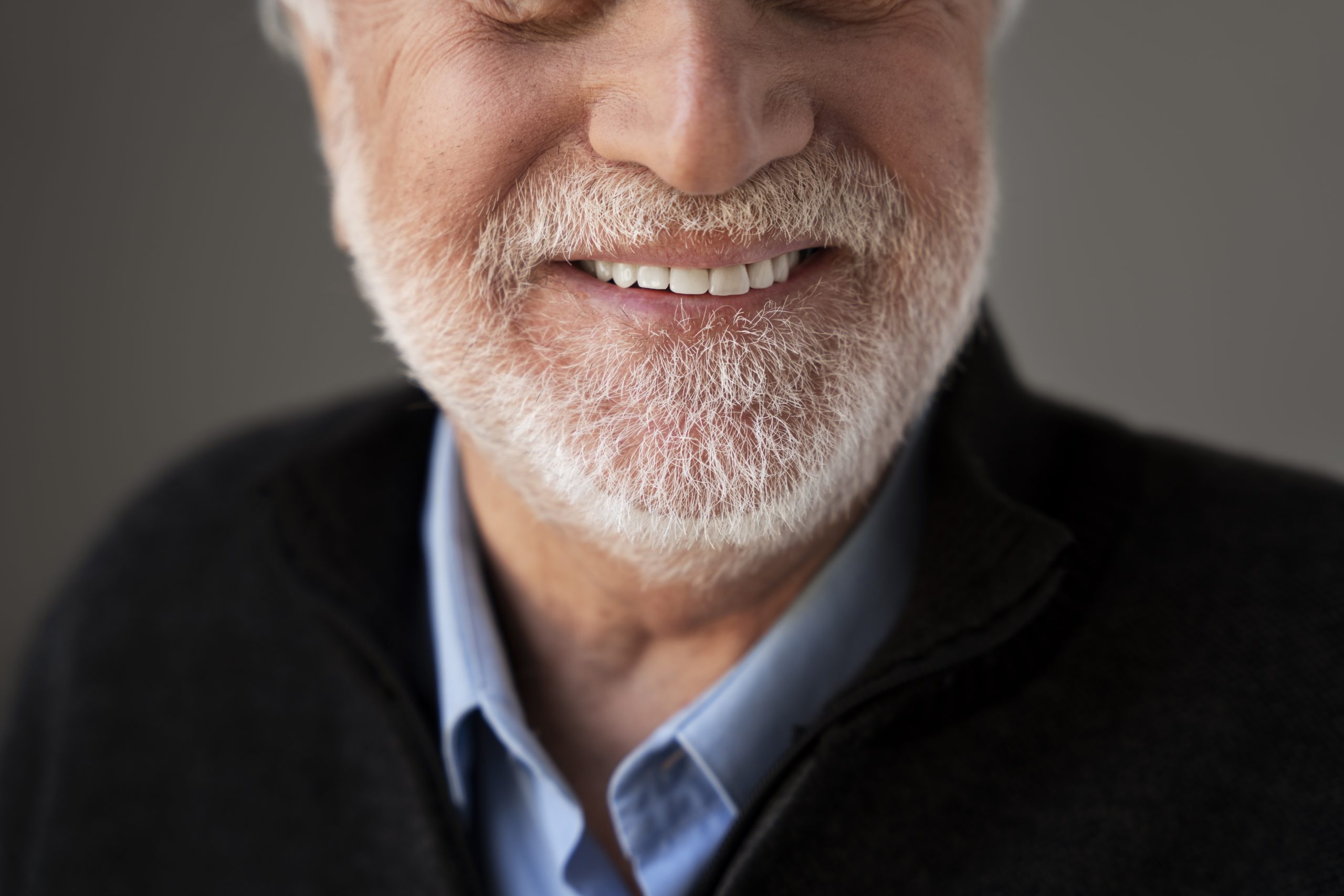
If you’re considering dentures, you might wonder whether they’ll look natural or if people will notice you’re wearing them. The appearance of your smile affects how you feel in social situations, during photos, and in everyday interactions. Modern dentures can achieve a highly realistic denture appearance when properly designed and fitted by registered dental practitioners.
What makes dentures look natural depends on three primary factors: shape and proportions of the teeth, colour and shade selection, and proper fit. Each of these elements works together to create dentures that complement your facial features and blend with your appearance. When these factors are carefully considered and customised to your individual needs, many patients achieve dentures that look natural to others.
In this blog, you’ll find information on the factors that contribute to natural-looking dentures in detail. You’ll learn about tooth design, colour matching, fitting processes, and the role of professional customisation. By understanding these elements, you can have informed conversations with your dental practitioner about your aesthetic goals and expectations.
Contents Navigation
- 1 Summary of the Content:
- 2 What Does "Natural-Looking" Actually Mean for Dentures?
- 3 Key Factors in Natural Denture Appearance
- 4 Denture Materials and Their Impact on Appearance
- 5 The Role of Professional Customisation
- 6 Common Mistakes That Affect Natural Appearance
- 7 Choosing the Right Denture Design for Your Face
- 8 Maintaining Natural Appearance Over Time
- 9 What to Expect During the Denture Fitting Process
- 10 Final Thoughts
Summary of the Content:
- Understanding what creates natural-looking dentures helps you communicate effectively with your dental practitioner about your goals.
- The shape and proportions of denture teeth should match your facial features and age appropriately.
- Denture colour selection involves more than choosing white teeth—it includes matching your skin tone and creating subtle variations.
- Proper fit supports your facial structures and positions teeth properly in relation to your lips.
- Modern denture quality depends on materials that offer both aesthetic appeal and functional durability.
- The denture customisation process involves multiple appointments where you can evaluate and adjust the appearance before final fabrication.
- Professional skills and attention to detail significantly influence the final outcome of your dentures.
- Common mistakes that make dentures appear artificial can often be avoided through adequate customisation time and clear communication.
- Following proper maintenance guidelines helps preserve the natural appearance of your dentures over time.
What Does "Natural-Looking" Actually Mean for Dentures?
Natural-looking dentures are designed to suit your individual facial features, age, and personality. The goal is to create teeth that look authentic rather than uniform or overly idealised. Realistic denture appearance reflects the natural variations found in biological teeth rather than an artificial standard.
Many people mistakenly believe all natural teeth should be bright white and aligned. Excessively uniform or idealised dentures can actually appear more artificial than dentures with slight issues and character. Multiple factors work together—shape, colour, fit, and positioning—to create an overall natural appearance that complements your individual features.
Key Factors in Natural Denture Appearance
Three primary elements contribute to what makes dentures look natural: tooth shape and proportions, colour and shade selection, and proper fit and positioning. These factors are interrelated and must be considered together rather than in isolation for favourable results. Each factor can be customised to your individual characteristics, facial structure, and aesthetic preferences.
Professional skills are essential in refining these elements to create dentures that look natural and function well. Your dentist will consider how each factor affects the others and make design decisions that balance aesthetic goals with practical considerations.
Shape and Tooth Proportions
Tooth size, length, and proportions significantly affect natural appearance by creating balance with your facial features. Denture teeth that are too large can overwhelm smaller facial features, whilst teeth that are too small may appear lost. Your dentist will consider measurements of your face, lips, and smile line when determining appropriate tooth dimensions.
Front teeth (incisors) differ from back teeth in both shape and size, creating visual interest and realism. Incisors are often more visible when you smile and are designed with attention to length and width proportions. Back teeth (molars and premolars) are usually broader and flatter to support chewing function whilst maintaining a natural appearance.
Tooth arrangement in well-designed dentures includes slight natural variations rather than aligned rows. Edges and surfaces can include subtle characterisation marks that mimic natural wear patterns accumulated over the years. These design variations are made through collaboration between you and your dentist based on facial measurements and your aesthetic goals.
Colour and Shade Selection
Choosing the right colour for dentures involves understanding that natural teeth are rarely pure white. Teeth usually display subtle colour variations and translucency that create depth and realism.
Several factors influence appropriate denture colour selection for your individual needs:
- Skin Tone:
Your natural skin colour affects which tooth shades will appear natural. Teeth that complement your skin tone create a better balance than stark white teeth that may look artificial. - Age Considerations:
Younger individuals often have slightly brighter teeth, whilst mature patients commonly have teeth with warmer, more subdued tones. Age-appropriate shade selection helps dentures look natural rather than conspicuously youthful. - Remaining Natural Teeth:
If you have some natural teeth remaining, denture teeth can be matched to blend with your existing tooth colour. This creates continuity in your smile and prevents obvious contrast between natural and artificial teeth. - Monochromatic vs. Characterised Dentures:
Single-shade dentures use one uniform colour throughout, whilst characterised dentures incorporate multiple shades. Characterisation can include lighter and darker areas that create depth, realism, and a more natural appearance. - Translucency Properties:
Natural teeth have some translucency, particularly at the edges, allowing light to pass through. Modern denture materials can replicate this property, creating more lifelike teeth than completely opaque materials.
Many patients believe whiter teeth always look more appealing, but overly bright teeth can appear artificial against mature skin tones. Your dentist will guide you towards shades that complement your appearance whilst maintaining a natural look. Understanding these considerations helps you participate actively in shade selection during your denture appointments.
Proper Fit and Positioning
The physical fit of dentures significantly affects their visual appearance beyond just comfort and function. Proper denture fit supports facial structures and can help address the sunken appearance often associated with bone loss. When dentures fit well, they may help support fullness in your cheeks and lips. For many patients, this can help maintain facial contours. Individual results vary.
Proper positioning of teeth in relation to your lips is essential for a natural appearance. Teeth positioned too far forward can create a bulky look and may cause your lips to protrude. Teeth positioned too far back can create a sunken appearance and may not be adequately visible when you smile.
The gingival (gum) portion of dentures should be coloured and contoured to match natural gum tissue. Modern denture bases can incorporate colour variations that mimic the subtle shading of biological gums rather than uniform pink. Achieving proper denture fit requires precise measurements, professional skills, and sometimes multiple adjustment appointments to work towards favourable aesthetic and functional results. Individual outcomes vary.
Denture Materials and Their Impact on Appearance
The materials used in denture fabrication significantly affect how realistic they appear to observers. Different materials have distinct properties regarding colour stability, translucency, durability, and customisability. Understanding these material differences helps you have informed discussions with your dentist about options.
Material selection often involves balancing aesthetic goals with practical considerations like durability and cost. Some materials offer better aesthetic properties but may require more careful handling or have higher costs. Registered dental practitioners can recommend appropriate natural-looking denture materials based on your individual needs, priorities, and circumstances.
Acrylic vs. Porcelain Denture Teeth
Both acrylic and porcelain materials can be used for denture teeth, each offering different aesthetic and functional properties. Understanding the characteristics of each material helps you have well-informed discussions with your dental practitioner.
| Characteristic | Porcelain Denture Teeth | Acrylic Denture Teeth |
| Translucency | Porcelain offers greater translucency and depth of colour, closely mimicking natural tooth enamel. | Modern acrylic has improved translucency properties, though generally less than porcelain. |
| Colour Stability | Porcelain maintains colour well over time with minimal staining from foods and beverages. | Acrylic may be more prone to gradual discolouration, though proper care reduces this concern. |
| Durability | Porcelain is more brittle and can chip or fracture if dentures are dropped or subjected to excessive force. | Acrylic offers stronger impact resistance and is less likely to break if accidentally dropped. |
| Adjustability | Porcelain teeth are difficult to adjust or modify after fabrication. | Acrylic teeth can be more easily adjusted, relined, or modified if needed. |
| Cost | Porcelain denture teeth usually cost more than acrylic options. | Acrylic denture teeth are generally more economical. |
| Aesthetic Outcome | Both materials can produce natural-looking results when properly selected and fabricated by registered dental practitioners. | Both materials can produce natural-looking results when properly selected and fabricated by registered dental practitioners. |
Individual suitability depends on multiple factors. Consultation with a registered dental practitioner is required to determine appropriate materials for your specific circumstances.
The appropriate choice between acrylic and porcelain depends on your individual circumstances, priorities, and budget. Consultation with a registered dental practitioner is necessary to determine the suitable option for your specific needs. Both natural-looking denture materials can deliver realistic results when designed and fitted with skill and attention.
Modern Denture Technologies and Materials
Denture technology has advanced significantly in recent years, offering improved aesthetic outcomes and durability. Modern materials and fabrication techniques can contribute to more natural-looking results through precision and customisation.
Recent developments in denture technology include the following:
- Current Acrylic Formulations:
New acrylic materials offer stronger colour stability, greater translucency, and improved stain resistance. These formulations more closely replicate the optical properties of natural tooth enamel. - Multi-Layered Materials:
Some denture systems use multiple layers of material to mimic the natural structure of teeth. These layers can replicate the gradual colour transition from the tooth surface to the inner core, creating greater depth and realism. - Digital Design Technologies:
Computer-aided design (CAD) systems allow precise customisation of tooth positioning, size, and shape. Digital measurements can improve accuracy in capturing your facial proportions and smile characteristics. - Modern Gum Tissue Simulation:
Modern denture base materials can replicate the subtle colour variations and texture of natural gum tissue. This creates a more realistic appearance than uniform pink acrylic bases. - Precision Manufacturing:
Digital manufacturing techniques can produce dentures with tighter tolerances and more consistent quality. This precision contributes to improved fit and more predictable aesthetic outcomes.
Technology is continually evolving in dentistry, and practitioners may offer different options based on their equipment and training. Discussing available technologies with your dental practitioner helps you understand what options might benefit your specific situation.
The Role of Professional Customisation
Achieving natural-looking dentures requires professional skills and is not simply a matter of selecting from standard options. The denture customisation process involves careful attention to multiple aesthetic factors and collaboration between you and your dental team.
Professional customisation includes the following important steps:
- Facial Measurements:
Your dentist takes precise measurements of your face. These include the width of your smile, the position of your lips at rest, and the relationship between your upper and lower jaw. This guides decisions about tooth size and positioning. - Aesthetic Consultations:
During consultation appointments, you discuss your aesthetic preferences, concerns, and goals with your dentist. This conversation helps your dental team understand what appearance you hope to achieve. - Shade Selection Appointments:
Dedicated appointments for selecting tooth shade allow you to view different colour options in various lighting conditions. Your dentist may use shade guides and take photographs to help you visualise different options. - Try-In Stages:
Before final fabrication, you’ll have appointments where you can see and evaluate the denture’s appearance. These try-in stages allow adjustments to tooth position, size, or colour based on your feedback. - Professional Guidance:
Your dentist balances your preferences with professional recommendations about what will achieve natural results. They consider factors like facial proportions, age-appropriate aesthetics, and functional requirements.
Selecting a registered dental practitioner with experience in denture aesthetics can significantly affect outcomes. Skill and attention to detail in the denture customisation process influence how natural your final dentures appear. Individual results vary based on multiple factors, and realistic expectations help support satisfaction.
Common Mistakes That Affect Natural Appearance
Understanding factors that can make dentures appear artificial helps you recognise quality work and communicate effectively with your dental provider. Several common issues can compromise the natural appearance of dentures.
Factors that may affect natural appearance include the following:
- Excessively White Teeth:
Teeth that are too bright or lack natural colour variation can appear artificial. This often occurs when patients request the whitest available shade without considering how it will complement their skin tone and age. - Inaccurate Tooth Size:
Teeth that are too large or too small relative to facial features create an imbalance. This can arise from inadequate facial measurements or insufficient customisation during the design process. - Improper Forward Positioning:
Teeth positioned too far forward create a bulky appearance and may cause lips to protrude unnaturally. This can result from rushed fabrication or inadequate try-in evaluations before final processing. - Artificial Gum Colour:
Gum portions that are excessively pink or uniform in colour can appear fake. Modern denture bases should incorporate subtle colour variations that mimic natural gum tissue characteristics. - Inadequate Lip Support:
Dentures that don’t provide enough support can cause a sunken facial appearance. This often occurs when dentures are made without proper attention to facial contours and vertical dimension. - Overly Aligned Teeth:
Teeth arranged in straight, uniform rows can appear artificial because natural teeth have slight variations. Some characterisation and natural positioning irregularities contribute to a realistic appearance.
Many of these issues can be addressed through adjustment or refabrication if identified early. Adequate time for try-in stages and clear communication about aesthetic concerns help prevent these problems. Focus on recognising quality work rather than criticising other practitioners when evaluating denture quality.
Choosing the Right Denture Design for Your Face
Denture design should complement your individual facial features, age, and personal preferences for favourable results. Several considerations influence which design elements will be flattering.
Design considerations include the following:
- Face Shape Balance:
Different face shapes (round, oval, square) are complemented by different tooth proportions. Round faces may be balanced by slightly longer teeth, whilst square faces may benefit from teeth with softer, more rounded edges. - Age-Appropriate Aesthetics:
Dentures should match your age rather than appearing “too young” for your overall appearance. Slightly warmer tooth tones and subtle characterisation often appear more natural for mature patients than bright white, uniform teeth. - Smile Line Considerations:
The amount of tooth that shows when you smile (your smile line) influences design decisions. Some people show more gum when smiling, whilst others show more teeth, affecting how the gingival portion should be contoured. - Personal Style Preferences:
Some patients prefer a more conservative, subtle smile, whilst others want a more prominent, visible smile. These preferences can be accommodated whilst maintaining a natural appearance through tooth size and positioning choices. - Facial Proportions:
Your dentist will consider your facial proportions and any natural asymmetries when designing dentures. The goal is to create balance and complement your existing features.
These aesthetic decisions can be discussed during consultations, and dentists will consider these factors in their recommendations. There is no single right design; rather, a suitable design for each individual based on multiple factors. Your input about preferences helps guide the denture customisation process towards results that feel right for you.
Maintaining Natural Appearance Over Time
Several factors can affect denture appearance over time, and understanding proper care helps preserve natural aesthetics. Following maintenance guidelines is essential to keeping your dentures looking realistic.
Maintenance considerations include the following:
- Proper Cleaning Prevents Staining:
Regular cleaning with appropriate denture cleansers prevents staining and discolouration from foods, beverages, and tobacco. Daily cleaning maintains the colour and appearance you initially achieved. - Appropriate Storage Prevents Warping:
Storing dentures in water or denture solution when not wearing them prevents drying and warping. Changes in denture shape can affect both fit and appearance. - Regular Professional Examinations:
Periodic check-ups allow your dentist to identify fit changes early before they significantly affect appearance. Your dentist can assess whether adjustments or relining are needed. - Timely Relines and Adjustments:
As oral structures change over time, dentures may require relining to maintain proper denture fit and facial support. Timely adjustments help preserve the natural appearance you initially achieved. - Realistic Expectations About Lifespan:
Dentures may eventually need replacement as your oral structures change and materials age. Many dentures last several years with proper care, but individual circumstances vary.
Following professional recommendations for maintenance is essential to preserving both appearance and function. Your dentist will provide specific care instructions based on your denture type and individual needs. Proper care helps maintain denture quality and extend the lifespan of your dentures.
What to Expect During the Denture Fitting Process
Understanding the usual stages of receiving dentures helps you know what to expect regarding appearance evaluation and customisation. The process involves multiple appointments to achieve favourable aesthetic and functional results.
The denture fitting process includes the following:
- Initial Consultation and Assessment:
During your first appointment, your dentist examines your oral health, discusses your aesthetic goals, and explains the denture process. This consultation establishes expectations and allows you to ask questions about appearance outcomes. - Impressions and Measurements:
Your dentist takes detailed impressions of your mouth and measurements of your facial features. These records form the foundation for creating dentures that fit properly and look natural. - Try-In Appointments:
You’ll have one or more appointments where you can see and evaluate the denture’s appearance before final fabrication. These try-in stages are important opportunities to request adjustments to tooth colour, size, or positioning. - Final Fitting and Delivery:
At your final appointment, you receive your completed dentures and your dentist checks the fit and appearance. This appointment includes instructions on care and cleaning, as well as what to expect during the adjustment period. - Follow-Up Adjustments:
After wearing your dentures for a period, you may need adjustment appointments to refine the fit or address any concerns. Minor refinements are common as you adapt to your new dentures.
Multiple appointments are usual and necessary for favourable results, so plan accordingly in your schedule. Communicate honestly about any aesthetic concerns during the try-in stages, when changes are easy to make. Your dentist is there to help you achieve dentures that look natural and function well for your individual needs.
Final Thoughts
Several key factors contribute to what makes dentures look natural. These include thoughtful design that considers tooth shape and proportions, appropriate denture colour selection based on your individual characteristics, and proper denture fit that supports facial structures. Each element works together to create dentures that complement your appearance rather than appearing obviously artificial. Modern materials and fabrication techniques offer more options than ever for achieving realistic results.
Achieving natural-looking dentures is a collaborative process between you and your dentist, requiring professional skills, quality materials, and adequate time for customisation. The denture customisation process allows you to participate in decisions about appearance whilst benefiting from professional guidance. Clear communication about your aesthetic goals helps your dental team design dentures that meet your expectations.
If you’re considering dentures, prioritise consultations with experienced, registered dental practitioners who emphasise aesthetic outcomes alongside function. Modern denture technology and techniques can deliver realistic results for suitable patients, with individual outcomes varying based on multiple factors. To discuss your specific aesthetic goals and explore denture options, contact Anchorage Dental Care Mindarie to arrange a consultation with our team.


 How We Can Help
 General Dentistry
 Emergency Dentist
 Cosmetic Dentistry
 Dental Implants
 Restorative Dentistry
 Cosmetic Procedures
 Orthodontics
 Sedation and Sleep Dentistry
 Preferred Provider
 Other Payment Options
 Government Scheme