

Living with denture discomfort can affect your daily life in ways others might not understand. Perhaps you find yourself avoiding certain foods you once enjoyed, feeling self-conscious during conversations, or wondering if what you’re experiencing is normal. If you’re dealing with these challenges, you’re not alone. Many people experience discomfort with their dentures at some point, and understanding why this happens can help you find the right path towards relief.
Denture discomfort can stem from multiple causes, each requiring different approaches to manage effectively. Some level of awareness and mild pressure is normal when you first receive new dentures, as your mouth adapts to wearing them. However, persistent or severe pain signals that something needs professional attention. The good news is that most denture discomfort can be addressed with proper care and timely intervention.
This article will help you understand what’s happening when your dentures feel uncomfortable and guide you towards appropriate care. You’ll learn to distinguish between normal adjustment sensations and signs that require a dentist’s assessment. We’ll explore immediate relief measures you can try at home, explain when professional care is necessary, and discuss long-term strategies to maintain comfort with your dentures.
Contents Navigation
- 1 Summary of the Content:
- 2 Understanding Denture Discomfort - What's Normal and What's Not
- 3 Common Causes of Denture Discomfort
- 4 Immediate Steps You Can Take for Relief
- 5 When Professional Denture Adjustment Is Needed
- 6 Preventing Future Denture Discomfort
- 7 Living Comfortably with Dentures
- 8 Final Thoughts
Summary of the Content:
- Denture discomfort has multiple causes, ranging from normal adjustment sensations to problematic issues requiring professional care.
- Initial adjustment typically takes 30 to 60 days, with mild pressure and increased saliva production being normal experiences.
- Common causes include poor fit from bone resorption, concentrated pressure at specific points, tissue changes with ageing, infections under dentures, and improper bite alignment.
- At-home relief measures include saltwater rinses, removing dentures at night, following gradual-wear schedules, and maintaining proper daily cleaning routines.
- A professional assessment is necessary when discomfort persists beyond 90 days, visible sores develop, or dentures become progressively looser.
- Adjustment procedures can include relieving pressure points, smoothing rough edges, rebasing, or relining to improve fit and comfort.
- Prevention strategies involve establishing good care habits, maintaining regular professional check-ups, and addressing minor issues promptly before they worsen.
Understanding Denture Discomfort - What's Normal and What's Not
When you first receive new dentures, your mouth needs time to adapt to having these appliances in place. This adjustment period is normal, but it’s important to understand what sensations you should expect and which symptoms indicate a problem.
Normal Adjustment Period Discomfort
The initial adaptation to new dentures typically takes 30 to 60 days, though this timeline varies from person to person. During these first weeks, you may experience mild pressure and heightened awareness that the dentures are in your mouth. This feeling of newness gradually fades as you become accustomed to wearing them.
Many people notice increased saliva production initially. Your mouth may respond to the dentures as if they’re food, triggering extra saliva. This reaction typically settles down within the first few weeks. Some minor gum soreness during the initial period is also common, particularly as tissues adapt to new pressure patterns.
Difficulty eating harder foods at first is normal. You may need to start with softer options and gradually work your way up to your usual diet. Slight changes in your speech are also expected initially, but typically improve over time as you adapt to speaking with dentures in place.
The pattern of your discomfort matters significantly. Normal adjustment discomfort should gradually decrease, not increase, over time. Most people adapt to properly fitted dentures within two to three months.
Warning Signs of Problematic Discomfort
While some initial discomfort is expected, certain symptoms indicate that something isn’t right. Sharp, intense pain differs from the dull pressure of normal adjustment. If you experience stabbing or severe pain, this suggests a problem rather than a typical adaptation.
Visible sores, ulcers, or bleeding that persist for more than a week or two require professional evaluation. Sore gums from dentures that don’t improve with home care measures warrant a professional evaluation. Discomfort that worsens over time instead of improving signals a problem requiring attention.
Pain concentrated in a specific spot often points to a pressure-point issue. If you find yourself unable to eat even soft foods after two to three months, this indicates a significant problem requiring professional assessment.
Dentures that become progressively looser over time signal changes in the shape or structure of your mouth. Persistent difficulty speaking after the adjustment period or chronic headaches and jaw pain when wearing dentures can indicate bite alignment issues requiring professional intervention.
Common Causes of Denture Discomfort
Understanding why dentures cause discomfort can help you identify what’s happening in your situation and determine the appropriate response.
Poor Fit or Improper Alignment
Poorly fitting dentures are among the most common causes of ongoing discomfort. Even when dentures are carefully made, initial fitting challenges can occur. The process of taking impressions and fabricating dentures involves multiple steps, and small variations can affect how the final appliance fits your mouth.
More commonly, fit issues develop over time. After tooth loss, your jawbone naturally undergoes resorption, in which the bone that once supported teeth gradually changes shape. This occurs in everyone who has lost teeth, though the rate varies. As your jaw ridge reshapes over months and years, dentures that once fitted well can become loose or create new pressure areas.
Gum tissue recession and changes also affect denture fit over time. Weight fluctuations affect your facial structure, including the tissues in your mouth. Significant weight changes can alter how your dentures fit.
Several signs indicate fit-related problems. If they slide or move when you eat or speak, this suggests an inadequate fit. Clicking sounds during chewing indicate improper movement. Increasing amounts of adhesive signal a deteriorating fit. Poorly fitting dentures often require increasing the adhesive use as the gap between the denture base and your tissues widens.
Food particles getting under your dentures regularly indicate gaps between the denture base and your gum tissue. Uneven contact with your gums creates areas of excessive pressure alongside areas with insufficient contact. When you notice these signs, denture adjustment becomes necessary to restore proper fit and function.
Denture Pressure Points and Uneven Distribution
Dentures distribute the force of chewing across your gum tissue and underlying bone. When this distribution becomes uneven, concentrated pressure can develop at specific spots, creating what dental professionals call denture pressure points.
When you chew, your dentures press against the soft tissues in your mouth. Ideally, this pressure distributes evenly across the entire bearing surface. However, high spots on the denture base can create areas of concentrated force. Uneven bite alignment can also cause certain areas to receive more pressure than others.
Denture pressure points commonly develop in several locations. These include the alveolar ridge (bony ridge where teeth once were) and the palate (roof of mouth) for upper dentures. They also occur on the tongue side of lower dentures and the vestibular area (cheek side).
Without management, denture pressure points typically progress through predictable stages. Initial redness and sensitivity appear first. If pressure continues, the tissue develops sore spots. Continued pressure can lead to ulceration, in which tissue breaks down, creating open wounds that require longer healing time.
Gum and Tissue Changes
The tissues in your mouth change naturally over time, affecting how comfortably your dentures fit and feel. Gum recession occurs as part of natural ageing, with tissue gradually thinning and receding. Reduced tissue resilience and healing capacity develop with age. Changes in saliva production affect the lubrication between dentures and gum tissue.
Several health conditions impact oral tissues and can contribute to sore gums from dentures. Diabetes impairs tissue healing and increases the risk of infection. Various medications cause dry mouth as a side effect. Osteoporosis affects bone density, potentially accelerating bone resorption that changes denture fit. Immune system conditions can affect tissue response to minor irritations.
Nutritional factors also play important roles in tissue health. Vitamin deficiencies can affect how well tissues maintain health and heal from irritation. Dehydration impacts oral tissues, potentially increasing discomfort. Adequate calcium and vitamin D support bone health, particularly important for jaw ridges. When nutritional deficiencies contribute to tissue problems, even well-fitted dentures may cause sore gums until these underlying issues are addressed.
Denture-Related Infections
Infections can develop in tissues beneath dentures, causing discomfort and requiring treatment. Denture stomatitis, a fungal infection under dentures, represents one of the most common denture-related infections. This creates red, inflamed tissue under the denture and may be manageable initially, though many people eventually notice a burning sensation.
Several factors contribute to the development of denture stomatitis: wearing dentures 24 hours a day without removing them, inadequate cleaning, sleeping in dentures, and compromised immune systems.
Prevention strategies significantly reduce infection risk. Removing dentures at night allows tissues to rest, recover, and receive air circulation. A thorough daily cleaning routine removes bacteria and fungi. Proper soaking in appropriate solutions helps keep dentures clean. Regular professional cleanings remove buildup that home care may miss.
Seek treatment when persistent redness or inflammation appears under dentures, burning sensations develop, unusual taste or odour occurs, or white patches appear on tissues.
Improper Bite Alignment
How your upper and lower dentures meet when you close your mouth affects more than just chewing. Improper bite alignment can cause widespread discomfort and problems beyond your mouth. When your bite isn’t balanced properly, the forces of chewing are distributed unevenly.
Jaw muscle strain develops as muscles work harder to compensate for improper alignment. Stress on the temporomandibular joint (TMJ) can cause joint pain and dysfunction.
Several symptoms accompany bite alignment problems: headaches (particularly in the temporal area), facial muscle fatigue, difficulty chewing efficiently, jaw clicking or popping, and neck and shoulder tension.
Bite alignment issues require professional assessment and adjustment. Your dentist needs to analyse how dentures fit and make precise modifications. This process may need multiple visits to achieve optimal alignment.
Immediate Steps You Can Take for Relief
IMPORTANT DISCLAIMER: These suggestions may provide temporary relief for mild discomfort, but they are not substitutes for professional dental care. Persistent or severe discomfort requires assessment by a qualified dentist to address the underlying cause.
At-Home Comfort Measures
Several measures you can try at home may help provide temporary relief. Your dentist may recommend a warm saltwater rinse as part of your care routine. If recommended, mix half a teaspoon of salt into 240 millilitres of warm water, and rinse gently as directed. Always follow your dentist’s specific instructions.
Removing your dentures at night is essential for tissue health and comfort. This allows gum tissues to recover and receive proper blood circulation. This step can significantly reduce the risk of developing sore gums from dentures.
For new dentures, following a gradual-wearing schedule often helps ease the adjustment. Start by wearing dentures for just a few hours, then gradually increase duration as comfort improves. Building tolerance over the first few weeks allows tissues to adapt more comfortably. This gradual approach helps prevent sore gums from dentures that can occur when tissues are overwhelmed by extended initial wear.
Adjusting your diet during adjustment can reduce stress on tissues. Start with softer foods such as eggs, fish, and cooked vegetables. Cut food into smaller pieces. Chew slowly and carefully. As comfort improves, gradually introduce harder foods back into your diet.
Careful gum massage may help promote tissue health. When dentures are out, gently massage gums with a clean finger. This promotes circulation and can support tissue health.
Denture Care Ideal Practices
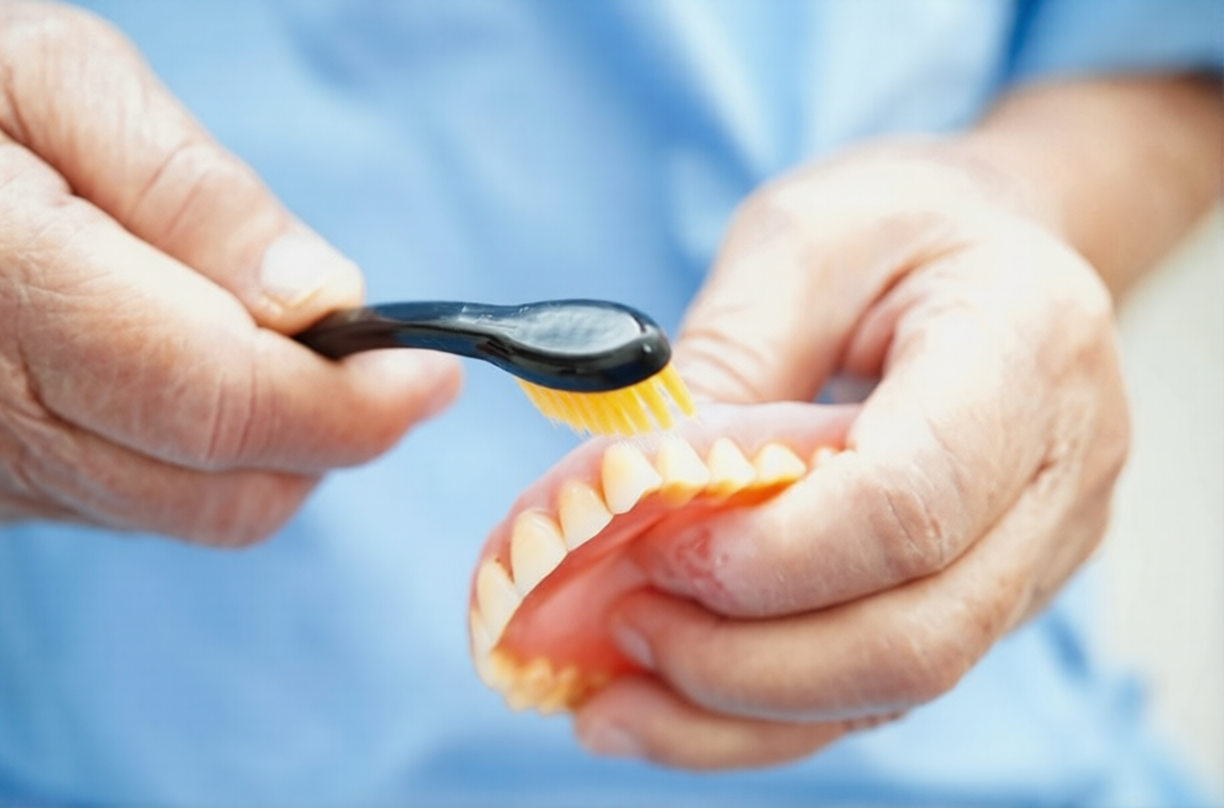
Proper denture care directly affects your comfort and the lifespan of your appliances. Remove and rinse dentures after eating to prevent food buildup. Brush dentures daily with a soft brush and denture cleaner specifically designed for this purpose. Clean over a folded towel or sink of water to prevent damage if dropped. Never use regular toothpaste on dentures, as it’s too abrasive and can scratch the surface.
Use lukewarm water for cleaning and rinsing. Never use hot water, as heat can warp dentures and change their shape. Rinse thoroughly after cleaning to remove all residue.
Soak dentures in denture cleaning solution or plain water when not wearing them. Never let dentures dry out, as this can cause them to change shape and fit poorly. Follow the manufacturer’s instructions for soaking solutions.
Handle dentures gently to prevent damage. Inspect regularly for signs of damage or wear: cracks, chips, loose teeth, rough spots that might irritate tissues, or colour changes that regular cleaning doesn’t remove.
Over-the-Counter Solutions
Several over-the-counter products can provide temporary relief or support, though it’s important to understand their limitations. Denture adhesives can provide temporary stability for minor fit issues. However, adhesives are not a long-term approach for poorly fitting dentures. Use them sparingly, as excessive use can mask underlying fit problems. If you find yourself needing daily adhesive use, a professional assessment is likely needed. Relying on adhesive to compensate for poorly fitting dentures delays necessary denture adjustment and can allow problems to worsen.
Denture cushions or pads may provide temporary relief for specific denture pressure points. These offer a short-term approach only and shouldn’t substitute for professional denture adjustment. They can help temporarily while waiting for a dental appointment.
Topical oral pain gels designed for oral use can provide temporary relief from sore spots. Apply to sore areas when not wearing dentures, following product instructions carefully. These are appropriate only for minor, temporary discomfort.
What NOT to Do
Never attempt to adjust dentures yourself by grinding or filing them. Such modifications can damage dentures and often create worse fit problems. Self-adjustment voids warranties, and proper adjustment requires professional tools and skills.
Never use inappropriate adhesives on dentures. Super glue or household adhesives can be toxic and cause damage. If dentures break, contact your dentist for proper guidance.
Don’t ignore persistent pain or discomfort. Ongoing discomfort indicates an underlying problem needing attention. Delaying treatment can allow issues to worsen and may lead to serious complications.
Don’t wear ill-fitting dentures continuously. Even if managing discomfort, continuous wear without regular breaks prevents tissues from recovering properly. Remove dentures at night, even if comfortable, as tissues need this rest period.
Don’t use abrasive cleaners on dentures. Regular toothpaste can scratch the denture surface. Bleach can weaken denture materials and change their colour. Use products specifically designed for denture cleaning.
When Professional Denture Adjustment Is Needed
Recognising when home care measures aren’t sufficient helps you seek appropriate professional care before minor issues become major problems. Understanding what professional care involves can ease any concerns about scheduling an appointment.
Signs You Need Professional Help
Several indicators suggest your denture discomfort requires professional assessment. Discomfort persisting beyond 60 to 90 days exceeds the normal adjustment period for new dentures. New discomfort in previously comfortable dentures signals changes requiring attention.
Visible sores or ulcers that don’t heal within one to two weeks indicate ongoing tissue damage needing professional intervention. Bleeding when wearing dentures isn’t normal and suggests tissue trauma. Difficulty eating even soft foods after adequate adjustment time points to significant functional problems.
Dentures that fall out or slip during normal activities don’t fit properly and need professional assessment. Pain that worsens rather than improves indicates a problem requiring attention. Requiring excessive adhesive signals for deterioration. Changes in speech that don’t improve may indicate positioning or fit issues. Persistent jaw pain or headaches can signal bite alignment problems. When sore gums from dentures persist despite home care, professional denture adjustment is essential to prevent further tissue damage.
What Professional Denture Adjustment Involves
The initial assessment typically involves a comprehensive oral examination in which your dentist evaluates the fit and condition of your dentures. They assess bite alignment and how upper and lower dentures meet. You’ll have an opportunity to discuss symptoms and concerns in detail.
Common adjustment procedures address various denture issues. Relieving denture pressure points involves selective grinding to remove high spots. Smoothing rough edges eliminates areas that irritate tissues. Adjusting bite alignment improves how dentures fit when you close your mouth. Rebasing replaces the denture base while keeping existing teeth. Relining adds material to the tissue-facing surface to improve fit. Soft relines provide cushioning for sensitive tissues, while hard relines create a better fit against gum contours. These denture adjustment procedures can often transform poorly fitting dentures into comfortable, functional appliances.
You may need multiple visits to achieve optimal adjustment, as dentures often require fine-tuning. New dentures typically require two to three follow-up adjustments. Each adjustment visit is typically brief, lasting 15 to 30 minutes. Some trial and error is normal in achieving a good fit. Multiple denture adjustment appointments may be needed to address poorly fitting dentures and achieve lasting comfort fully.
When Denture Replacement May Be Necessary
Sometimes, adjustment alone cannot address denture problems, and replacement becomes the appropriate option. Significant bone loss since dentures were made can create a mismatch between the denture base and current tissue contours. When the denture base no longer matches tissue contours adequately, relining may not suffice to restore proper fit.
Extensive wear or damage to dentures affects function and comfort. Visible wear on denture teeth reduces chewing efficiency. Cracks or breaks compromise structural integrity. If dentures have required repeated restorations, replacement may be more cost-effective.
Dentures typically last five to eight years with proper care, though this varies. Older dentures may no longer match the current oral structure. Materials can degrade over time. Advances in technology mean newer dentures may offer benefits that older appliances cannot.
Major changes in oral health or overall health may necessitate new dentures. Significant weight changes alter facial structure and oral tissues. Changes in medications can affect oral tissues. Development of health conditions impacting oral health may require dentures designed with these factors in mind.
Alternatives to Traditional Dentures
Several alternatives to conventional removable dentures exist. Implant-supported dentures offer greater stability than traditional removable dentures. Dental implants placed in your jawbone provide anchors that securely hold the denture. This approach can reduce bone loss over time. Many people experience improved chewing ability with implant-supported dentures. While implant-supported dentures involve higher initial costs, the long-term benefits may justify this investment. Not all patients are suitable candidates, so individual assessment is necessary.
If you have some natural teeth remaining, partial dentures represent an option that replaces only missing teeth. Dental bridges can replace one or a few missing teeth. Individual dental implants can replace single missing teeth without affecting adjacent teeth.
Each option has different characteristics, benefits, and considerations. Professional assessment helps determine which approach is appropriate for your individual situation.
Preventing Future Denture Discomfort
Establishing good habits and maintaining regular professional care can help prevent many denture problems before they develop.
Establishing Good Habits from the Start
Following your dentist’s wearing schedule for new dentures helps provide a comfortable adjustment. Remove dentures at night during the initial adjustment period to allow tissues to rest and recover. Attend all scheduled follow-up appointments, as these visits allow necessary adjustments before minor issues become painful. Regular denture adjustment appointments during the first few months help maintain optimal fit as your mouth adapts.
Report new issues promptly to your dental team rather than waiting for scheduled appointments. Minor problems are typically easier and less expensive to address when caught early. Keep communication open with your dental team, sharing concerns even if they seem small. Early reporting of issues, such as sore gums from dentures, allows for prompt denture adjustment before minor irritations develop into serious problems.
Long-Term Denture Care Practices
Daily maintenance routines protect your dentures and oral health. Remove and rinse dentures after each meal. Brush them thoroughly daily with appropriate cleaners. Soak them overnight in a proper solution. Handle dentures gently during cleaning and insertion to prevent damage.
Proper storage maintains denture shape and cleanliness. Always keep dentures in water or soaking solution when not wearing them. Never let dentures dry out. Use a clean container specifically designated for denture storage. Change the soaking solution daily.
Schedule examinations at least twice per year, or more frequently if your dentist recommends. Professional cleaning and inspection catch problems early. Regular tissue health monitoring identifies changes that might affect fit or comfort. These preventive visits often identify and address small issues before they cause pain.
Replace dentures according to professional recommendations, typically every five to eight years. Seek replacement promptly if you notice significant changes in fit or function.
Oral Health Maintenance
Suppose you have partial dentures and retain some natural teeth, brush and floss those remaining teeth daily. Pay particular attention to teeth that contact denture clasps. Continue regular dental check-ups for natural teeth.
Even without natural teeth, gums and oral tissues need care. Gently brush gums, tongue, and palate with a soft brush each day. This stimulates circulation, removes bacteria, and helps maintain tissue health.
Your overall health significantly impacts oral tissues. Managing chronic conditions like diabetes helps maintain tissue health and healing capacity. Be aware of medications that can cause dry mouth. Adequate nutrition supports tissue health and healing. Stay well hydrated.
A balanced diet provides the nutrients tissues need to maintain health. Calcium and vitamin D support bone health. Vitamin C supports gum health and tissue healing. Adequate protein supports tissue rehabilitation when irritation occurs. Drinking sufficient water throughout the day keeps tissues hydrated and supports saliva production.
Recognising Early Warning Signs
Watch for subtle changes in how dentures fit. A slight increase in movement, different sensations when biting down, or minor changes in how dentures seat all warrant attention. An increased need for adhesives serves as an early warning sign. Needing more product than usual or more frequent applications signals that the fit is changing.
Minor discomfort patterns shouldn’t be ignored, even when they seem manageable. Occasional sore spots, discomfort only at the end of the day, or sensitivity in specific situations all indicate developing issues. Address these early rather than waiting for pain to become severe. Schedule an assessment when you notice changes, as early intervention typically involves simpler, less expensive care.
Living Comfortably with Dentures
Understanding what to expect from dentures and how to maintain them properly helps you achieve the desired outcomes.
Realistic Expectations
Most denture wearers adapt successfully when they receive proper care and follow recommended maintenance routines. Modern dentures offer significantly improved comfort and function compared to dentures from previous generations. However, individual experiences vary based on many factors, including oral anatomy, overall health, bone and tissue quality, commitment to care routine, and regular professional support.
Advances in technology mean today’s dentures use better materials than those available in previous generations. More accurate impression techniques and fabrication methods result in better-fitting appliances. Improved aesthetics make modern dentures look more natural. Enhanced function allows better chewing and speaking.
Quality of Life with Well-Fitted Dentures
Properly fitted dentures can restore many abilities and improve various aspects of life. Physical abilities restored may include eating a varied, nutritious diet, speaking clearly, and smiling without self-consciousness. Maintaining facial structure and appearance becomes possible when teeth are replaced. Improved nutrition supports overall health when you can eat a wider variety of foods.
Social and emotional benefits often accompany successful denture adaptation. Enhanced self-esteem in social situations makes interactions more comfortable. Reduced anxiety about appearance allows you to focus on enjoying social connections. Many people experience improved self-esteem when dental problems are addressed.
Physical health benefits can result from properly fitted dentures. Better nutrition becomes possible when you can effectively chew a wider variety of foods. Proper digestion starts with effective chewing, which well-fitted dentures support. These benefits require properly fitted dentures and regular professional care to maintain function over time.
Final Thoughts
Denture discomfort stems from various causes, each requiring appropriate approaches to manage effectively. The normal adjustment period for new dentures differs significantly from fit issues, pressure points, tissue changes, infections, or material reactions. Changes over time are natural and often require professional attention to maintain comfort.
Multiple levels of management are available to address denture-related discomfort. Temporary at-home relief measures can help with minor, short-term discomfort. Professional adjustments and restorations address fit issues, pressure points, and other mechanical problems. Long-term replacement becomes appropriate when dentures no longer adequately meet your needs.
Prevention through proper care reduces your risk of developing problems. Daily maintenance routines protect both your dentures and oral tissues. Regular professional check-ups identify developing issues before they cause pain. Early intervention for emerging issues typically involves simpler, less expensive treatment than delayed care.
You don’t have to simply accept ongoing pain or significant discomfort as inevitable with dentures. Most denture discomfort can be addressed effectively with appropriate care. Professional support is available to help you achieve and maintain comfort.
Remember that everyone’s experience with dentures is unique. What works well for one person may differ for another. A professional assessment determines the appropriate approach for your situation. Persistent discomfort requires professional evaluation to identify the underlying cause. Don’t delay seeking help for ongoing issues; early intervention typically yields better outcomes.
If you’re experiencing denture discomfort, we’re here to help you find relief and achieve comfortable function. Our team at Anchorage Dental Care Mindarie can assess your situation, identify the causes of your discomfort, and recommend appropriate care approaches. Book a consultation to discuss your concerns, or contact our dental clinic to learn more about how we support denture wearers in achieving comfort and function.


 How We Can Help
 General Dentistry
 Emergency Dentist
 Cosmetic Dentistry
 Dental Implants
 Restorative Dentistry
 Cosmetic Procedures
 Orthodontics
 Sedation and Sleep Dentistry
 Preferred Provider
 Other Payment Options
 Government Scheme