

Discovering damage to your dental veneer can feel concerning, especially if it affects your smile. You might worry about how quickly you need professional care or about the options available to you. These feelings are completely understandable, and many patients experience this situation.
Veneer damage, whilst concerning, can often be addressed with appropriate professional care. Treatment outcomes vary depending on individual circumstances. Veneers are thin shells bonded to teeth for cosmetic and functional purposes. However, they can sustain damage under certain circumstances, like trauma or biting hard objects. Treatment options vary based on damage extent, the material type, and individual needs. Outcomes and suitability vary from patient to patient.
This article guides you through immediate steps, when to consult your dentist, and treatment approaches. If you’re wondering what do you do if your veneers crack or chip, we’ll walk you through the process. We’ll also cover preventive measures to help protect your investment. Remember that individual situations vary, so consult a qualified dentist.
Any surgical or invasive procedure carries risks. Before proceeding, you should seek a second opinion from an appropriately qualified health practitioner.
Contents Navigation
Summary of the Content:

- Veneer damage occurs from trauma, biting hard objects, grinding teeth, and natural wear over time, though understanding the causes helps with prevention.
- Immediate steps include assessing visible damage, protecting the area, and contacting your dental clinic promptly for professional assessment and care.
- Severity ranges from minor chips to complete breakage with exposed tooth structure, requiring immediate attention from your dentist.
- If you’re wondering what do you do if your veneers crack or chip, treatment varies by material—porcelain or composite resin—and damage extent significantly.
- Treatment options range from minor bonding procedures to complete veneer replacement, depending on your individual circumstances and material type.
- Prevention includes avoiding hard foods like ice cubes, using nightguards if you grind your teeth, and attending regular checkups for monitoring.
- Taking good care of veneers through proper hygiene and caution can help extend their longevity. Individual results vary significantly.
Why Do Dental Veneers Chip or Crack?
Dental veneers are thin, tough shells designed to enhance tooth appearance and function. Despite their strength, these cosmetic dental restorations aren’t indestructible under excessive force. Understanding common causes may inform care approaches. Individual risk factors vary, and damage cannot always be prevented.
Common causes include the following:
- Direct trauma:
Accidents, falls, or sports injuries can crack or chip veneers instantly upon impact to your mouth or face, creating immediate visible damage that requires professional assessment. - Hard objects:
Biting ice cubes, hard candy, or nuts, or using teeth as tools, can create a damaging force that exceeds what veneer materials can effectively withstand during normal use. - Teeth grinding:
Bruxism generates repeated pressure that weakens veneers over many years of wear, gradually compromising their structural integrity through constant nightly force. - Poor bonding:
Improper placement during the original procedure may create weak spots over time, making the veneer more prone to detachment or cracking than properly bonded restorations. - Natural wear:
Veneers gradually wear from normal use, affecting their longevity and durability as they thin and weaken with age and daily use over many years.
Porcelain veneers are strong when bonded properly, but more brittle than natural teeth. Composite resin veneers have different properties but face similar damage risks from excessive force.
Grinding your teeth unconsciously during sleep creates constant stress on veneers. Signs include jaw soreness, worn teeth, or increased sensitivity upon waking. If decay develops beneath veneers, it can compromise bonding and lead to failure. Understanding your specific situation may inform prevention strategies. Your dentist can discuss approaches that may be suitable for your circumstances.
Immediate Steps to Take When You Discover Damage
Stay calm after discovering veneer damage, as most situations aren’t true dental emergencies. Taking measured steps protects your oral health whilst awaiting professional care. Here’s what you can do right away.
- Assess the damage by looking in a mirror with good lighting. Is it a small chip, crack line, larger piece, or complete detachment? Keep any broken pieces in a clean container if possible. Gently run your tongue along the edges to check for sharp edges or sensitivity.
- Protect the area by rinsing your mouth with warm water to clean debris. Stick to soft foods and chew on the opposite side of your mouth. Avoid very hot, cold, hard, or crunchy foods that could further damage your teeth. Apply dental wax to cover sharp edges temporarily if needed.
- Contact your dentist to schedule an appointment. Reception staff can help determine appropriate timing based on your situation. Describe what happened, what you observed, and any pain or sensitivity present. Ask whether same-day attention is needed or if scheduling within days is appropriate. Reception staff can help determine urgency based on your description.
Never attempt DIY adjustments using household adhesives or products not designed for dental use. Don’t use the damaged area to bite or chew, even if it doesn’t hurt. Don’t ignore the situation, hoping it will go away, as the damage can worsen. Skip aggressive brushing directly on the damaged area until a professional assessment occurs.
Assessing the Severity of Damage
Understanding damage severity may provide general guidance about urgency. Only dental professionals can properly assess the full extent. Underlying issues may not be visible without professional examination and X-rays taken.
- Minor chips involve small edge chips along the gum line or biting edge. These may not be visible when smiling and often don’t cause pain. Even small chips warrant professional evaluation because rough edges can irritate tissues over time.
- Moderate damage includes visible crack lines across the veneer surface. Chips noticeable when you smile or speak fall into this category. You might experience some sensitivity to temperature or pressure, though typically not severe.
- Severe damage involves large pieces broken off, exposed tooth structure appearing a different colour, or complete detachment. You’re experiencing significant pain or sensitivity that’s affecting your daily activities. Sharp edges cause injury that dental wax cannot manage, warranting same-day attention.
When contacting your clinic, describe your observations in simple terms, such as “crack line across my front veneer.” This helps dental staff provide appropriate guidance about timing and appointment urgency.
Managing Discomfort and Sensitivity
Some patients experience discomfort following veneer damage, whilst others notice no pain at all. Self-care measures may provide temporary comfort whilst awaiting your appointment. Contact your dentist if symptoms worsen.
- For pain relief:
Consider over-the-counter pain medication following the package directions carefully. Consult a pharmacist if you have health conditions or take other medications. Remember that pain relief addresses symptoms but not the underlying damaged veneer issue. - For sensitivity:
Avoid very hot or cold foods and beverages temporarily. Use room-temperature or lukewarm options on the affected area for comfort. When drinking cold water, use a straw positioned away from the damaged veneer. - For irritation:
Warm salt water rinses may provide comfort for some patients with irritated tissues. Mix half a teaspoon of salt into warm water, then gently swish. For sharp edges, temporarily apply dental wax to the area. Replace wax after eating if it comes loose. - Contact your dentist urgently if you experience:
Significant pain that over-the-counter relief cannot manage, swelling around the tooth or gums, sensitivity that worsens over 24 to 48 hours, bleeding that doesn’t cease with gentle pressure, or sharp edges continuing to cause injury despite dental wax.
Maintain good oral hygiene by continuing to brush twice daily, gently around the damaged area. You can still floss carefully, though you may need to take extra care near the affected tooth.
When to Seek Professional Dental Care for Chipped or Cracked Veneers
General guidance about urgency may inform decisions about scheduling professional care. Your dentist can provide specific advice for your situation. Most chipped veneers can wait several days for appointments without complications. However, certain circumstances warrant contacting your dentist immediately for same-day attention.
Situations Requiring Urgent Care
Seek immediate professional care if you experience:
- Severe pain:
Pain that over-the-counter relief cannot adequately manage throughout your day may indicate exposed nerves or underlying tooth damage, requiring urgent professional attention and assessment. - Large breakage:
Pieces broken off with exposed tooth structure visible beneath the original veneer shell require prompt care to protect the vulnerable tooth surface from further damage or sensitivity. - Complete detachment:
Situations where the entire veneer has come off your front tooth surface create urgent aesthetic concerns and expose the underlying tooth to potential damage or decay. - Uncontrolled bleeding:
Sharp edges cutting your tongue, cheek, or gum tissue repeatedly may cause injuries that continues bleeding with gentle pressure, requiring professional management of the wound. - Significant swelling:
Swelling around the affected tooth, suggesting possible infection, requires prompt treatment to prevent complications and address the underlying cause of inflammation in surrounding tissues.
These situations typically warrant urgent assessment to address potential complications. Early professional evaluation may reduce the risk of additional issues. Most dental clinics accommodate emergency appointments for patients experiencing these symptoms. Don’t hesitate to explain your situation clearly when calling for guidance.
Standard Scheduling Appropriate
Minor chips without pain, small cracks with intact bonding, and cosmetic damage only can typically wait. Schedule an appointment within the next several days during regular business hours. Use the protective measures described earlier whilst awaiting your consultation appointment.
When calling, mention when the damage occurred, the extent of the visible injury, the pain level, and the functional impact. This information assists reception staff in scheduling. Your dentist will assess your situation during the consultation.
Treatment Options for Damaged Veneers
Your dentist will conduct a thorough examination, including a visual assessment and X-rays if needed. They’ll check the extent of damage, the underlying tooth condition, the integrity of the veneer bond, and bite function. Treatment varies significantly based on material type (porcelain or composite resin) and damage severity.
Factors affecting treatment options include the following:
- Type of veneer material:
The material type—porcelain or composite resin—determines which approaches are possible, as different materials have distinct bonding properties and durability characteristics. - Extent of damage:
The size and severity of chips or cracks, along with their location on the tooth, influence whether conservative adjustments are suitable or complete replacement is needed. - Condition of the underlying tooth:
The health and structural integrity of the tooth beneath the veneer determine which treatment approaches are appropriate and effective for long-term success. - Age of existing veneer:
Older veneers approaching their expected lifespan may be better candidates for replacement than adjustment, as they may have accumulated wear. - Your aesthetic concerns:
Visible front teeth may require higher aesthetic standards than back teeth, influencing treatment choices based on how noticeable the veneer is when you smile. - Budget and time constraints:
Treatment costs and the number of appointments required vary between adjustment and replacement options, affecting which approach suits your circumstances and schedule.
Your dentist will explain the options they believe are most appropriate, discuss the advantages and limitations honestly, and provide timelines and cost estimates. Some adjustments are completed same-day, whilst replacement veneers typically require multiple visits over one to two weeks.
Any surgical or invasive procedure carries risks. Before proceeding, you should seek a second opinion from an appropriately qualified health practitioner.
Understanding Porcelain vs. Composite Veneers Differences
The type of veneer material significantly affects the available treatment options when damage occurs. Your dentist can identify which type you have during an examination if you are unsure.
Comparison of Veneer Materials:
| Feature | Porcelain Veneers | Composite Resin Veneers |
| Material | Ceramic material fabricated in laboratories and securely bonded to teeth | Tooth-coloured filling material is applied directly to teeth or fabricated separately |
| Durability | Typically resistant to stains from coffee, tea, and other substances. Individual results vary | Less resistant to stains; may discolour over time with exposure. Individual results vary |
| Treatment Options | Rarely bond reliably to additional materials once damaged; replacement is often needed | An additional composite can bond to the existing material, allowing for more adjustment options |
| Appearance | Natural translucency mimicking real enamel with light-reflecting properties that look authentic | May not match the translucency of porcelain; adjustments may show visible differences |
| Longevity | Can last 10 to 15 years or longer with proper care. Individual longevity varies significantly based on multiple factors. | May require more frequent maintenance or replacement. Individual results vary based on care and use patterns |
| Cost | Higher initial investment due to laboratory fabrication | Generally lower cost as they’re made directly in the office |
Key considerations for damaged veneers:
- Porcelain adjustments:
Once damaged, porcelain rarely bonds reliably to additional materials, nor do adjustments hold up effectively. Think of porcelain’s strength arising from its fully bonded structure as a single unit. Replacement often provides more reliable long-term results than attempting adjustments on damaged porcelain surfaces. - Composite adjustments:
An Additional composite can bond to existing composite material, opening more adjustment options for minor damage. However, composite materials can discolour more readily than porcelain, especially from daily use stains. Adjustments may not match existing material completely, especially after many years of placement and natural staining.
Your dentist will explain how your veneer type affects treatment options during examination. Material differences may inform expectations about approaches, though individual outcomes vary.
Minor Damage Treatment Approaches
For minor chips or small cracks that do not compromise structural integrity, conservative approaches may be considered. Suitability depends on your specific situation, the type of veneer, and the location of the tooth damage.
Dental bonding applies tooth-coloured composite resin to fill small chips and restore the tooth’s shape. Your dentist shapes, hardens with a dental light, and polishes the addition. Colour matching results vary. This works better for composite veneers, where the materials bond more reliably. For porcelain veneers, bonding is considered only for very minor edge chips.
Veneer recontouring smooths and polishes minor irregularities rather than adding material to the surface. For very small chips, your dentist might carefully smooth rough edges and polish. This approach is limited to situations where removing small amounts creates acceptable results.
Important limitations to understand:
- Aesthetic matching:
Adjustments may not match the translucency and light-reflecting properties of porcelain under all lighting conditions, potentially creating visible differences at different angles and brightness levels across environments. - Durability concerns:
Bonded additions are typically less long-lasting than the original veneer structure over time, meaning they may wear down faster or require future revision as daily use affects the junction between materials. - Colour challenges:
Colour matching can be challenging, particularly with older veneers that have accumulated staining from coffee, tea, or other substances over many years of placement and use in your mouth. - Location matters:
Visible front teeth versus back teeth significantly affect aesthetic expectations, as chips are more noticeable when smiling than when molars remain hidden during normal conversation and social interactions.
Your dentist can explain whether conservative approaches might provide acceptable results for your situation. They’ll discuss advantages and limitations honestly so you can make informed choices.
When Complete Replacement is Needed
Many damaged veneers require complete replacement for reliable, long-lasting results. Replacement may be appropriate for many situations involving significant damage, though it involves a greater time investment. Your dentist can discuss whether this approach is suitable for your circumstances.
Replacement is typically recommended when:
- Significant cracks:
Structural cracks compromise the veneer’s integrity throughout the restoration, affecting its ability to function properly and protect the underlying tooth from damage or sensitivity during daily use. - Large chips:
Substantial portions have been removed, affecting shape, function, and tooth appearance, making the veneer unable to serve its intended cosmetic and protective purposes effectively for your smile. - Complete detachment:
The veneer has completely detached from the tooth, whether it came off intact or broke during separation, leaving the underlying tooth exposed to potential damage, decay, or sensitivity. - Underlying tooth damage:
The tooth beneath the veneer has been damaged and needs attention before new veneer placement, requiring treatment to address structural issues or decay that may have developed. - Previous adjustments failed:
Previous attempts have failed or didn’t meet expectations for aesthetics or function, suggesting a more comprehensive approach, such as a complete replacement, may yield better long-term results. - Multiple issues present:
Multiple small chips or cracks have occurred over time, suggesting the veneer is nearing its expected lifespan, and that replacement would provide more reliable results than further adjustments.
The replacement process involves:
- First appointment:
Your dentist carefully removes the damaged veneer, prepares the tooth surface, if needed, through minimal shaping, takes impressions or digital scans to create your custom veneer, and places a temporary covering for protection whilst waiting. - Fabrication period:
Laboratory technicians custom-create your new veneer over one to two weeks using the impressions or scans taken during your first appointment, providing proper fit, shape, and colour matching to your surrounding natural teeth. - Second appointment:
Your dentist removes the temporary covering and cleans the tooth; tries in the new veneer to check fit and colour against surrounding teeth; securely bonds it using special adhesive and curing techniques; checks your bite to verify proper function; and makes final adjustments for comfort.
Some clinics with advanced technology offer same-day replacement using CAD/CAM systems for in-house fabrication. Your dentist can explain whether this option is available and appropriate for you.
Cost varies depending on the veneer type, laboratory fees, the number of appointments needed, and specific circumstances. Your dentist can provide detailed estimates before you proceed so you can make informed choices. Check with your health fund before treatment to understand your out-of-pocket costs.
Questions to Ask Your Dentist
Asking questions during consultation may support informed decision-making about your treatment options. Consider asking about these important aspects during your consultation for damaged veneer care.
About damage extent:
- What exactly has happened to my veneer and the underlying tooth beneath it?
- How serious is this damage, and are there underlying factors that contributed to it?
About treatment options:
- What are my options for addressing this damage, from conservative to comprehensive approaches?
- Which approach do you recommend for my specific situation, and why is it suitable?
- How long can I expect each treatment option to last with proper care?
About the process:
- What will the procedure involve, step by step, from beginning to completion?
- How many appointments will I need, and will I need temporary covering between them?
About timing:
- How soon do we need to address this damage to prevent further complications?
- Can I think about my options for a few days before proceeding?
About costs:
- What will this treatment cost, and do you offer payment plans?
- Does my health fund typically provide cover for this type of veneer treatment?
About prevention:
- How can I prevent this from happening again to this or other veneers?
- Should I consider a nightguard if grinding might have contributed to this damage?
Your dentist is there to help you make informed choices, not pressure you. Don’t hesitate to request clarification on anything you don’t fully understand before proceeding.
Preventing Future Veneer Damage
Practical steps may help reduce the risk of future damage to veneers. Individual results vary based on multiple factors. Preventive measures focus on reducing risk to the aesthetic and functional benefits that veneers provide.
- Avoiding hard objects and foods may reduce the risk of veneer damage. Your dentist can provide specific guidance based on your circumstances. Try to avoid biting ice cubes, hard candy, popcorn kernels, hard nuts, and hard bread crusts. Never use teeth as tools to open packages, tear tape, or hold non-food items. Cut hard foods into smaller pieces rather than biting them with the front teeth.
- Manage teeth grinding with a custom nightguard if you grind during sleep or stressful times. Bruxism creates a significant force that can damage veneers over time through repeated nightly pressure. Signs include waking with jaw soreness, your partner noticing grinding sounds, and worn teeth. A custom nightguard is designed to absorb grinding forces and reduce direct contact between your upper and lower teeth. Effectiveness varies among individuals.
- Maintaining good oral hygiene may reduce the risk of underlying tooth decay that could affect veneer integrity. Individual susceptibility to decay varies. Brush twice daily with a non-abrasive toothpaste, using gentle circular motions for two full minutes. Floss daily to remove plaque from between teeth and along the gum line. Use alcohol-free mouthwash, as recommended by your dentist, to maintain healthy gums.
- Wear a mouthguard when playing sports or participating in activities with a risk of facial impact. Sports like football, basketball, martial arts, or hockey warrant protection during participation. A custom sports mouthguard from your dentist may offer suitable protection during sports activities. Your dentist can discuss options appropriate for your needs.
- Attend regular checkups every 6 to 12 months so your dentist can monitor veneers. During checkups, your dentist examines the condition of the veneer, checks the bonding integrity, looks for signs of wear, and assesses your bite. Professional cleaning may help maintain the veneer’s appearance and support surrounding gum health. Individual outcomes vary based on multiple factors.
Daily Care and Maintenance
Establishing a consistent daily care routine may support the appearance and structural integrity of veneers. Good veneer care is similar to caring for natural teeth, with some additional considerations. Individual outcomes vary.
- Brushing routine:
Use a soft-bristled toothbrush to avoid potential scratching of veneer surfaces. Your dentist may recommend non-abrasive toothpaste for daily use. Some whitening formulas may be more abrasive. Discuss suitable products with your dental professional. Apply gentle pressure with circular motions rather than aggressive back-and-forth scrubbing, which can damage the material. Pay attention to the area where your veneer meets your natural tooth and gum line. - Flossing daily:
Gently slide floss between teeth using a back-and-forth motion without forcing between tight contacts. Curve the floss around each tooth in a C-shape to clean below the gum line. Avoid forcefully snapping floss, as this could potentially disturb the veneer edge over repeated use. - Mouthwash use:
If your dentist recommends mouthwash, choose an alcohol-free option for daily use. Some dental professionals suggest alcohol-free mouthwash options for patients with composite restorations. Your dentist can recommend suitable products for your specific situation. Using alcohol-free alternatives removes any potential concern whilst still providing antimicrobial benefits. - Eating mindfully:
Cut hard foods into smaller pieces rather than biting into them directly. Be cautious with foods that could be unexpectedly hard; check carefully before biting into them. Consider chewing harder foods with your back teeth rather than your front teeth. Be gentle with sticky foods like caramels, which can pull on the edges of veneers.
When to Schedule Review Appointments
Regular professional monitoring forms an important part of maintaining long-term veneer success and health. Most dental professionals recommend checkups every 6 to 12 months for patients with veneers.
During regular checkups, your dentist will:
- Examine each veneer’s physical condition, looking for any signs of wear or damage
- Check the bond integrity between the veneer and your tooth to maintain security
- Assess your bite and how teeth come together to identify stress on veneers
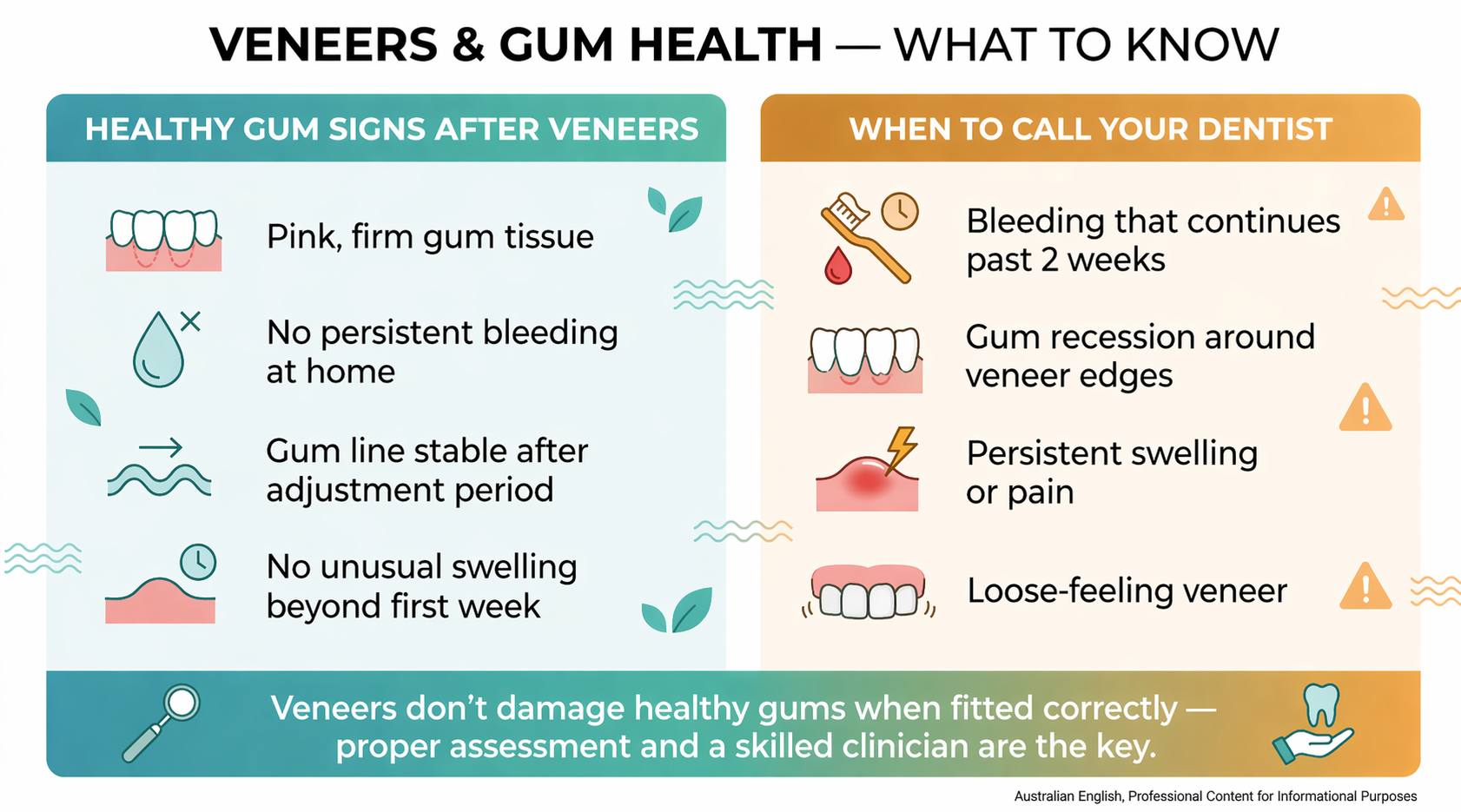
- Evaluate gum health around your veneers for recession or inflammation signs
- Provide professional cleaning to remove buildup and maintain the veneer’s appearance
Between regular appointments, schedule an earlier review if you notice:
- Changes in how your veneer feels, such as rough edges or a loose feeling
- New sensitivity around a veneered tooth, particularly if it persists or worsens
- Changes in appearance, such as visible dark lines along the gum line
- Visible gaps between the veneer and your gum tissue that weren’t present before
- Any discomfort or pain around a veneered tooth that doesn’t go away
Regular professional care, combined with good daily home care, may support the longevity of veneers. Individual results vary significantly. With appropriate care, veneers may last 10 to 15 years for some patients. Individual longevity varies significantly based on factors including placement quality, oral hygiene habits, bite forces, and individual circumstances.
Final Thoughts
Discovering chipped veneers can feel stressful, but it’s a manageable situation with professional care. The key points include taking immediate protective measures, contacting your dentist for an assessment, and understanding that treatment varies depending on the extent of the damage and the material involved.
If you’re wondering what to do if your veneers crack or chip, treatment ranges from minor bonding adjustments to complete replacement, depending on your circumstances. Your dentist will examine the damage, discuss suitable options, and help you decide on an approach. Avoiding hard foods, managing grinding, maintaining hygiene, and attending regular checkups may help prolong veneer longevity. Individual outcomes vary significantly.
Individual situations vary, so consultation with a qualified dentist remains essential for proper assessment. Your dental professional can evaluate your specific damage and discuss treatment options. Consultation is required to assess suitability for your circumstances.
Anchorage Dental Centre Mindarie provides dental care services, including veneer assessment. These dental practitioners are available for consultation:
- Dr Michael Shams
DEN0001580551
General Dentist - Charles Tricoli
DEN0002559634
General Dentist - Zin Zin Wong
DEN0002560395
General Dentist - Ivy Wu
DEN0002441361
General Dentist
If you have concerns about veneer damage, you can contact the clinic. A qualified dentist can assess your individual situation and discuss whether treatment options may be suitable for your circumstances. Consultation is required to determine appropriate approaches.
Note: Any surgical or invasive procedure carries risks. Before proceeding, you should seek a second opinion from an appropriately qualified health practitioner.


 How We Can Help
 General Dentistry
 Emergency Dentist
 Cosmetic Dentistry
 Dental Implants
 Restorative Dentistry
 Cosmetic Procedures
 Orthodontics
 Sedation and Sleep Dentistry
 Preferred Provider
 Other Payment Options
 Government Scheme